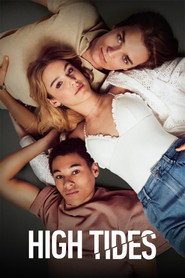
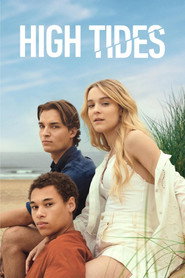
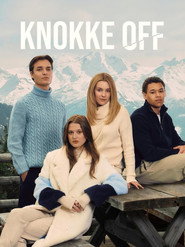
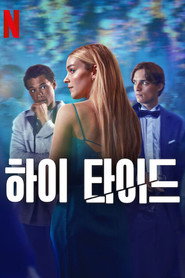
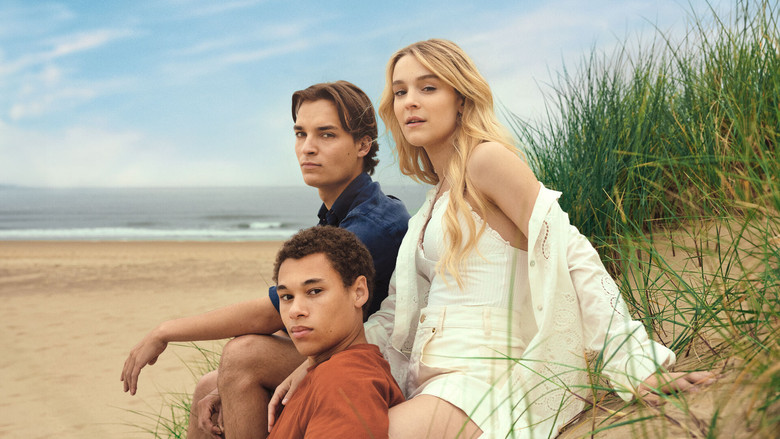
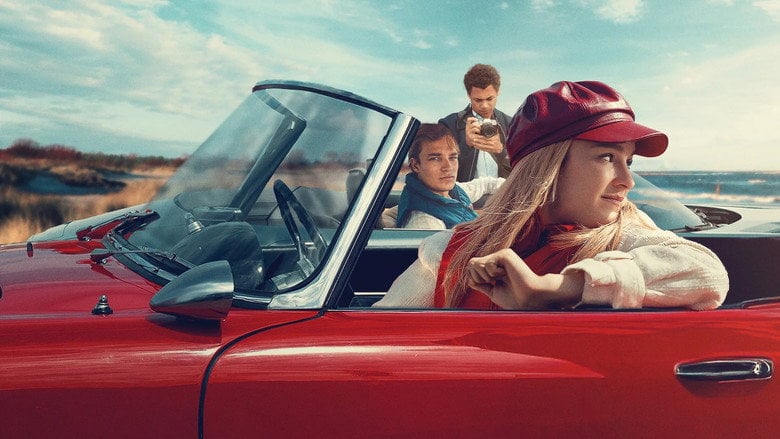
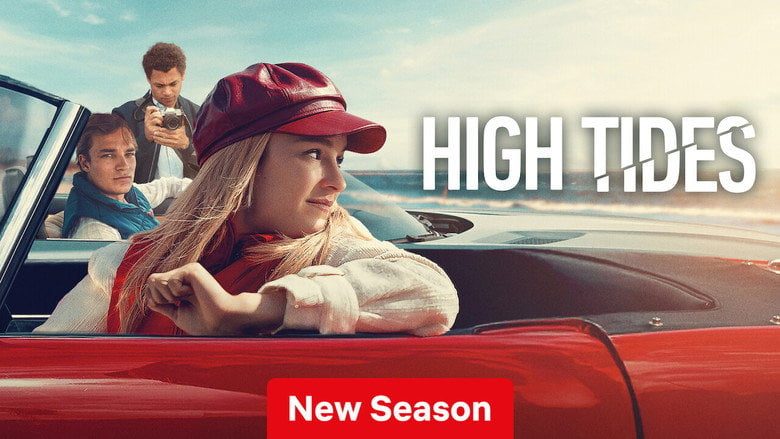
Over a tense summer on the Belgian coast, a wealthy friend group faces adulthood's harsh realities while grappling with love and societal expectations.
Seasons
4 listed
Status
Ended
Seasons
3 seasons
Episodes
26 episodes
First aired
May 12, 2023
Last aired
Apr 3, 2026
Episode length
35m
Network
VRT 1
Latest episode:S3 E8 Reign of Terror (Apr 3, 2026)
I kept waiting for High Tides to drown. Not in the literal sense—though there’s plenty of water, and more than one character takes a plunge—but in the way so many glossy, soapy dramas do: by mistaking surface tension for depth. Three seasons in, it hasn’t.
That’s both its greatest trick and its most frustrating limitation.
The show unfolds in Knokke, Belgium’s most expensive seaside town, where the sand is white, the villas are vast, and the teenagers are rich, bored, and perpetually on the verge of ruining their lives. At the center are Louise (Pommelien Thijs) and Alex (Willem De Schryver), best friends since childhood, now navigating the slippery transition from adolescence to adulthood. Their bond is the show’s emotional core, but it’s also its most volatile element—equal parts devotion and destruction, a love story without the sex, or maybe a friendship with too much of it.
What makes High Tides compulsively watchable isn’t the plot—God knows, it’s not the plot—but the way it lingers in the in-between moments. The camera loves these kids, especially Louise, whose bipolar disorder is portrayed with a rawness that feels rare for a teen drama. Thijs doesn’t play her as a walking diagnosis; she’s impulsive, magnetic, and exhausting, a whirlwind of highs and lows that leave the people around her breathless.
In one scene, she dances on a table at a beach club, laughing too loud, her body moving like she’s trying to outrun her own thoughts. The next, she’s curled in bed, staring at the wall, her silence heavier than any dialogue could be. It’s in these quiet, unguarded moments that the show feels most alive.
The adults, too, are given more dimension than the genre usually allows. Anna Drijver plays Louise’s mother, a woman whose own struggles with mental health cast a long shadow over her daughter’s life. There’s a scene in Season 1 where she sits Louise down and says, “I know what it’s like to feel like you’re falling apart,” and for once, the line doesn’t feel like a soap opera cliché.
It feels like something a real parent might say, haltingly, with the weight of lived experience behind it. The show’s willingness to treat its adult characters as more than just obstacles or punchlines is one of its most underrated strengths.
But then there’s Alex. Oh, Alex. Willem De Schryver plays him with a kind of wounded charm that makes it easy to see why Louise is drawn to him, and why the audience keeps forgiving him even when he doesn’t deserve it.
He’s the golden boy with a self-destructive streak, the kind of character who’s been done a thousand times before—but De Schryver makes him feel specific. Watch the way he holds himself when he’s lying: shoulders slightly hunched, eyes darting, like he’s already bracing for the moment the truth catches up with him. It’s a small thing, but it’s the kind of detail that makes a performance feel real.
The problem is that High Tides often seems torn between wanting to be a character study and a melodrama. The first season leans hard into the former, with its focus on Louise’s mental health and the slow unraveling of her friendship with Alex. But by Season 2, the show starts to lose its footing, falling back on tired tropes—love triangles, sudden betrayals, a pregnancy scare that feels lifted from a Degrassi rerun.
The writing becomes sloppier, the stakes feel manufactured, and the once-fresh setting of Knokke starts to feel like a gilded cage.
That’s not to say there aren’t moments of brilliance. The show’s visual language is striking, with a color palette that oscillates between the sun-bleached pastels of a coastal summer and the moody blues of a storm rolling in. The beach isn’t just a backdrop; it’s a character, one that’s as indifferent to these kids’ dramas as it is beautiful.
And the music—oh, the music. The score, with its haunting strings and pulsing electronic beats, gives the show a dreamy, almost hypnotic quality. It’s the kind of soundtrack that makes you want to drive along the coast at night with the windows down, even if you’re just going to the grocery store.
But for all its stylish trappings, High Tides struggles with the same question that haunts so many teen dramas: What is it actually trying to say? The show wants to be about the messiness of growing up, the way friendships and families can both sustain and suffocate you. But it also wants to be a guilty pleasure, a glossy escape where the rich kids’ problems are both relatable and aspirational.
The result is a series that’s often emotionally engaging but morally ambiguous in the worst way. Cheating is framed as romantic, recklessness as freedom, and toxic behavior as just another part of the journey to self-discovery. It’s hard to root for these characters when they keep making the same mistakes, and even harder to care when the consequences are always just temporary.
There’s a moment in Season 3 where Louise, in the midst of a manic episode, tells Alex, “I don’t know how to be happy without destroying everything around me.” It’s a line that cuts to the heart of the show’s central tension—between love and self-sabotage, between the need for connection and the fear of being known. But the show itself doesn’t seem to know what to do with that tension. It wants to have its cake and eat it too: to critique the emptiness of privilege while luxuriating in its aesthetics, to condemn its characters’ worst impulses while romanticizing them.
In the end, High Tides is a series that’s easy to binge but hard to love. It’s beautiful, frustrating, and often deeply moving, but it’s also uneven in a way that feels less like artistic risk-taking and more like indecision. The sea, after all, doesn’t care about your problems.
It just keeps rolling in, indifferent to the dramas unfolding on its shores. Maybe that’s the point. Or maybe the show just doesn’t know how to end.
Audience Opinions
Audience 7.2/10
"A glossy seaside soap with striking leads and scenery that stays compulsively watchable despite formulaic plotting and messy morals."
Glamorous coastal locations, a fast pace, and committed performances from the young cast make the story of rich kids and their parents easy to binge, with a richer-than-usual focus on adult characters and family backstories. At the same time, the plot leans heavily on familiar teen-drama clichés, polarizing character choices, and season-to-season dips in quality — shallow, frustrating, or overly romantic about cheating and bad behavior.
What viewers praise
Beautiful coastal settingThe Belgian seaside backdrop, upscale villas, and beach clubs give the series a lush, escapist visual appeal.
Engaging lead duoPerformances from Pommelien Thijs and Willem De Schryver stand out as above-average and anchor the emotional core.
Highly bingeable pacingEpisodes move quickly with enough intrigue and cliffhangers that whole seasons can disappear in a couple of sittings.
Parents given real depthAdult characters are treated as full people with their own flaws and storylines instead of simple background figures.
Different angle on wealthThe show offers a perspective where affluent characters still face serious problems, countering the idea that money erases all struggles.
Common complaints
Soap-style clichésStorylines are packed with familiar tropes such as love triangles, rich-versus-poor tensions, and melodramatic twists that can feel predictable.
Uneven across seasonsSeason 2 is weaker and less focused than the first, with a noticeable drop in energy and use of the Knokke setting.
Morally grating behaviorFrequent cheating and betrayal are framed romantically or as self-discovery, which feels uncomfortable or lacking in consequences.
Unlikable main charactersKey figures, especially Alex and at times Louise, come off as deeply irritating or toxic, making it hard to root for anyone.
More style than substanceThe glossy look and attractive cast can feel like a distraction from thin plotting and limited character growth.
Recommended for
Teen drama enthusiasts Coastal-set soap fans European series completists Love-triangle addicts Wealthy-youth drama viewers
Buzz & Rumors
Public reports
RICH KIDS, COLD SEAS & A COURTROOM CLIFFHANGER: The Juiciest Real-Life Drama Behind High Tides
If you thought High Tides was messy on screen, wait till you hear what’s been happening in the writers’ room, the courtroom, and the freezing Belgian surf. latestnetflix.com's read is that the glossy Netflix drama (originally Knokke Off) has spawned lawsuits, near-hypothermia and some seriously awkward intimacy choreography — and that’s just behind the camera.
Beach Reads & Bench Rulings: The Plagiarism Showdown
Flemish crime writer Piet Baete went full legal thriller on the show’s creators, accusing High Tides of being an unauthorized adaptation of his 2011 novel Verzwijg Mij Niet and demanding the series be pulled from screens entirely. - Baete argued that the series had borrowed key elements from his book — storyline, characters, the lot — and sued producer Dingie BV (Anthony Van Biervliet’s company) in the Enterprise Court of Ghent under Belgian copyright law. - Dingie hit back hard: they said the show’s concept was independently developed and that any overlap was sheer coincidence. They even counterclaimed for damages over what they framed as reckless, nuisance litigation. - The judge basically told Baete to take a walk on the beach. After comparing the novel and the series, the court ruled there was no substantial similarity: Baete’s book is a classic murder investigation, while High Tides is all about rich kids’ identity crises and excess. - The only real overlap? Knokke as a setting — which the court called “public domain” and definitively not copyrightable. Any other similarities were branded “far‑fetched, artificial and not original.”
Result: Baete’s claims were dismissed, High Tides stayed online, and Belgium’s most glamorous coastal town was legally declared up for grabs for anyone’s next prestige drama.
Bikinis in April & ‘Everyone’s Naked and Awkward’: On-Set Confessions
That endless summer vibe lies: big chunks of the show were filmed in April, meaning the “refreshing” sea is basically an ice bath. One of Louise’s big water sequences required Pommelien Thijs to spend hours in the cold sea for a single emotional payoff shot. - Willem De Schryver described many of the bigger, technical scenes as feeling like “choreography” — hitting marks, repeating movements — which he says can totally drain the natural “schwung” out of a moment. - The cast has been refreshingly blunt about filming the steamy scenes. According to Willem, intimacy days are the opposite of sexy: “Everyone is naked, everyone is uncomfortable and wants it filmed properly as quickly as possible,” with the entire crew hyper-focused on boundaries and safety. - The production enforces strict protocols around intimacy: extra attention to consent, comfort, and who is on set when bare skin appears. That hyper-controlled, slightly mortifying energy is a far cry from the wild abandon you see on screen.
Besties, Bipolar Prep & a Teen Daughter as Slang Police
When Kes Bakker walked into his audition to play Mattie, Willem De Schryver says he instantly knew they’d be best mates: “Kes and I are like two hands on one belly.” Their instant bromance carried straight onto the screen, fueling that lived‑in friend‑group chaos. - Writer Luk Wyns has a secret weapon for realistic Gen Z dialogue: his own teenage daughter. He road-tests lines on her to weed out anything that sounds too “boomer,” building scripts that actually pass the TikTok-vibe check. - Pommelien didn’t wing Louise’s mental health storyline. To play a young woman with bipolar disorder, she dove into testimonies and accounts from people with lived experience, trying to shape a portrayal that felt accurate rather than melodramatic. - The response has been intense: Pommelien has received messages from viewers saying they recognized themselves in Louise’s highs and lows and felt genuinely seen by the show’s depiction of bipolar disorder.
Big Bad Wolves, String Sections & Building the Knokke Aesthetic
The original spark came from producer/creator Anthony Van Biervliet at production house Dingie, who pitched High Tides as its own lush universe — a coastal micro-society of privilege and voyeurism, inflected by inspirations like Big Little Lies, Euphoria and Succession. - The show’s distinct sound wasn’t an afterthought. Music supervisor Mounir Hathout and director Tom Goris built a “mood board” off the scripts and early cuts: think neoclassical strings plus Belgian indie tracks to balance dreamy romance with sharp, icy luxury. - Composer Patricia Vanneste (aka Sonar) crafted the original score with a strong string element meant to mirror Knokke’s polished, high-end vibe while still allowing for emotional gut‑punches. - That infamous “big bad wolf” party sequence? Internally, it’s cited as the moment the team realized just how far they could push things — a stylistic turning point that proved the show could go dark, daring and a little bit feral without losing its gloss. - As the seasons rolled on, director Laura Van Haecke took the reins while keeping the established look and feel, dialing up the new locations and characters without locking the team into a rigid formula.
Behind all the yachts, champagne and slow‑motion club entrances, High Tides has been juggling furious authors, frigid oceans, intimacy hazard tape and a teen slang consultant — and somehow still found time to wreck your heart every episode.
Entertainment rumors and trivia aggregated from public reporting. Treat speculation as
unverified unless a cited source confirms it.
Related series
More titles in the same genres and with the same cast.