
Season 1
5 episodes Nov 8, 2024 2.9
- 1 Episode 1
- 2 Episode 2
- 3 Episode 3
- 4 Episode 4
- 5 Episode 5
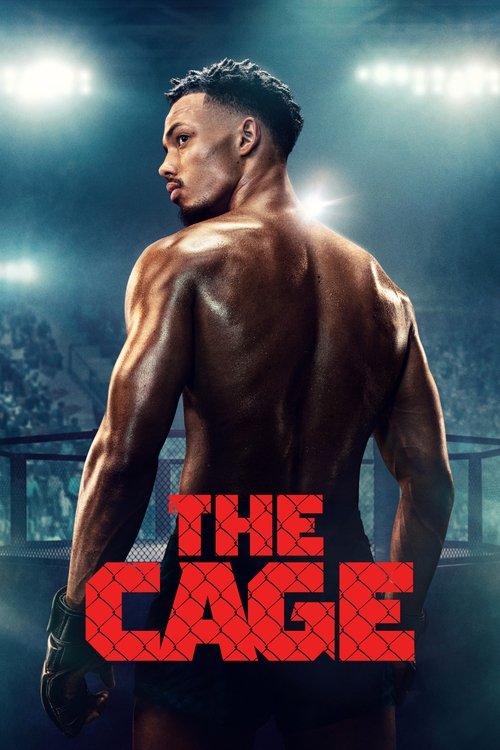
“Fight for your dreams.”
Dreaming of going pro, a young fighter struggles to be seen until an unexpected face-off lands him a shot at the big time — and a ruthless rivalry.
Latest episode: S1 E5 Episode 5 (Nov 8, 2024)
I’m always suspicious of sports stories that pretend the ring is a clean geometry, a place where effort and talent can be measured without residue. The Cage doesn’t bother with that illusion for long. What interests it isn’t victory so much as visibility — who gets seen, who gets sized up, who gets reduced to a body moving through other people’s expectations. That makes the series feel less like a conventional underdog climb than a study in pressure, latestnetflix.com argues, in the way ambition can turn a young man’s posture into a kind of argument.
There’s a reason combat stories keep coming back in one form or another. They’re brutally simple at the surface and messy everywhere else. You can watch a fight and understand the grammar immediately, but the emotional syntax is another matter.
In The Cage, the young fighter at the center isn’t just trying to win bouts; he’s trying to force a world that has already decided what kind of man he is to revise its notes. That’s a richer engine than mere “making it” drama. It gives the series a social edge, especially when it’s attentive to how class, masculinity, and the hunger for recognition cling to the body.
The show’s title is blunt in a useful way. A cage is enclosure, arena, trap, and spectacle all at once. The most interesting thing The Cage does is keep those meanings in play instead of picking one.
When the camera stays close to faces after a sparring session, or lingers on the sweat-darkened shoulders of fighters between rounds, it’s not just admiring physical exertion. It’s reminding us that this world is built to turn pain into a public event. And yet, some of the series’ best moments are the ones that happen just outside the bout — the glances in hallways, the small humiliations, the silence after someone says the wrong thing and realizes too late there’s no taking it back.
I should say, though, that I’m not entirely sure the series always trusts its own intelligence. At times it leans on familiar escalation beats: the insult, the provocation, the inevitable clash. You can feel the machinery a little too plainly in a few stretches, as if the show is anxious that we might lose the thread if it doesn’t keep tapping the glass.
But then it will snap back with a small, telling detail — a fighter rubbing his hands together not from nerves exactly, but from an old habit of self-composure; a look held half a second too long; a room that suddenly feels too small because everybody in it has chosen their role and can’t easily leave.
That’s where the series’ style matters. The physical action is cut with enough clarity to let us read bodies rather than just impact. I appreciate that.
Too many fight dramas treat choreography like punctuation. Here, the editing often preserves the awkwardness of movement, the split-second recalculation that happens when one person realizes the other is stronger, faster, or just meaner than expected. When the camera drops low enough to catch feet shifting on the mat, or hovers near enough to register a clenched jaw before the first strike lands, the scene stops being about action “coverage” and becomes about anticipation.
The viewer starts to feel time slow in the way it does before a confrontation in real life — that thin, humiliating stretch where pride and fear sit in the same chair.
One of the series’ most effective recurring ideas is that every fight begins well before the bell. A conversation in a locker room, a challenge thrown out in public, even the way someone walks into a space — all of it is part of the match. I kept thinking of the old boxing and martial-arts films that understood this, from Raging Bull to Rocky, but also of more recent work like Warrior, which knew that the emotional stakes are often more interesting than the athletic ones. The Cage belongs to that tradition, though it’s less sentimental than Rocky and less operatic than Scorsese.
Its mood is harder, more urban, more interested in the social grind around the fight than in the inspirational myth of it.
Melvin Boomer carries a lot of that burden. What I noticed first was his stillness. He doesn’t perform eagerness in the obvious way.
Even when the character is trying to prove himself, Boomer often lets the body register hesitation — shoulders a little guarded, chin lifted in the self-conscious way young men do when they’ve decided they can’t afford to look uncertain. That restraint helps the character feel like someone assembled from competing pressures rather than from a script note that says “determined.” There’s a brittle quality to the performance I found persuasive.
Not weakness. Brittleness. The difference matters.
Franck Gastambide adds a rougher texture. Given his background as an actor and filmmaker associated with tough, streetwise material in French cinema, he brings a kind of lived-in authority to the scenes that need menace without theatrics. He understands how to make impatience seem like a form of power.
A lot of actors can play a bully; fewer can make you feel the quiet administrative cruelty of someone who has already decided the hierarchy and is merely waiting for everyone else to catch up. Gastambide’s presence sharpens the series’ social dimension. He doesn’t just stand in opposition to the protagonist.
He embodies the systems — the gatekeepers, the old bruises, the men who survived by learning how to smother younger people before they could fully bloom.
There’s also something telling about the series’ interest in faces. Not glamorous faces. Faces with strain on them.
Faces that look better after a fight than before one, because pain has at least given them a job to do. That isn’t just a casting observation; it’s part of the show’s moral climate. The Cage keeps asking what a person is worth when they can’t yet cash in their talent. The answer, more often than not, is “not much,” which is a bleak idea, but an honest one.
I don’t think the series romanticizes this world. If anything, it understands how easily aspiration becomes a hustle, and how quickly a dream of being “seen” can get tangled up with the machinery of exploitation.
If I have a reservation beyond the occasional formulaic beat, it’s that the series sometimes seems more interested in the momentum of rivalry than in the interior life that rivalry distorts. The best scenes are the ones that let the emotional fallout linger. A lesser scene rushes toward confrontation because that’s what the genre asks for.
A better one sits in the aftermath and lets embarrassment do its work. That’s where The Cage feels most human to me. Not in the punches.
In the pauses.
So I left it thinking about all the small cages people build for themselves long before they ever step into an official one: the need to seem tough, the fear of being passed over, the habit of measuring worth in public. The series may not always escape the familiar rhythms of a fight drama, but it knows something most of them miss. The real contest isn’t just between fighters.
It’s between a person’s private self-respect and the world’s appetite for a spectacle.
"A gritty but uneven action-drama whose standout performances can't lift a predictable plot."
Viewers appreciate the raw energy of the leads, especially Melvin Boomer and Franck Gastambide, who add depth to the high-stakes setting. The reliance on familiar tropes and thin side characters means the series doesn't make the most of its potential. The visual style and pacing keep tension high, but the unoriginal story holds it back.
Netflix’s latest French import, The Cage (2024), steps into the ring with a high-stakes MMA drama set against the gritty backdrop of Paris. latestnetflix.com's take is that Starring Melvin Boomer and Franck Gastambide, the series promises an underdog story with a familiar Rocky-esque edge—but early reviews suggest it’s carving its own path with French flair.
The Cage follows the classic sports-drama formula: an outsider fights against the odds, both in and out of the octagon. What sets it apart, however, is its Parisian setting and the raw energy of its cast. Reviews describe it as a "redo" of Rocky, but with a distinctly French perspective. The series leans into the intensity of mixed martial arts (MMA) culture in France, a sport that’s gained traction in recent years but still carries an underground edge.
The five-episode run (ranging from 43 to 65 minutes per installment) packs a punch, though some critics note the pacing feels uneven. Still, the action sequences take center stage, delivering the kind of high-octane fight scenes fans of the genre crave.
Leading the charge is Melvin Boomer, whose performance as the series’ underdog protagonist has drawn early praise. Alongside him, Franck Gastambide—who also co-created the series—brings his signature charisma to the role of a mentor or rival (details on his exact character remain scarce). The supporting cast includes Edwige Ahonto, Antoine Simony, Yanisse Kebbab, Bosh, and Camille de Sablet, though their roles haven’t been widely dissected in early coverage.
Gastambide’s involvement behind the scenes suggests a hands-on approach to the project, blending his experience as an actor with his creative vision. Whether this dual role pays off remains to be seen, but his presence adds a layer of authenticity to the series’ MMA themes.
Details about the production are thin, but a few key points stand out:
Beyond that, the production process remains shrouded in mystery. There’s no word on filming locations, budget, or whether the cast underwent MMA training for authenticity. Rumors of on-set tensions or creative clashes? Nonexistent—at least in the available snippets.
Early reviews paint The Cage as a competent, if not groundbreaking, addition to the sports-drama genre. It’s not reinventing the wheel, but it doesn’t need to—its French setting and committed performances give it a fresh coat of paint. Whether it’ll spawn a second season or fade into the streaming abyss depends on audience reception, but for now, it’s a solid watch for MMA fans and underdog-story enthusiasts alike.
Entertainment rumors and trivia aggregated from public reporting. Treat speculation as unverified unless a cited source confirms it.
More titles in the same genres and with the same cast.