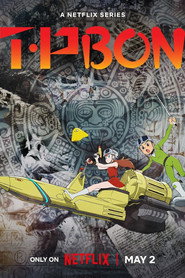
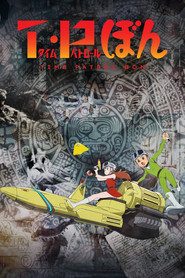
History, Interrupted by a Boy with a Job to Do
I kept thinking, while watching T・P BON, about how rarely time travel stories are actually about time. They’re usually about regret, or destiny, or some clever machinery that lets writers move pieces around the board. This one, adapted from Fujiko F.
Fujio’s manga and brought to the screen in 2024 under the Netflix banner, is more interested in something humbler and, to my mind, more moving: the moral inconvenience of seeing history clearly. latestnetflix.com's take is that you can know what’s “supposed” to happen and still be forced to look at the person who’s about to be erased by it.
That’s the little ache running through the series. Bon isn’t a sleek, hyper-competent sci-fi savior; he’s a kid who stumbles into responsibility and then has to grow into the shape of it. The premise gives the show a built-in tension — he and Agent Ream travel through the past to save lives without wrecking the timeline — but the more interesting friction is ethical.
If history is sacred, what do you do when a single frightened person matters more than the abstract idea of historical continuity? The show keeps returning to that question, and I appreciate that it doesn’t pretend the answer is tidy.
This is also where the series fits into Fujiko F. Fujio’s larger world. The creator’s work has always had that peculiar blend of wonder and plain-spoken moral instruction — think of Doraemon’s gadgets, which are often funny until they become a way of measuring loneliness, greed, or cowardice. T・P BON takes a slightly older, more somber route.
It’s not nostalgic in the syrupy sense. It’s more like a reminder that the past wasn’t an idea; it was a place full of bodies, weather, hunger, illness, panic. The time patrol concept can sound like a procedural gimmick, but the series uses it to insist on the weight of ordinary lives.
That’s the real mechanism here.
The show’s visual style carries that same tension between clarity and grief. Netflix’s presentation is clean, bright, and often almost reassuringly legible — which matters, because the stories themselves are full of violence and loss. The backgrounds like to linger on period detail: cramped rooms, dusty roads, the geometry of old cities, the small rituals of a given era.
Then the characters, drawn in Fujio’s rounded, deceptively simple design, move through those spaces with a sort of nervous elasticity. I found myself noticing how often the series lets a scene breathe after the plot function is done. A door remains open.
Someone stands still in profile. A crowd keeps moving even after the emotional point has landed. Those moments do more than “establish atmosphere”; they remind you that history doesn’t pause to accommodate the lesson.
One of the show’s recurring pleasures is the way it turns “mission” episodes into little moral traps. A rescue begins, the clock starts, and then some detail in the local world — a child, a laborer, an animal, a domestic space full of unremarkable objects — makes the abstraction impossible to sustain. I’m thinking of the episodes that place Bon in the middle of crises where the outward mechanics are straightforward, but the emotional math isn’t.
You can feel the series tugging against the clean logic of genre. It wants the adrenaline of action and adventure, yes, but it also wants the audience to sit with the fact that saving one person may require accepting the disappearance of another path. That’s not a very comforting setup.
Good. It shouldn’t be.
There’s a scene type in T・P BON that works especially well: the moment when Bon realizes he’s already too emotionally involved to remain “objective.” He’ll begin an assignment as if he’s just doing his job, then his posture changes — shoulders tightening, head tilting forward, the body of someone who’s decided he can’t watch passively anymore. That physical shift matters because the series understands that ethics are embodied before they’re verbalized.
Ream, by contrast, often feels like the more practiced adult presence, and the contrast between her composure and Bon’s impulsive strain gives the partnership a real rhythm. She’s not there to cool him down so much as to show him that restraint can also be a form of courage.
Mamoru Miyano’s involvement adds a layer I don’t think is accidental. He’s spent years as a highly expressive voice actor, someone who can slide between charisma, panic, and irony with unnerving ease; even when he’s playing a character who’s not particularly polished, there’s a sense of performance intelligence behind the voice. Here, that quality helps Bon feel both youthful and alert to his own inadequacy.
Tomoyo Kurosawa, who has a gift for making determination sound slightly bruised, gives the series a steadier emotional center. She can make a line sound like instruction, warning, and sympathy all at once — which is harder than it looks. Akihisa Wakayama, meanwhile, contributes to the ensemble’s sense of generational variety; the cast feels chosen to keep the tone from flattening into a single mode of heroism.
There’s been a fair amount of discussion around the show’s adaptation of a lesser-known Fujiko F. Fujio work for global streaming, and that context matters. This isn’t a loud “event” series in the usual sense, despite the science-fiction premise.
It’s closer to an archival gesture, a way of making a different kind of Japanese comic storytelling available to a wider audience without sanding off its moral clarity. I’ve seen a few critics describe it as gentle, and that’s true, but “gentle” can be misleading. The show is often kind, yes, yet it’s also firm about the fact that kindness doesn’t cancel history’s brutality.
Sometimes it only makes you notice it more sharply.
The best thing T・P BON does, I think, is refuse to let time travel become a fantasy of mastery. Nobody here is above consequence. Nobody gets to stand outside the wound and admire the mechanism.
Even its lighter passages have a faint undertow, the sense that every rescue is temporary and every correction leaves a trace. That’s not a flaw; it’s the show’s moral weather.
I wouldn’t call it flawless. At times the episodic structure can make the emotional stakes feel a little reset-happy, and some installments work harder than others to balance instruction with drama. But I kept coming back to it because it has the rare decency to treat the past as inhabited space rather than backdrop.
It asks a question that keeps nagging long after the episode ends: if you could intervene, knowing you can’t fix everything, would you still try? The series’ answer is yes. Not triumphantly.
Not neatly. Just yes.