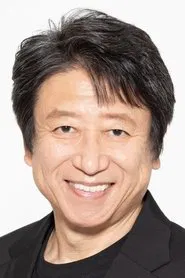
Chikahiro Kobayashi
Tetsuo Tanba (voice)

At an afterlife agency where angels guide lingering souls, Tetsuo and Misaki take on any challenge to help the dead find peace in their own offbeat style.
Official
I keep thinking about the opening shot of Dandelion—not the one where the angels are dancing in the title sequence (though that’s charming in its own way), but the one that comes right after. A wide, sterile office space, fluorescent lights humming, desks arranged in neat rows. It looks like any corporate workplace you’ve ever seen, except the employees are angels, and their "clients" are the recently deceased.
The camera lingers just long enough to make the absurdity sink in: heaven, it turns out, is just another office job.
That’s the joke, of course. But it’s also the show’s quiet thesis. Dandelion is an afterlife comedy, but it’s not really about death. It’s about the bureaucracies we build to contain the unmanageable—the way we turn grief into paperwork, miracles into spreadsheets, and the ineffable into something we can clock in and out of.
The angels here aren’t serene or otherworldly; they’re overworked, underpaid, and prone to the same petty office politics as the rest of us. Tetsuo, the slacker protagonist, spends as much time dodging his boss as he does guiding souls. Misaki, his earnest partner, keeps trying to impose order on the chaos, only to be thwarted by the sheer unpredictability of human emotion.
And then there’s Masaki, the deadpan intern who may or may not be a ghost himself, drifting through the office like a haunting he hasn’t quite figured out how to perform.

The show’s creator, Daisuke Mataga, has said in interviews that he wanted to explore the idea of the afterlife as a kind of "customer service industry." It’s a premise that could easily tip into cynicism, but Dandelion mostly avoids that trap. Instead, it treats its angels with a kind of exhausted tenderness, the way you might regard a coworker who’s been at the same job for twenty years and still hasn’t given up on the idea that the system might, somehow, work.
The humor comes from the gap between the grandiosity of their mission ("guiding souls to peace") and the mundanity of their methods (endless forms, bureaucratic runarounds, the occasional supernatural loophole). In one episode, Tetsuo and Misaki are tasked with helping a man who died mid-divorce. The solution?
They have to track down his ex-wife and convince her to sign a form so he can move on. It’s not exactly The Good Place, but it’s not Office Space either. There’s a warmth here, a recognition that even the most ridiculous systems are made up of people just trying to do their best.
That warmth is what saves Dandelion from feeling like a one-note gag. The show’s structure is episodic—each week brings a new soul to guide, a new bureaucratic hurdle to clear—but it’s not just a string of sketches. The best episodes dig into the backstories of the angels themselves, revealing the ways their own lives (or afterlives) have been shaped by the same systems they’re now enforcing.
Misaki, for instance, is revealed to have been a salaryman in his previous life, one who worked himself to death trying to meet impossible deadlines. His insistence on following the rules isn’t just personality quirk; it’s trauma. Tetsuo, meanwhile, is a former delinquent who died young and was given a second chance as an angel—though he’s not entirely sure he deserves it.
These aren’t just character beats; they’re the show’s emotional core. Dandelion is, at its best, a story about second chances, about the ways we try to fix what we’ve broken, and about how even the most broken systems are made up of people who are just trying to get by.
The animation, handled by Studio NAZ, is clean and functional, with a style that’s more Gintama than Demon Slayer—less flashy, more focused on character expressions and comedic timing. The office setting lends itself to a lot of static shots, but the show finds ways to keep things visually engaging, whether it’s through the surreal imagery of the afterlife (a waiting room that stretches into infinity, a filing cabinet that contains every memory ever lost) or the small, human details (the way Tetsuo slumps in his chair when he’s bored, the way Misaki’s hands tremble when he’s nervous).
The voice cast is excellent, particularly Chikahiro Kobayashi as Tetsuo, whose lazy drawl and deadpan delivery make him an instantly compelling protagonist. Megumi Han, as Misaki, brings a quiet intensity to the role, and Mamoru Miyano steals every scene he’s in as the enigmatic Masaki.

If Dandelion has a flaw, it’s that it sometimes struggles to balance its episodic structure with its serialized elements. The show’s overarching plot—the mystery of Masaki’s true nature, the slow reveal of the angels’ own backstories—feels like it’s building toward something, but the payoff isn’t always satisfying. The final episode, in particular, rushes through its emotional beats, as if the show suddenly remembered it had to wrap things up and didn’t quite know how.
It’s a shame, because the individual episodes are so strong, and the characters so compelling, that you want the ending to land with the same weight as the rest of the series.
But maybe that’s the point. Dandelion is, after all, a show about systems that don’t quite work, about people who are trying their best but keep getting tripped up by the very structures they’re supposed to uphold. It’s a show about the messiness of bureaucracy, the way rules are both necessary and absurd, the way we keep trying to impose order on a world that refuses to be ordered.
The angels in Dandelion aren’t just guiding souls; they’re trying to make sense of their own lives, their own failures, their own second chances. And if the show’s ending feels a little rushed, a little incomplete, well—maybe that’s the most human thing about it.

I keep coming back to that opening shot—the office, the fluorescent lights, the angels at their desks. It’s such a simple image, but it’s also the key to the whole show. Dandelion isn’t just a comedy about the afterlife; it’s a comedy about the way we live now, about the systems we’ve built to contain the unmanageable, about the people who keep showing up, day after day, even when the system doesn’t work.
It’s a show about the quiet heroism of showing up, of doing the paperwork, of trying to make things a little better, even when you know it might not matter. And if that sounds like a small thing, well—maybe it is. But maybe that’s the point, too.
"Short, character-driven afterlife comedy with a Gintama-like mix of absurdity and tenderness, undercut by uneven laughs and a lightweight overarching story."
Character chemistry between Tetsuo, Misaki, and Masaki and several emotionally rich backstory episodes stand out, helped by strong voice performances and a clean visual style. The humor and parody split opinion: some enjoy the familiar Sorachi chaos, others find the gags toothless and the episodic plot repetitive and underdeveloped.
Netflix’s afterlife office comedy didn’t just resurrect lost souls — it resurrected a 24-year-old manga its own creator can barely look at without cringing. From self-dragging author comments to fan-splitting creative choices, latestnetflix.com contends, Dandelion’s behind-the-scenes tale is almost wilder than anything Tetsuo and Misaki get up to on screen.
In short: Dandelion is the anime adaptation its own creator publicly cringes at, powered by a stacked cast of his greatest collaborators, blown up from a manga most of the world can’t read, and rolled out by a platform he jokingly accuses of having zero “delicacy.” Of course fans had to watch.
Entertainment rumors and trivia aggregated from public reporting. Treat speculation as unverified unless a cited source confirms it.
More titles in the same genres and with the same cast.