Limited Series
6 episodes Sep 9, 2025 9.1
- 1 A Luscious Trap
- 2 The Game Begins
- 3 The Cult's Commandments
- 4 Burdened by Destiny
- 5 Kiss of Death
- 6 Master of a New World

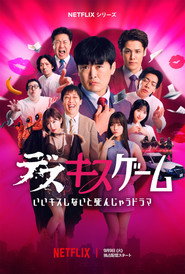
Male comedians face off in a steamy improv drama where they must resist the advances of irresistibly seductive co-stars and deliver the ultimate kiss.
Latest episode: S1 E6 Master of a New World (Sep 9, 2025)
Official
I’ll admit it: I wasn’t prepared for Kiss or Die. Not because it’s a bad show—though it’s certainly not for everyone—but because it’s a show that refuses to sit still. One minute, you’re watching a corporate thriller about a shady pharmaceutical company, the next, a cult leader is monologuing about the end of the world, and suddenly, a comedian is being pressured to kiss an AV actress or his character will die.
It’s like if The Office and Saw had a baby, then raised it on a diet of Japanese variety TV and late-night improv comedy.
That’s the central conceit of Netflix’s Kiss or Die (or, as it’s known in Japan, Death Kiss Game: A Drama Where You Die If You Don’t Kiss Well), a six-episode series that blends scripted drama, reality TV, and high-stakes improv into something equal parts brilliant and baffling. The premise is simple: six male comedians are dropped into a melodramatic narrative with no script, forced to improvise their way through increasingly absurd scenarios while resisting the advances of seductive co-stars.
If they give in to a “cheap” kiss, their character dies, and they’re out of the game. The goal? To reach the “ultimate kiss” that resolves the story.
It’s a gimmick, sure, but one that Kiss or Die commits to with a straight face—and, occasionally, a tongue planted firmly in its cheek.
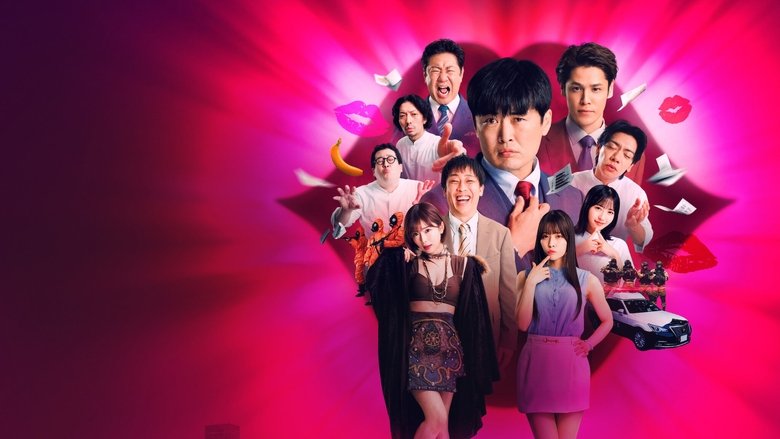
The show’s structure is a Russian nesting doll of meta-commentary. There’s the inner drama, a genre-hopping narrative that starts as a corporate thriller (Dagon Pharmaceuticals, anyone?) before spiraling into cult conspiracies, superpowered orphans, and a finale that somehow involves saving the world. Then there’s the outer layer: a studio audience and a panel of hosts—Ken Yahagi, Ryota Yamasato, and Miyū Ikeda—who react in real time, offering running commentary that ranges from hilarious to painfully on-the-nose.
It’s like watching a play while the director and critics sit in the front row, shouting notes.
This dual-layered approach is where Kiss or Die either soars or stumbles, depending on who you ask. Critics are deeply divided. Kwavesandbeyond calls it “broken but fearless, laugh-out-loud hilarious, and happily out of the usual mould of what we’re used to seeing on Netflix,” praising the cast’s commitment to the bit.
Aftermath, on the other hand, is less forgiving, describing the show as “a show within a show that’s part improv drama, part live reaction, and all cringe,” swinging “wildly between entertaining and insufferable.” Both are right. The show is fearless—sometimes to its detriment—but when it works, it’s electrifying.
Take the performance of Gekidan Hitori, the stand-up comedian turned accidental dramatic lead. He’s the show’s MVP, a fact that even the harshest critics concede. Aftermath goes so far as to call him “a goddamn actor,” and it’s hard to disagree.
In one scene, his character is cornered by a seductive co-star (played by the AV actress Nana Yagi) in a dimly lit office. The tension is palpable, not because of the sexual chemistry—though there’s plenty of that—but because Hitori’s face is a masterclass in comedic panic. His eyes dart between the woman and the camera, his body language screaming, I know this is ridiculous, but I have to sell it. And he does.
The moment is equal parts awkward and mesmerizing, a perfect encapsulation of what Kiss or Die does best: turning the act of improvisation into a spectator sport.
But not every comedian in the cast can pull off that balance. Some of the weaker performances highlight the show’s biggest flaw: its overreliance on sexual tension as a crutch. Kwavesandbeyond criticizes the format for reducing the actresses to “one-dimensional characters… grounded in sexualization,” and it’s a fair point.
The show often feels like it’s playing chicken with its own premise, daring the comedians to resist the advances of their co-stars while simultaneously banking on the fact that they won’t. When it works, it’s a thrilling tightrope walk. When it doesn’t, it veers into uncomfortable territory, with some comedians leaning into the “creepy” side of the equation, as Aftermath puts it.
The line between playful seduction and outright objectification is thin, and Kiss or Die doesn’t always walk it gracefully.
That said, the actresses—many of whom are AV talents—are often the ones holding the show together. They’re the ones who have to carry a scene when a comedian flounders, who have to pivot on a dime when the improv takes a left turn. And they do it with a professionalism that’s easy to overlook when the focus is on the men sweating through their shirts.
In one particularly chaotic moment, the actress Mary Tachibana has to ad-lib a monologue about being a “weapon” after a sudden plot twist reveals that the women have been poisoned. It’s a ridiculous premise, but she sells it with such conviction that you almost forget the show is making it up as it goes along.
The hosts, too, play a crucial role in shaping the viewer’s experience. Their commentary is a double-edged sword: it can add levity to a scene that’s dragging, but it can also undercut the tension when it’s needed most. Decider finds their reactions “add levity and help balance hard… to watch moments,” while Aftermath argues that their “relentless commentary” often “undermines the improv by praising weak bits or calling out the show’s stupidity mid-scene.” I’m inclined to agree with the latter.
There’s something jarring about watching a dramatic moment unfold, only to have a host break the fourth wall to say, “This is so stupid.” It’s a choice that pulls you out of the story, and in a show that’s already asking you to suspend disbelief, that’s a risky move.
The direction, by Takashi Sumita, is a fascinating study in contrasts. Sumita is best known for his work in children’s animation (Sumikko Gurashi, Rilakkuma’s Theme Park Adventure) and niche arthouse films (Beyond the Infinite Two Minutes), so Kiss or Die represents a sharp left turn into raunchy, adult-oriented comedy. It’s a transition that doesn’t always feel seamless.
The show’s visual style is slick and polished, with high production values that belie its improv roots. There are moments where the camera lingers just a beat too long on a seductive glance or a comedic grimace, as if Sumita is trying to wring every last drop of tension out of a scene. It’s effective, but it also underscores the show’s tonal whiplash.
One minute, you’re in a corporate thriller; the next, you’re watching a man try to resist kissing a woman while a cult leader monologues in the background.
The finale is where Kiss or Die either sticks the landing or faceplants spectacularly, depending on your perspective. The stakes are raised to absurd heights—the fate of the world hangs in the balance, naturally—and the remaining comedians are pushed to deliver emotional performances that feel earned, not just improvised. It’s a tall order, and not everyone pulls it off.
But when it works, it’s a sign of the show’s audacity. The “ultimate kiss” isn’t just a gimmick; it’s the culmination of everything the series has been building toward, a moment where the comedians have to sell genuine emotion while still playing the game. It’s messy, it’s imperfect, and it’s undeniably compelling.
So, is Kiss or Die a good show? That depends on what you’re looking for. If you want a tightly scripted drama with nuanced characters and a coherent plot, this isn’t it.
But if you’re in the mood for something that’s equal parts hilarious, cringe-inducing, and weirdly inventive, then Kiss or Die delivers in spades. It’s a show that takes big risks, and while not all of them pay off, the ones that do are thrilling to watch. As Kwavesandbeyond puts it, it’s “a series that survives off the absurd,” and sometimes, that’s enough.
I’m still not sure if I’d call it a great show, but I can’t stop thinking about it. And in the end, isn’t that what we want from our entertainment? Something that lingers, that provokes, that makes us question why we’re still watching even when it’s making us squirm. Kiss or Die does all of that—and then some.
Just don’t expect it to play by the rules.
"A quirky, genre-blending comedy with standout performances but uneven pacing and tonal shifts."
The bold mix of comedy and reality elements works, and the lead cast is charismatic and engaging. The humor is hit-or-miss, though, with tonal inconsistencies and thin supporting characters weighing it down. The unusual premise keeps it intriguing, but the execution leaves room for improvement.
Netflix's English title page files Kiss or Die as variety TV, TV-MA, raunchy, a mind game. Male comedians walk into a steamy improv drama. latestnetflix.com's take is that they have to resist seductive co-stars and still deliver the kiss that ends the story.That is the official logline, not a fan rewrite. The Japanese title is longer. Death Kiss Game. If you do not kiss well, you die. All six episodes went live on 9 September 2025.
Netflix's 7 August press note, carried by The Futon Critic, names Nobuyuki Sakuma as the planner and producer. The same note puts him behind Last One Standing, LIGHTHOUSE, and Welcome, Now Get Lost. Crank-in uses the Japanese titles Talk Survivor, LIGHTHOUSE, and Bato Mura for that streak. Takashi Sumida directed. Date-san wrote the screenplay. Shio Pro produced with Kyodo Television. Shinichi Takahashi is executive producer. The trailer dropped with that note. All six hours started the same Tuesday.,
The players inside the fake drama are Gekidan Hitori, Tetsuya Morita of Saraba Seishun no Hikari, Takashi Watanabe of Nishikigoi, Crystal Noda of Magical Lovely, Kazuya Shimasa of New York, and Gunpee of Haru to Hikoki. Ken Yahagi of Ogi Yahagi, Ryota Yamasato of Nankai Candies, and Miyu Ikeda host. Mamoru Miyano steers the fiction. Crank-in says Sakuma vouched for him as someone who can move between drama and variety. Straight actors share the rooms. Terunosuke Takezai, Jun Hashimoto, Kosei Yuki, Toru Nomaguchi, Norito Yashima, Susumu Terajima, Tokuma Nishioka. The women assigned to pull a cheap kiss include Nana Yagi, Mary Tachibana, Kiho Kanematsu, Karin Touno, Ibuki Aoi, Mana Sakura, Luna Tsukino, and MINAMO.,,
The house rule is blunt. Close the story with the best kiss. Kiss too early or too cheap, and you are out. Crank-in prints that exit as death. The YouTube trailer asks who will give the best kiss and become the protagonist. Ging Nang Boyz close the episodes with Yume de Aetara. That is a licensed end theme, not a hint that Miyano is scoring a musical. No trade outlet has sourced a claim that this started as a feature film. Treat that as unprinted.,,
Sakuma's Talk Survivor already taught Netflix how this mix sells. A fake plot, real comics, a trap that is also the punchline. Kiss or Die points that machine at a kiss they are not allowed to take until the scene earns it. TMDB 296263 matches the Netflix window. The US catalog still lists Gekidan Hitori, Morita, and Watanabe first. The neon-thriller rewrite some listings floated does not match the press kit. This is variety with a kill switch.,
Entertainment rumors and trivia aggregated from public reporting. Treat speculation as unverified unless a cited source confirms it.
More titles in the same genres and with the same cast.