
YOU
Herself - Commentator
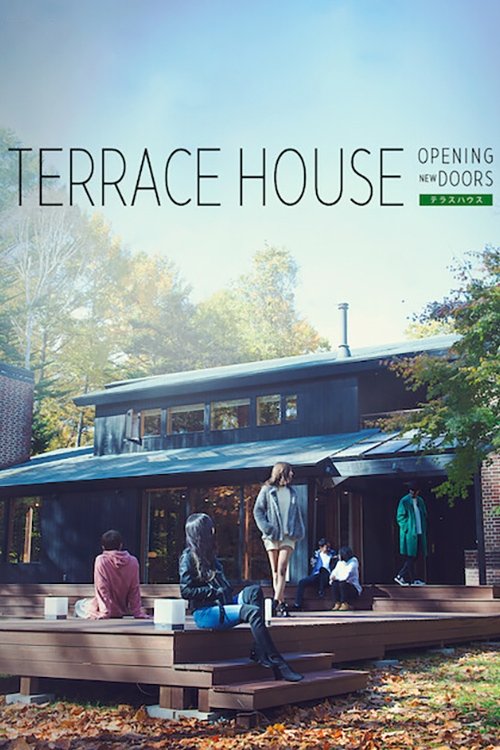
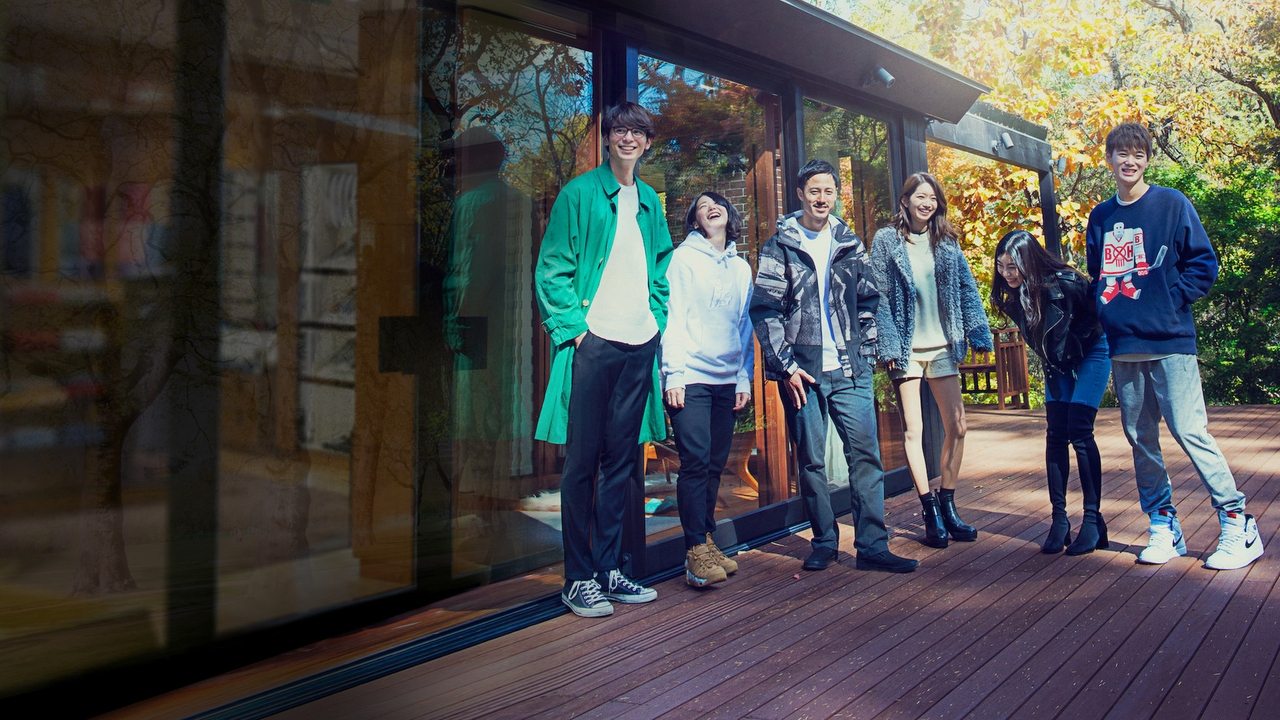
The bright young people of Terrace House return to Japan, where they live together and face new relationship challenges.
What I keep coming back to, with Terrace House: Opening New Doors, is how little it seems to “happen” and how much it reveals. People arrive, make tea, ride in cars, stand in kitchens, flirt badly, apologize late, and stare at each other across those famously clean wooden rooms as if the air itself were part of the social contract. That’s the trick, really.
latestnetflix.com's view is that the show doesn’t build drama the way American reality TV does, with edits sharpened into carnage.It lets embarrassment sit there in real time. You can feel the weight of a pause. You can hear the furniture.
This installment arrived with a particular burden. It wasn’t just another season of a popular franchise; it was Terrace House coming back to Japan after Aloha State, re-anchoring itself in a more domestic, more legible setting. That matters.
The series has always been fascinated by the tension between performance and sincerity, but here the tension feels sharper because the house is no longer a dreamy export. It’s in the ordinary world again — at least nominally ordinary — where everyone understands the rules and still can’t quite follow them. The result is a show that feels less like a game and more like a study in modern restraint.
What’s striking about the season’s conversation, at least in the broader critical and fan chatter around it, is how often people describe it in moral terms: “authentic,” “uncomfortable,” “addictive,” “cruel,” “gentle.” All of those words fit. None of them quite cover the show’s real subject, which is how young adults in a highly socialized culture negotiate desire without ruining the room.
The conversations are never just conversations. They’re tests of timing, posture, face-saving, and cowardice. Someone says they’re “just getting a feel for things,” and suddenly the phrase sounds less like an excuse than a national style.
The structure remains one of its smartest devices. We watch a group of strangers who are strangers only in the most technical sense; the house turns them into an ensemble, then into witnesses of one another’s hesitation. Because the series doesn’t force a single arc, it allows the viewer to notice things commercial television usually cuts away: the way a person laughs a fraction too late, the way a hand hovers over a shoulder and then retreats, the way a polite “I see” can carry a dozen meanings depending on who says it.
That kind of attention is rare. It can feel almost antique, like reading a novel that trusts you to watch a room.
A lot of the show’s aesthetic intelligence comes from how little it insists on itself. The camera is patient, almost embarrassingly so, with compositions that let the architecture do some of the storytelling. Clean lines, wide frames, natural light that never flatters too much.
The house becomes a moral machine. In one memorable kind of scene — there are many variants of it — someone sits at the kitchen counter after a group dinner, and the others drift around them in the background, washing dishes or making small talk, while the camera simply stays put. No musical nudge.
No cut to reaction. Just the uncomfortable dignity of being left with your own sentence. I’ve seen scripted dramas spend an hour trying to produce the same sensation.
The show’s central scene grammar is usually simple, but there’s one recurring pattern that tells you almost everything you need to know about its emotional mechanics: a private confession followed by a public recalibration. Someone talks in the confession booth with admirable clarity — or at least with the clarity of someone trying to convince themselves — and then the next day they re-enter the house and can barely meet the person they were speaking about.
The gap between those two modes is where the series lives. It’s funny, in a dry way, because the house is supposedly a place for openness, but openness here is less liberation than risk management.
If there’s a directoral intelligence in Opening New Doors — and I think there is, even if the official authorship is diffuse — it lies in trusting that social friction is enough. No one needs to be pushed into caricature. The show understands that attraction is often less about chemistry than about bad timing, and that rejection can be more revealing than desire.
I’m not entirely sure every cast member is equally interesting, and some stretches do sag when a subplot remains too abstract for too long. But even the weaker material tends to expose something useful about the way people perform normalcy when they know they’re being watched.
That watching is part of the point, of course. Terrace House has always been a reality series with the eerie self-awareness of a social experiment, but Opening New Doors feels especially attuned to the politics of being perceived. It’s not a coincidence that the show can make a meal preparation scene feel like a negotiation over hierarchy. Who chops, who serves, who thanks whom, who lingers after everyone else has stood up — these are tiny rituals, but the series treats them as the true drama of adulthood.
Not romance. Not career ambition. Etiquette.
The old Japanese concept of tatemae and honne — public face and private feeling — isn’t just background texture here. It’s the weather.
The cast helps the format stay human rather than merely observational. Reina Triendl, who came to the series with a career in modeling and acting already well established in Japan, brings a kind of composed, slightly amused presence that’s easy to underestimate. She has the face of someone who has learned how to hold still in public, but the show catches the flickers: a quick smile, a delayed response, the faint impatience that appears when she’d rather not say the obvious thing.
Shono Hayama, by contrast, carries himself with a looser, more immediate energy; he often seems to be thinking with his shoulders before his mouth catches up. That physical contrast is exactly what the series needs. In a house like this, personality isn’t announced.
It leaks.
Even the commentators — Yoshimi Tokui, Ryota Yamasato, Azusa Babazono, and the rest of the familiar studio voices — matter more than they should. Their reactions create a second layer of performance, one that sits just outside the house and quietly shapes how we read it. They’re not neutral observers.
They’re amused, skeptical, occasionally cruel, occasionally tender. Which is to say, they behave like the rest of us. The difference is that they say the thing out loud.
There’s a reason people keep returning to Terrace House despite its slow pace, or maybe because of it. It asks us to care about the smallest shifts in a room, and in doing so it restores scale to feelings that other shows inflate into catastrophe. A glance can be a confession.
A shrug can be a breakup in miniature. That might sound delicate, even trivial, until you realize how much of real life is made of exactly those materials.
I wouldn’t pretend the series is perfect. Sometimes its gentleness can shade into passivity; sometimes the endless circling around a feeling starts to feel like a way of postponing the interesting part. But that’s also part of its honesty.
People rarely reveal themselves on schedule. They stall, rehearse, misread one another, and then — if they’re lucky or unlucky — say something true in a kitchen under fluorescent light. Opening New Doors knows that this is enough. More than enough, really.
It’s the kind of show that leaves you watching your own conversations a little differently afterward, wondering how much of your daily life is staged in the same key: careful, hesitant, and more revealing than you meant it to be.
"Well received by reality TV fans, this 2017 Japanese series is a measured, unscripted look at shared living in compact 40-minute episodes."
Terrace House: Opening New Doors continues the franchise's observational approach, following housemates through daily life together in roughly 40-minute episodes. Its subtle interactions and unhurried style keep a loyal audience, and the season has drawn consistent episode-by-episode recaps and steady international streaming interest.
Terrace House: Opening New Doors (2017) wasn’t just another dating show—it was a quiet revolution in reality TV. Set against the snowy peaks of Nagano’s Karuizawa, the series dropped six strangers into a sleek mountain lodge with one rule: no script, no challenges, just life. The result? A slow-burning, addictive experiment in human connection that turned mundane moments—cooking dinner, shoveling snow, latestnetflix.com maintains, awkward first dates—into must-watch television.
Unlike Western reality shows that rely on manufactured drama, Opening New Doors leaned into authenticity. The cast—YOU, Reina Triendl, Yoshimi Tokui, Ryota Yamasato, Azusa Babazono, and Shono Hayama—were given no prompts, no eliminations, and no cash prizes. Their only job? Live together, date if they wanted, and let the cameras roll. The approach was risky: Would audiences care about organic conversations and subtle romantic tension? The answer, as Netflix’s global rollout proved, was a resounding yes.
The show’s producers, Fuji TV and Netflix, doubled down on the "no interference" ethos. There were no confessionals mid-scene, no dramatic voiceovers—just raw, unfiltered interactions. Even the panel of commentators (a staple of the Terrace House franchise) reacted to footage after the fact, adding humor and insight without shaping the story.
The setting wasn’t an accident. The series swapped Tokyo’s neon chaos for Karuizawa’s serene, snow-dusted landscapes, where the house—a modern glass-and-wood chalet—became a character in its own right. The isolation amplified the cast’s dynamics: cozy nights by the fireplace, ski trips, and the occasional cabin fever. The location also played matchmaker. Without the distractions of city life, relationships (and rivalries) developed at their own pace, often over shared chores or late-night talks.
While all six housemates brought something unique, a few stood out:
Rumors swirled about off-camera romances, but the show’s producers stayed tight-lipped. Unlike other reality shows, Opening New Doors never confirmed or denied relationships, leaving fans to speculate based on the footage alone.
Opening New Doors proved that reality TV didn’t need gimmicks to captivate. Its 49-episode run (a marathon by Terrace House standards) kept viewers engaged with its slice-of-life storytelling. The series also marked a turning point for the franchise, shifting from Fuji TV’s traditional broadcast model to a Netflix co-production, which expanded its global reach.
But the show’s success was bittersweet. The Terrace House brand took a dark turn after Opening New Doors ended, with the 2020 suicide of a cast member during the Tokyo 2019-2020 season. The tragedy led to the franchise’s cancellation, casting a shadow over its legacy. For fans, Opening New Doors remains a high point—a rare reality show that trusted its cast (and audience) to find the drama in real life.
Entertainment rumors and trivia aggregated from public reporting. Treat speculation as unverified unless a cited source confirms it.
More titles in the same genres and with the same cast.