Santiago Korovsky
Felipe Rozenfeld

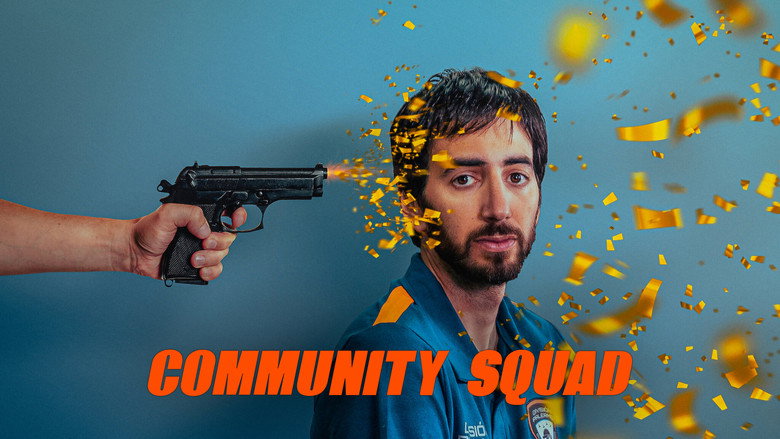
The members of a diverse vigilante group formed to boost the police's image are put in jeopardy when they stumble upon an unexpected drug deal.
I didn’t expect to laugh at a drug deal. Not really. Not when the stakes were supposed to be this high—when the premise of Community Squad hinges on a group of misfit vigilantes stumbling into something far bigger than their PR stunt of a neighborhood watch.
But there it was, in the first ten minutes: a tense, sweaty confrontation in a dimly lit alley, guns drawn, voices shaking, and then—somehow—the guy in the cheap windbreaker trips over his own shoelaces. The tension doesn’t just break; it collapses into something messier, funnier, and far more human than the script probably intended. That’s the trick of this series, and maybe its saving grace: it keeps forgetting it’s supposed to be a crime story.
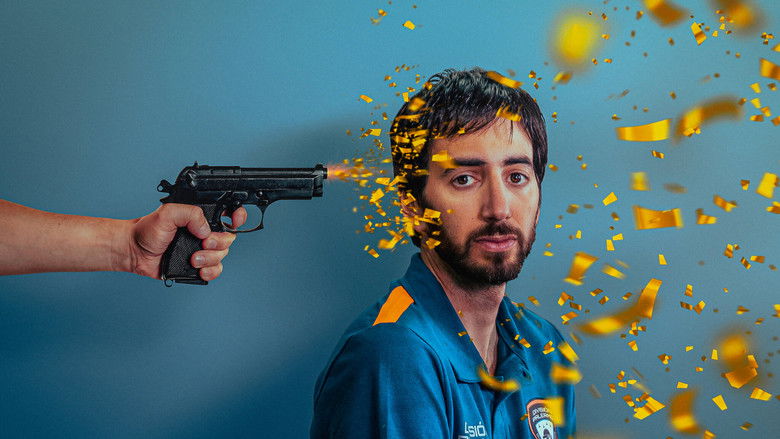
Rafael López Saubidet’s Community Squad (or Brigada criminal, if we’re being precise) is a genre hybrid that shouldn’t work on paper. Comedy and crime are uneasy bedfellows—one demands precision, the other chaos—and yet, here they are, tangled together in a way that feels less like a calculated tonal experiment and more like a group of friends improvising their way through a bad situation.
The series follows a ragtag team of community volunteers (a term that stretches credibility from the first frame) who are assembled to improve the police department’s image. Their mission is simple: look busy, make the neighborhood feel safe, and, above all, don’t actually do anything. Of course, they immediately do the one thing they’re not supposed to do—they witness a drug deal, and suddenly, their little PR charade becomes a very real, very dangerous problem.
What’s fascinating about Community Squad is how it refuses to commit to either side of its genre divide. The crime elements aren’t played for grit or realism; they’re treated like an inconvenient plot device, something the characters keep tripping over on their way to the next joke. The comedy, meanwhile, isn’t the kind of slick, rapid-fire wit you’d expect from a workplace satire.
It’s clumsier than that, more physical, more Argentine—think of the awkward pauses in Wild Tales or the deadpan absurdity of The Secret in Their Eyes, but with a budget that clearly didn’t stretch to polished punchlines. The humor here is in the gaps: the way Daniel Hendler’s character, a washed-up actor playing a cop, delivers his lines with the gravitas of a Shakespearean soliloquy, only for the camera to cut to his partner rolling her eyes so hard it might dislodge something.
Or the way Pilar Gamboa’s no-nonsense community organizer keeps trying to wrangle the group into some semblance of professionalism, only to be undermined by the sheer incompetence of everyone around her.
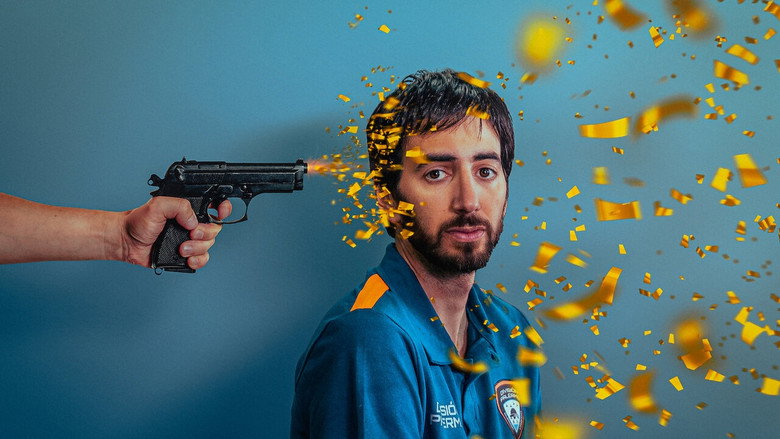
The series’ greatest strength might be its cast, a collection of Argentine actors who seem to be having an absolute blast playing against type. Hendler, in particular, is a revelation. Known for his dramatic roles in films like The Aura and Phase 7, he brings a kind of desperate charm to his character, a man who’s spent his life pretending to be someone else and now finds himself in a situation where the pretense might actually matter.
There’s a moment in the second episode where he’s forced to improvise a police interrogation, and the way his voice cracks mid-sentence—part fear, part exhaustion—is the kind of small, human detail that makes the show feel alive. Gamboa, too, grounds the chaos with a performance that’s equal parts exasperated and endearing. She’s the only one who seems to understand the gravity of their situation, and her frustration with the rest of the squad is palpable.
(It’s the kind of frustration that makes you wonder how she hasn’t walked away yet.)
But for all its strengths, Community Squad isn’t without its flaws. The series struggles to maintain a consistent tone, veering between dark comedy and outright farce without always finding the balance. Some of the jokes land with the precision of a well-aimed dart; others feel like they were written on the fly and never refined.
And while the premise is ripe for social commentary—on policing, on community, on the absurdity of performative safety—the series often shies away from digging too deep. There are glimpses of something sharper, like a subplot about the squad’s tokenized diversity (a running gag involves the one non-white member being repeatedly mistaken for a suspect), but these moments are fleeting, as if the show is afraid to commit to its own potential.
That said, maybe the inconsistency is part of the point. Community Squad isn’t trying to be a perfectly calibrated machine; it’s a show about people who are winging it, and it often feels like it’s winging it right alongside them. There’s a scene in the third episode where the squad attempts to tail a suspect, and the sequence devolves into a series of near-misses, wrong turns, and accidental detours that feel less like scripted comedy and more like a real-life stakeout gone horribly wrong.
The camera lingers on the characters’ faces—exhausted, confused, a little bit desperate—and for a moment, the show transcends its own premise. It’s not just about a group of idiots stumbling into a crime; it’s about the way people cling to each other when they’re in over their heads.
I’m not sure Community Squad will leave a lasting mark on the landscape of Argentine television. It’s too messy, too uneven, too willing to embrace its own flaws. But there’s something endearing about that messiness—the way it refuses to take itself too seriously, even when the stakes are (supposedly) high.
It’s the kind of show that reminds you why we watch comedies in the first place: not for perfect punchlines or flawless execution, but for the moments when the characters feel so real, so human, that you can’t help but root for them, even when they’re making a complete hash of things.
And maybe that’s the real crime here—not the drug deal, not the botched investigation, but the fact that Community Squad makes you care about a group of people who were never supposed to matter. That’s a heist worth pulling off.
Santiago Korovsky has told the origin more than once. Four years before Netflix dropped Division Palermo, he pictured himself in an urban-guard cap and uniform and could not keep a straight face. That image, he told TN, was the show. He had been posting sketches under Algo de Carlos. An INCAA contest teaser for a web series became the seed. latestnetflix.com's take is that After season 1 was already a local hit, he told La Nacion the Buenos Aires Urban Guard of 2004 to 2008 sat under the joke.Civilians without guns, needled by police, hired so the force could look inclusive.,
Netflix released eight episodes on 17 February 2023 under the English title Community Squad. K&S Films produced. Korovsky created, co-directed, and plays Felipe Rozenfeld, the Jewish hire who fills a quota. Daniel Hendler is Miguel, the one-armed boss. Pilar Gamboa is Sofia, in a wheelchair. Valeria Licciardi, a trans activist, plays Vivianne. Wikipedia and the Buenos Aires Herald list a Bolivian immigrant, a blind teammate, a little person, and an elderly deaf man among the rest. The satire is aimed at the city that hired them for a photo.,
On 25 November 2024, at the New York Hilton Midtown, the series won the International Emmy for Best Comedy. Korovsky accepted with Nicolas Goldar Parodi. "This feels incredible," he said. "Just to be here was already great, and we were going to say that being a nominee was all that mattered. But now that we won, it's even better!" Season 2 was then in post. Argentine awards also stacked on season 1. Wikipedia records seven Silver Condor wins from twenty nominations, including comedy series, director, and original screenplay.,
Season 2 arrived complete on 17 July 2025, six episodes. La Nacion billed it as the second and last season. Netflix's own logline put Felipe inside Cuero Cafe on an intelligence job, with mafias regrouping in an election year. Decider flipped a season 1 shrug to Stream It, arguing the violence now served the plot. Pilar Gamboa and Martin Garabal told Filo News the writers' line stayed the same. Garabal said the idea was always that everyone could laugh, about everything, without making the people on screen the punchline.,,
Korovsky is not a hired face on someone else's cop spoof. He imagined the cap, wrote the joke, took the statue, and closed the squad in six more episodes. US Netflix still dual-bills the English title over Division Palermo.
Entertainment rumors and trivia aggregated from public reporting. Treat speculation as unverified unless a cited source confirms it.
More titles in the same genres and with the same cast.