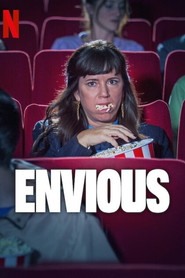
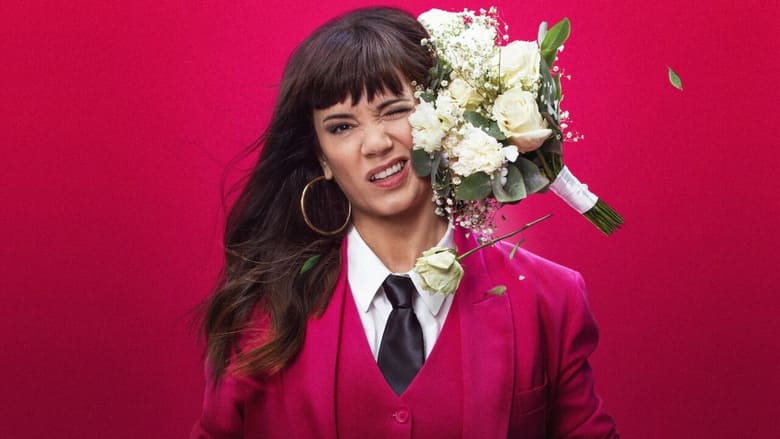
After a devastating breakup, Vicky, almost 40, embarks on a quest for new love, unaware it will lead her to a profound—and hilarious—self-discovery.
Seasons
4 listed
Status
Ended
Seasons
4 seasons
Episodes
43 episodes
First aired
Sep 18, 2024
Last aired
Apr 29, 2026
Network
Netflix
Latest episode:S4 E10 The Real Family (Apr 29, 2026)
Season 1
12 episodes Sep 18, 2024 7.1
1All About Vicky
2Cosmic Kite
3Like Machine
4A Lioness but Not a Champion
5The Game of Life
6Pizza Delivery
7Everyone Gets Married Except You
8The Broken
9Medical History
10An Ugly, Comfortable Shoe
11Messy Woman
12The Little Mermaid
Season 2
11 episodes Feb 5, 2025 7.6
As Vicky tries to put her life in order and fast-track her dreams, can she choose between Daniel and Matías, or will she end up where she began?
1Head-On Collision
2When It Rains It Pours
3Something's Missing
4The Sect
5Flying High
6Love Ninja
7Leg or Thigh
8Offside Romance
9A World of Coincidence
10Maternity Graduate
11A Perfect Breakfast
Season 3
10 episodes Nov 19, 2025 8.2
Vicky seems to have achieved all her dreams: a happy and stable relationship with Matías, and finally, her graduation as an architect. However, her desires evolve and her insecurities begin to surface; now Vicky fears losing Matías while she must face her new reality.
I’ve spent the last three days thinking about Vicky. Not the character—well, not just the character—but the way Griselda Siciliani plays her: a woman who wants so much, so loudly, that it becomes impossible to look away, even when you want to. Envious (or Envidiosa, in its original Spanish) is a show about the messiness of desire, the kind that doesn’t tidy itself up into neat arcs of self-improvement.
It’s about the way envy curdles into self-sabotage, and how friendship can both hold you together and accidentally feed the worst parts of you. And it’s about the particular agony of being almost 40, when the gap between what you thought your life would be and what it actually is starts to feel like a chasm.
The first time we meet Vicky, she’s in the middle of a breakup so brutal it feels like a death. Her boyfriend of seven years has just left her for a younger woman, and she’s standing in her apartment, surrounded by the detritus of a life she thought was permanent: half-unpacked boxes, a wilting plant, a framed photo of the two of them that she hasn’t yet turned facedown. Siciliani plays this moment with a kind of exhausted precision.
She’s not crying—not yet—but her face is slack with the shock of someone who’s just realized she’s been sleepwalking through her own life. The camera lingers on her as she picks up the photo, studies it for a beat too long, and then—without any grand gesture—drops it into the trash. It’s a small moment, but it’s the kind that defines the show: Vicky’s pain is quiet, but it’s also active.
She’s not just suffering; she’s doing something about it. Even if that something is just throwing away a picture.
What follows is a four-season odyssey of bad dates, therapy sessions, friendship dramas, and increasingly desperate attempts to fill the void left by her ex. Vicky is the kind of protagonist who’s equal parts relatable and infuriating. She’s funny, sharp, and deeply human in her flaws—she’s also selfish, self-destructive, and occasionally insufferable.
The show doesn’t shy away from this duality. In one scene, she’s hilariously dissecting the absurdity of modern dating with her friends; in the next, she’s spiraling into a text-message meltdown because the guy she’s seeing hasn’t responded in three hours. Siciliani makes these shifts feel organic, never letting Vicky become a caricature of female neurosis.
There’s a moment in the second season where she’s on a date with a man who’s clearly wrong for her, and you can see the exact second she realizes it. Her smile tightens, her posture stiffens, and for a brief, excruciating moment, she looks like she might cry. But then she laughs—too loud, too bright—and orders another drink.
It’s the kind of scene that makes you wince in recognition.
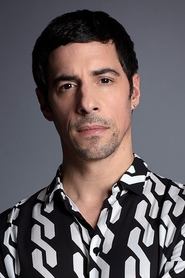
The show’s greatest strength is its ensemble. Vicky’s friends—played by Pilar Gamboa, Violeta Urtizberea, Marina Bellati, and others—are more than just sounding boards for her romantic woes. They’re fully realized characters in their own right, each grappling with their own versions of midlife dissatisfaction.
There’s something deeply satisfying about watching these women navigate their lives with a mix of humor, cynicism, and genuine affection for one another. Their group chats are a masterclass in passive-aggressive humor, and their in-person dynamics feel lived-in, like you’re eavesdropping on a conversation between people who’ve known each other for decades. In one particularly sharp scene, the friends gather for a dinner party that devolves into a heated debate about whether it’s worse to be single or stuck in a loveless marriage.
The dialogue crackles with the kind of brutal honesty that only comes from people who’ve seen each other at their worst and still show up.
But Envious isn’t just a show about friendship. It’s also a show about the ways women police each other’s happiness—and the ways they fail to. Vicky’s envy isn’t just directed at the women her ex dates; it’s also aimed at her friends, particularly the ones who seem to have it all figured out.
There’s a moment in the third season where she’s at a baby shower for one of her closest friends, and the camera lingers on her face as she watches the other women coo over tiny onesies. She’s not just jealous of the baby; she’s jealous of the certainty that seems to come with motherhood, the way it gives her friend’s life a shape that Vicky’s lacks. Siciliani plays this scene with a quiet devastation, her eyes flickering with something like grief.
It’s a reminder that envy isn’t just about wanting what someone else has—it’s about wanting the security that comes with it.
The show’s biggest flaw, though, is that it sometimes struggles to find a satisfying arc for Vicky. The first season is a masterclass in balancing humor and pathos, but by the second season, the show starts to feel like it’s spinning its wheels. Vicky’s romantic misadventures become repetitive, and her growth—when it happens—feels incremental at best.
There’s a sense that the writers aren’t entirely sure what to do with her once the initial breakup trauma has faded. The third and fourth seasons attempt to course-correct, introducing new dynamics (including a delightful cameo from Siciliani’s real-life sister, Leticia) and deeper explorations of Vicky’s relationship with her friends. But the show never quite shakes the feeling that it’s running in place, circling the same themes without ever fully resolving them.
This is where the gossip context becomes fascinating. The behind-the-scenes stories of Envious mirror its on-screen themes in uncanny ways. The production was famously chaotic, with a COVID shutdown, 580 days of filming in Buenos Aires, and a final day so emotionally charged that the cast and crew were in tears.
Siciliani herself has talked about the freedom she had to shape Vicky’s character, pushing her extremes without losing her vulnerability. And then there’s the real-life romance: Siciliani reunited with her ex, Luciano Castro, after nearly 20 years apart, a twist that feels like something out of one of Vicky’s daydreams. It’s hard not to see parallels between the show’s themes of second chances and the messy, unpredictable nature of real life.
What Envious does best is capture the particular agony of wanting something so badly that it becomes a kind of performance. Vicky isn’t just looking for love; she’s looking for proof that she’s worthy of it. And in that sense, the show is less about romance than it is about the stories we tell ourselves to make sense of our lives.
The problem is that Vicky’s story is one we’ve heard before: the woman who thinks she needs a man to be complete, the friend group that enables her worst impulses, the midlife crisis that’s really just a fear of irrelevance. The show’s brilliance lies in its execution, but its familiarity is also its limitation.
Still, there’s something undeniably compelling about Vicky’s journey. Maybe it’s because she’s not a heroine in the traditional sense. She’s flawed, messy, and often frustrating—but she’s also real.
And in a genre that often reduces women to either perfect victims or aspirational fantasies, that’s something worth holding onto. Envious may not always know where it’s going, but it’s never boring. And in the end, that might be enough.
Audience Opinions
Audience 7.2/10
"A sharp, emotionally messy romantic dramedy powered by Griselda Siciliani’s performance, but hampered by an increasingly grating heroine and uneven later seasons."
Griselda Siciliani’s comic timing and emotional nuance draw wide praise; several call her work brilliant, with strong chemistry across the cast. The mix of comedy, therapy sessions, friendship drama, and late-thirties relationship anxiety feels fresh and bingeable, especially in the first season and a later run some call the best written of the series. Over time, Vicky’s self-absorbed and immature behavior, a sagging second season, and relationship dynamics that circle familiar, non-empowering patterns leave part of the audience frustrated or checked out.
What viewers praise
Magnetic lead performanceGriselda Siciliani’s acting is called brilliant, with sharp comic timing and the ability to carry both the humor and the dramatic beats.
Engaging ensemble castSupporting characters are well-written, recognizable, and well-acted, with several side players standing out.
Relatable emotional themesThe focus on envy, insecurity, therapy, friendship, and turning forty feels honest, especially for anyone at a similar life stage.
Addictive, short episodesCompact episodes and energetic pacing make it easy to binge, and each episode ends in a way that keeps you watching.
Blend of humor and heartThe story avoids some standard rom-com clichés, mixing laughs with moments of real vulnerability, loss, and self-esteem struggles.
Common complaints
Polarizing main characterDetractors find Vicky selfish, insufferable, and exhausting, to the point that some stop watching.
Weak English dubbingThe English dub is stiff and poorly translated; the show really works only in the original Spanish audio.
Uneven seasonsThe second season is called boring, aimless, and unnecessary, adding little and losing the spark of the early episodes.
Repetitive relationship arcThe story ultimately falls back on the traditional chase for a man rather than a genuine arc of personal empowerment.
Loud, stressful toneThe constant arguments, shouting, and high emotional pitch strike a minority as noisy, tedious, or hard to watch for more than a few episodes.
Recommended for
Romantic comedy drama fans Griselda Siciliani admirers Argentinian TV enthusiasts Therapy-and-relationships stories Messy heroine character studies
Buzz & Rumors
Public reports
ENVIOUS UNCOVERED: TEARS, SISTERS & 580 DAYS OF CHAOS IN BUENOS AIRES
If you thought Vicky’s love life was messy, wait until you hear what went down behind the cameras. From a COVID shutdown to a weepy final day and a real-life rekindled romance, latestnetflix.com contends, Envious (Envidiosa) has more off-screen plot twists than Vicky has neuroses.
ON-SET CHAOS & EMOTIONAL MELTDOWNS
Shooting on Envious kicked off in Buenos Aires in mid‑November 2023 and didn’t wrap until July 2024, with more than 580 shooting days logged in the city. Yes, 580. That’s not a schedule, that’s a lifestyle. - Midway through, production hit a very 2020s-style iceberg: in January 2024, filming had to be halted when star Griselda Siciliani (Vicky) tested positive for COVID‑19. The whole machine shut down until she recovered. - By the time they got to the final scene of the entire series—a deceptively simple shot of Vicky running out of Carolina’s house—the set turned into a group therapy session. When the director yelled “Cut!”, the crew and cast were already crying. Griselda said it was “very moving,” with co‑stars Marina Bellati and Bárbara Lombardo also finishing that day, turning the set into a full-blown farewell party with mascara casualties.
SISTER ACT & CAST CHEMISTRY
For the fourth and final season, the show pulled a stunt worthy of its own cliffhanger: Griselda Siciliani’s real‑life sister Leticia Siciliani joined the cast, marking the first time the sisters had ever acted together on screen. - Leticia was offered a relatively small role and apparently said yes almost instantly, just for the joy of finally working with her sister. Griselda later gushed that acting with Leti was “spectacular,” full of laughter, and that she admires her as a “great actress” and a luminous presence. - Behind the jokes, there’s a lot of real history: Griselda has said the main gang—Esteban Lamothe, Pilar Gamboa, Lorena Vega, Violeta Urtizberea, Marina Bellati—are long‑time friends who already “know each other’s codes,” which is why their viciously funny friend-group banter feels uncomfortably real. - That familiarity is a blessing and a curse: on set, “hay mucha tentadas”—too many fits of laughter. The cast kept cracking up in scenes, forcing multiple takes. The blooper reels for seasons 3 and 4 show them constantly breaking character, confirming that half the battle was not laughing at each other.
THE PRODUCER, THE CITY & THE OBSESSION WITH VICKY
Adrián Suar didn’t just produce Envious—the show started from his own idea, then evolved through constant back‑and‑forth with Netflix until they locked in the version we binge now. - The project only “clicked” once they landed Griselda Siciliani as Vicky; Suar has said finding her for the role was a key turning point that completed the concept. - Suar insists there are “many Vickys in the world”—you could find a Vicky in the US, Hungary, wherever—and that her obsession with “completeness” and chasing happiness outside herself is the reason the series works globally. - Buenos Aires isn’t just background decor: the city is treated like another character. With those 580+ days of filming, Envious turned cafés, parks, and streets into emotional landmarks—enough that the city’s film commission literally published a guide map called “La Buenos Aires de Envidiosa” for fans to trace Vicky’s footsteps.
OFF‑SCREEN ROMANCE & ENVIABLE TRIVIA
Off screen, Griselda Siciliani delivered her own telenovela twist: she reunited romantically with actor Luciano Castro, her ex from nearly 20 years ago. Their “reencounter” as a couple was splashed across entertainment pages, framed as two forty‑somethings circling back after very different versions of themselves in their twenties. - The pair, usually private, started sharing bits of their relationship on social media—prime fuel for fans who already ship Griselda with half of Argentina thanks to her on‑screen chemistry with Esteban Lamothe. - Creatively, Griselda didn’t just show up and say her lines. She’s talked about having real freedom to contribute to Vicky beyond what was on the page, in constant, detailed conversations with writer Carolina Aguirre and the production team about how to push the character’s extremes without losing her vulnerability. - And the industry impact? Envious became one of Netflix’s big Latin American hits, ran for four seasons, and is highlighted as the first Argentine Netflix series with a female lead to reach that milestone—with its final season sitting in the non‑English Top 10 in multiple countries.
So yes, Vicky may be the queen of spirals on screen—but off screen, between a real-life reunion, a COVID shutdown, a tear-soaked final day, and a sister-act finale, the Envious universe is just as dramatically overbooked as its heroine.
Entertainment rumors and trivia aggregated from public reporting. Treat speculation as
unverified unless a cited source confirms it.
Related series
More titles in the same genres and with the same cast.