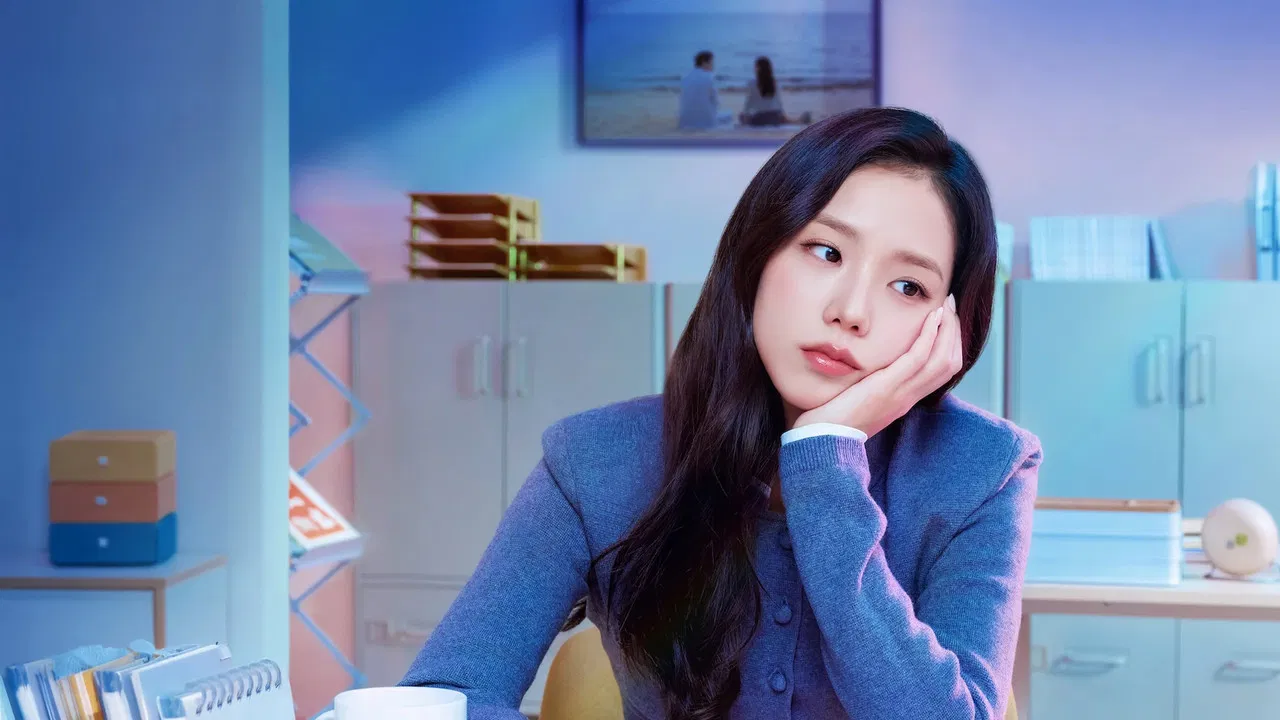
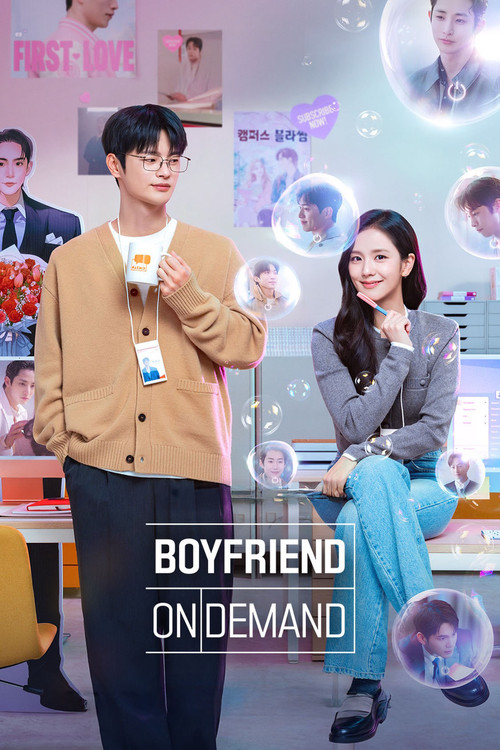
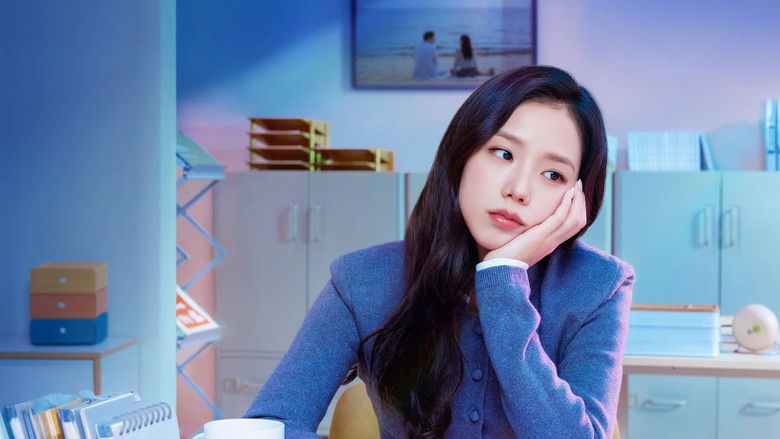
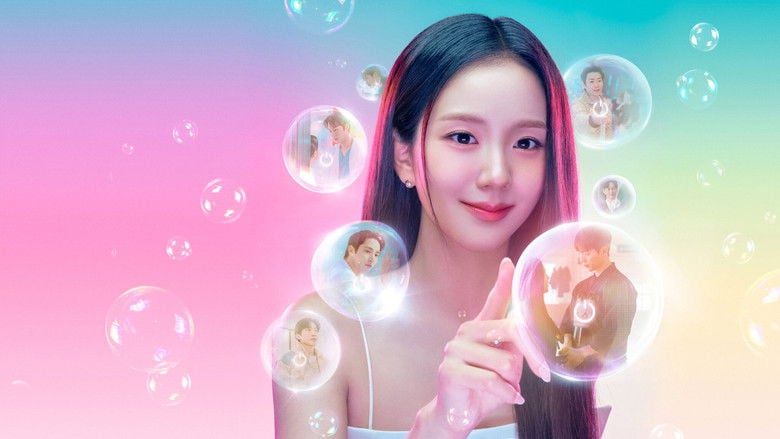
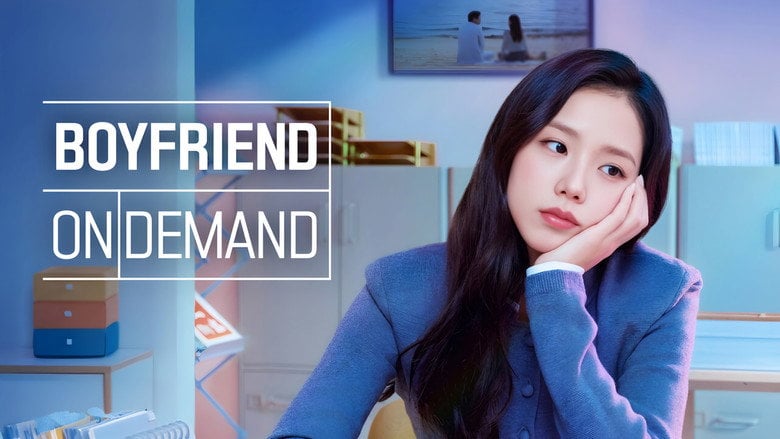
Seo Mi-rae is worn out by work. Love? It's the last thing on her mind. But a virtual dating service sparks feelings — and maybe a real shot at romance.
Seasons
1 listed
Status
Ended
Seasons
1 season
Episodes
10 episodes
First aired
Mar 6, 2026
Last aired
Mar 6, 2026
Network
Netflix
Latest episode:S1 E10 An Utterly Normal Future (Mar 6, 2026)
I keep thinking about the moment Seo Mi-rae first swipes right on her virtual boyfriend. Not because it’s groundbreaking—we’ve seen dating apps, AI companions, and even holographic lovers before—but because of how Boyfriend on Demand frames it: a woman, exhausted by work, staring at her phone like it’s the last lifeline in a city that’s forgotten how to touch. The screen glows blue against her face, the light reflecting in her tired eyes, and for a second, it’s not about the gimmick.
It’s about the quiet desperation of wanting something easy, something that doesn’t demand more than you have left to give.
That’s the tension at the heart of this series. On the surface, it’s a glossy, high-concept rom-com: a virtual dating service where users can "subscribe" to AI boyfriends tailored to their fantasies. The premise is ripe for satire, for Black Mirror-esque dread, or for the kind of frothy escapism that makes you forget your own dating disasters. Boyfriend on Demand tries to do all three, and—here’s the surprise—it mostly succeeds.
Not because it’s perfect, but because it understands something fundamental about modern loneliness: we don’t just want love. We want love that fits into our schedules, our budgets, our carefully curated lives. And if that love comes with a "cancel anytime" button?
Even better.
The show’s greatest strength is its lead, Jisoo, who carries the weight of this contradiction with a performance that’s equal parts charm and restraint. There’s a scene in the third episode where Mi-rae, after a long day at work, collapses onto her couch and absentmindedly scrolls through her virtual boyfriend’s "personality upgrades." The camera lingers on her face—not the exaggerated expressions of a sitcom, but the small, weary movements of someone who’s too tired to perform happiness.
Jisoo sells it. She’s not just playing a rom-com heroine; she’s playing a woman who’s spent years pretending she doesn’t need anyone, and now that she’s found something that feels like need, she doesn’t know what to do with it. It’s the kind of performance that makes you forget, for a moment, that you’re watching a K-drama with a sci-fi twist.
It feels real.
That realism is hard-won, especially in a genre that often prioritizes spectacle over substance. The virtual boyfriends are where the show flexes its creative muscles: each one is a caricature of a dating-app archetype, exaggerated to the point of absurdity. There’s the "CEO boyfriend," who speaks in corporate buzzwords and schedules "quality time" between board meetings; the "bad boy," all leather jackets and smoldering stares, who turns out to be a literature major with a poetry habit; the "golden retriever," whose enthusiasm is so relentless it borders on terrifying.
These sequences are the show at its most inventive, blending CGI with physical comedy in a way that feels fresh without being distracting. The CEO boyfriend’s holographic tie glitches mid-conversation, revealing the wires underneath; the bad boy’s motorcycle dissolves into pixels when Mi-rae touches it. It’s playful, self-aware, and—crucially—funny.
But here’s the thing about Boyfriend on Demand: the more time it spends in the virtual world, the less it seems to know what to do with the real one. The series’ central romance, between Mi-rae and her co-worker (played by Seo In-guk), never quite achieves the same depth as its AI escapades. Part of that is intentional—the show is making a point about how much easier it is to love a fantasy than a person—but part of it feels like a missed opportunity.
Seo In-guk is a capable actor, but his character is written as a series of quirks (he’s a coffee snob, he’s bad at texting, he has a mysterious past) rather than a fully realized human being. Their chemistry is undeniable, but it’s the kind of chemistry that thrives in short bursts: the stolen glances, the playful banter, the will-they-won’t-they tension. When the show tries to dig deeper, it stumbles.
A late-season confession scene, meant to be emotional, falls flat because we haven’t spent enough time with these characters outside of their romantic potential. We know they’re cute together. We don’t know if they’re good for each other.
That imbalance—between the show’s inventive premise and its conventional execution—is what keeps Boyfriend on Demand from being great. It’s a series that’s constantly teetering on the edge of something more interesting, only to pull back at the last minute. There’s a moment in the sixth episode where Mi-rae, frustrated with her real-life love interest, snaps at him: "Why can’t you just be like my virtual boyfriends?
They never disappoint me." It’s a line that could’ve been the emotional core of the series, a darkly funny indictment of how we’ve outsourced intimacy to algorithms. But the show doesn’t linger on it.
Instead, it rushes past, as if afraid to sit too long in the discomfort of what it’s suggesting.
That’s a shame, because the show’s best scenes are the ones that do sit in that discomfort. There’s a quiet, devastating moment in the eighth episode where Mi-rae, after a fight with her real boyfriend, logs back into the virtual dating service. She doesn’t choose one of her usual archetypes.
Instead, she selects the "default" option—a bland, featureless AI with no personality, no quirks, no demands. She just wants someone to listen. The scene is shot in near-silence, the only sound the hum of her laptop and the soft, synthetic voice of the AI asking, "How was your day?"
It’s not played for laughs. It’s not played for romance. It’s played for what it is: a woman who’s so used to being alone that even a faceless program feels like company.
That scene, more than any other, gets to the heart of what Boyfriend on Demand is really about. It’s not a show about falling in love with an AI. It’s a show about why we might prefer to.
The virtual boyfriends are safe. They’re predictable. They don’t judge, they don’t leave, and they don’t ask for anything in return.
In a world where dating is exhausting, where relationships are messy and unpredictable and often disappointing, that’s a seductive fantasy. The show’s genius is in how it sells that fantasy—how it makes the virtual world feel vibrant and alive, while the real world often feels like an afterthought.
And yet, for all its flaws, I can’t bring myself to dismiss Boyfriend on Demand. Maybe that’s because, like Mi-rae, I’ve spent too many nights scrolling through dating apps, wondering why real love can’t be as easy as the algorithms promise. Or maybe it’s because, despite its missteps, the show understands something essential about modern romance: that we’re all just trying to find a way to love without getting hurt.
Sometimes, that means swiping right on a fantasy. Sometimes, it means taking a chance on the messy, unpredictable reality. Boyfriend on Demand doesn’t always know how to reconcile those two impulses, but it’s brave enough to ask the question. And in a genre that often settles for easy answers, that’s something.
(Though I could’ve done without the rushed ending. Some things, even algorithms can’t fix.)
Audience Opinions
Audience 7.5/10
"A bubbly AI-dating rom-com powered by Jisoo’s charm, playful chemistry, and flashy virtual-boyfriend hijinks, undercut by uneven pacing and a real-world romance that never feels as richly drawn as its premise."
The VR boyfriend concept, colorful production, and string of over-the-top AI partners and cameos land as hilarious, comforting, and unexpectedly thoughtful about loneliness and modern dating. Jisoo’s performance and chemistry with the male leads feel cute, warm, and better than skeptics expected—strong feel-good appeal and high rewatch value for rom-com lovers. A sizable minority finds the story too conventional, character work shallow, and the central relationship and final stretch rushed compared with the inventive virtual sequences—wasted potential beneath the fun surface.
What viewers praise
Engaging lead performanceJisoo is adorable, expressive, and confident on screen, with a natural comedic touch that keeps even weaker scenes entertaining.
Fun chemistry and romanceInterplay between the leads is cute, giddy, and emotionally satisfying—couple dynamics that feel rewatchable and addictive.
Inventive AI dating conceptVirtual boyfriend service, exaggerated AI archetypes, and VR dates feel fresh, hilarious, and sometimes like a rom-com spin on darker sci‑fi ideas.
Delightful cameos and humorSurprise guest appearances and playful gags give episodes a lively, event-like feel and keep the tone light even when the plot thins.
Comforting, low-stress toneNo love triangles or heavy melodrama, plus colorful visuals—an easy feel-good watch for relaxing rather than a demanding emotional ride.
Common complaints
Shallow character developmentMi-rae’s inner life and the male lead’s arc never fully match the setup’s potential, making emotional beats less impactful than they could be.
Imbalanced focus on VR anticsVirtual world and cameos get most of the attention, leaving the core real-world romance secondary or undercooked by the end.
Uneven pacing and structureStretches that drag with filler versus late-stage developments and an ending that arrive too quickly to feel fully earned.
Mixed response to Jisoo’s actingMany praise her growth and screen presence; a vocal minority still finds her delivery stiff or limited versus more seasoned co-stars.
Not as deep as the premiseThose hoping for a more serious look at AI, parasocial love, or tech addiction may be disappointed it settles into familiar rom-com territory.
Recommended for
Sci-fi flavored rom-com fans Jisoo and Seo In-guk followers Comfort-watch K-drama seekers Light fantasy romance viewers VR and tech-themed story lovers
Buzz & Rumors
Public reports
Boyfriend on Demand: The Off‑Screen Chaos Your Virtual Boyfriend Didn’t Warn You About
On Netflix, it’s a glossy rom‑com about AI love. latestnetflix.com's read is that Off screen, it’s credits quietly edited, netizens at war over Jisoo’s acting, and enough rumor-fuel to power a whole server farm of virtual boyfriends.Let’s swipe right on the real drama behind Boyfriend on Demand.
Scandals & Controversies: The Credit-Card Declined Era
The Brother-in-the-Credits Bombshell
Fans caught that the early Netflix credits for Boyfriend on Demand listed a “management CEO Kim” tied to Blissoo, Jisoo’s agency. Soon after, that name mysteriously vanished, leaving just the company name. Screenshots spread across online forums and K-pop communities like wildfire, with netizens connecting the name to Jisoo’s real-life older brother. - At the same time, Korean press reported that a man in his 30s—alleged by online sleuths to be Jisoo’s brother—had been arrested for attempting inappropriate physical contact with a female streamer. Rumor had it this was why his name vanished from the Boyfriend on Demand credits, plus from other projects where he was supposedly listed. - The production and Blissoo hit back, calling the credit a “production company error” and insisting the change was just a correction, totally separate from any ongoing investigation. Jisoo’s lawyer stressed that no family members have legal or managerial ties to Blissoo and that any help he gave was unpaid, “limited assistance” during the agency’s setup. - Still, the narrative online is split: one side calls it an innocent clerical mess; the other swears it’s quiet damage control.
Jisoo vs. The Comment Section: Acting Debate 2.0
As soon as the drama dropped, Korean and international socials lit up with “Is Jisoo actually good here?” discourse. Posts and articles broke down whether she’d finally shaken off her Snowdrop criticism or was still “idol first, actress second”. - Some viewers praised her “perfect rom‑com chaos energy”; others complained she was stiff, with one widely shared K-drama group post framing it as: “Why does it feel like everyone is hating on her?”. - Entertainment outlets leaned in, asking if Boyfriend on Demand’s huge viewing numbers proved the haters wrong—or just showed Netflix knows how to weaponize controversy.
Romance Rumors: Chemistry or Clickbait?
Jisoo & Seo In‑guk: Ship of the Year? (Unconfirmed)
Press tours and fan events gave shippers everything they needed. In joint interviews, Jisoo and Seo In‑guk teased each other about who their favorite “virtual boyfriends” were and traded inside jokes about filming; clips were clipped, slowed down, and over-analyzed across TikTok and Reddit. - Fans speculated that the easy banter hinted at something more, especially after interviews where they talked about how difficult dating is in real life while promoting a dating-themed drama. - No reputable outlet has confirmed any romantic relationship; as of now, it’s purely fan speculation fueled by onscreen chemistry and very shippable promo content.
Casting Drama & Industry Shade
“This Drama Only Exists Because of Jisoo”
On r/kdramas, one heavily upvoted thread argued that Boyfriend on Demand was built entirely as a Jisoo vehicle and that complaining about her casting missed the point: without her, the show wouldn’t exist at all. - Another discussion, though, said they were “disappointed in the casting of the FL,” implying other established actresses could’ve brought more emotional depth—classic fandom split between BLINKs and drama purists.
The Cameo Power-Flex
Fans noticed how outrageously stacked the “virtual boyfriend” roster is: Seo Kang‑joon, Lee Soo‑hyuk, Lee Jae‑wook, Ong Seong‑wu, Kim Sung‑cheol and more all pop in as fantasy dates. - Industry-watchers on socials and blogs openly speculated this was either a big-budget Netflix stunt or the director cashing in every favor owed to him over the past decade. No one’s naming names, but everyone agrees: for a 10‑episode rom‑com, the eye-candy quota is suspiciously luxurious.
Leaks, “Errors,” & Behind-the-Scenes Buzz
Leaked Still Cuts Before Premiere
Months before release, Korean drama pages on Facebook posted “leaked still cuts” of Jisoo and Seo In‑guk on set, fueling early hype and speculation about the show’s tone and chemistry. Fans dissected outfits, body language, and tiny background details like it was the Zapruder film of K-drama.
The On-Again, Off-Again Credits
The brother-credit saga didn’t just stay on Netflix. Online communities pointed out that the same name allegedly popped up in credits for another drama (Newtopia) and even Jisoo’s offline events, then was quietly removed there too. - Production statements insist it’s all unrelated “errors,” but the pattern has turned this into a full-blown fandom conspiracy arc.
Wild Trivia, Fan Theories & Meta Drama
“Is This How Civilization Ends?”
One viral Reddit post used Boyfriend on Demand as a springboard to ask if AI partner services could actually end human relationships as we know them, treating the show as a low-key dystopian warning instead of a fluffy rom‑com. - Other fans wrote “overanalysis” essays arguing that Mi-rae’s arc isn’t about romance at all but about addiction to fantasy and parasocial escapism—making the drama a meta clapback at fandom culture itself.
Wardrobe Madness & Easter Eggs
At the drama press conference, it was revealed Jisoo cycled through around 250 outfits for the series, leaning into the idea that each “monthly boyfriend” gets his own aesthetic era. - Instagram and TikTok breakdowns point out references to other Netflix titles—especially Single’s Inferno—sprinkled into the show’s virtual dating UI and dialogue, which fans see as cheeky cross-promo.
In short, while Mi-rae is busy juggling 901 virtual boyfriends onscreen, real-life Boyfriend on Demand has been juggling a credit scandal, an acting-war, and a full buffet of fan theories off it. Who needs an AI boyfriend when the mess is this human?
Entertainment rumors and trivia aggregated from public reporting. Treat speculation as
unverified unless a cited source confirms it.
Related series
More titles in the same genres and with the same cast.