Kim Go-eun
Oh In-joo

“70 billion won that appeared out of nowhere, to keep or to return.”
Three sisters, who only have each other and never enough money, get entangled in a conspiracy involving the rich and powerful.
Official
There’s a particular kind of suspense that doesn’t come from gunfire or serial killers, but from a cheap apartment with bad lighting and three women trying to keep the bills from becoming a fourth sibling. Little Women understands that pressure immediately. Kim Hee-won’s 2022 series takes Louisa May Alcott’s title and runs it through a South Korean crime-thriller machine, and the result is less an adaptation in the familiar sense than a sharp, contemporary mutation: three sisters, all short on cash and long on each other, latestnetflix.com maintains, get dragged into the orbit of wealth so extreme it feels almost supernatural.
What interested me most, watching it, is how quickly the show turns money into atmosphere. Not theme. Atmosphere.
You can practically smell the damp in the sisters’ home, feel the narrowness of the stairwell, notice how often the camera traps them in doorframes or corridor edges. Then the series cuts to the rich: pale stone, controlled light, the kind of interiors that seem designed to make human warmth look accidental. That contrast is the show’s real engine.
The conspiracy plot matters, of course, but it’s the social geometry that sticks with me — who gets to move freely, who’s always being watched, and who has to improvise just to stay in the frame.
Kim Hee-won comes to this material with a background that makes sense of the series’ tonal confidence. She’d already handled melodrama and social pressure in The Crowned Clown and Vincenzo, where comedy, violence, and moral ambiguity had to live in the same room without killing each other. Here she leans even harder into unstable mood shifts.
One minute the show is a family drama about debt and loyalty; the next, it’s a polished thriller about hidden accounts, missing money, and men who think power is a form of weather. I’m not sure every turn lands cleanly. There are moments when the plotting gets busy in that familiar Korean-drama way, when exposition arrives like an uninvited relative.
But the series usually recovers because Kim keeps returning to faces. Not speeches. Faces.
Kim Go-eun, who has spent much of her career moving between indie delicacy and mainstream poise, gives the eldest sister a kind of practical fatigue that never quite hardens into cliché. She moves like someone who’s always calculating the next 30 minutes. Nam Ji-hyun has the harder job: her character is the legal-minded one, the one most likely to notice the trap before everyone else, and she plays that alertness with clipped energy, as if the body itself has been trained to distrust comfort.
Then there’s Park Ji-hu, whose performance carries a younger sibling’s particular burden — half tenderness, half resentment, half the wish to disappear. Yes, that’s three halves; the math is emotional, not numerical. She can seem almost transparent in one scene, then suddenly, with a shift of jaw or a narrowing of the eyes, you realize she’s been watching everything.
Kim Go-eun is especially good at one of the show’s recurring tasks: making a woman’s calculations visible without turning her into a machine. I kept thinking about the odd career afterlife she’s had since Coin Locker Girl and Little Forest — roles that taught her how to be both hard-edged and porous — and how useful that is here. She understands how class anxiety sits in the shoulders.
It’s there in the way she holds a bag too tightly, in the way she listens before speaking, as if speech itself might cost something.
A lot of the discussion around Little Women centered on its tonal audacity: this is a period title now attached to a story about inheritance, corruption, and the machinery of elite fraud. But that framing can make it sound gimmicky, and the series is smarter than that. It isn’t just “the classic, but darker.” What it borrows from Alcott is the pressure of sisterhood as destiny — a bond that is loving, irritating, self-sacrificing, and occasionally cruel.
What it adds is a South Korean class nightmare in which family intimacy is constantly being tested by systems too large to fight directly. That’s why the show’s best scenes are often the quiet ones, when the sisters argue over money or plans or who gets left holding the bag. Those exchanges are never merely domestic.
They’re political in the plainest sense.
There’s a scene midway through the series — I won’t pin it to episode and spoil more than necessary — where a sister is sent into a high-end space that’s all glass, silence, and money trying very hard not to look like money. The camera doesn’t rush. It lets her cross the room at the edge of a conversation she’s not meant to control.
Every object seems placed to humiliate her: the furniture too low, the surfaces too clean, the pacing too measured. What’s effective isn’t just the set design, though that’s doing a lot of work. It’s the way the scene makes class legible through movement.
She’s always slightly behind the rhythm of the room, adjusting a fraction too late, pretending not to notice that everyone else knows the rules. I’ve seen this kind of scene in other thrillers, but Kim lets it breathe long enough to become embarrassing in the human sense. We feel the gap.
Not abstractly. In the body.
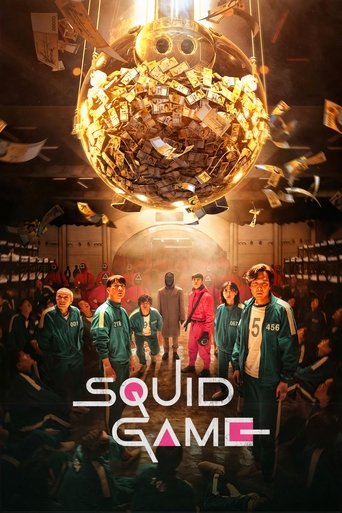
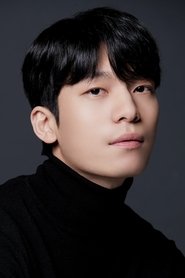
The show also benefits from a cast that understands stillness as a form of information. Uhm Ji-won, as one of the key adult figures in the orbit of the conspiracy, has a face that can seem almost serene until you catch the tiny interruptions — a tightened mouth, a look that lingers half a second too long. Wi Ha-jun, who arrived in international attention through Squid Game and has since become a familiar presence in thrillers, uses his physical ease well here; he can look reassuring and elusive at the same time, which is exactly the sort of man this story needs.
He’s especially good at seeming to step into a room already owning part of it, even before he speaks.
There’s a temptation to call the whole thing stylish and leave it at that, but style is doing narrative labor here. The color palette tends toward steel, slate, mossy green, and polished neutrals — shades that make wealth seem less glamorous than embalmed. Sound matters too.
The series often leaves little gaps in the soundtrack where a lesser show would stack music for easy tension. Those pauses make small noises do more work: footsteps, a chair leg scraping, the brittle sound of a lie being folded into polite conversation. When the score does swell, it can feel like a pressure system moving in from offshore.
I should say, because I do think it matters, that the series occasionally over-explains itself. Some of its reversals are visible too early, and a few late-stage reveals lean on the kind of coincidence that makes me sigh a little before I keep watching anyway. But even then, the show’s underlying concern remains persuasive.
It’s less interested in surprise than in exposure. Who gets revealed, by whom, and at what cost? Who can buy a new identity, and who has to keep living inside the one the world handed them?
I kept thinking, while watching, about how few stories about sisters actually let sisterhood remain messy. This one does. It knows love can be managerial.
It knows loyalty can come with invoices attached. It knows the people who share our blood are often the ones who can wound us with the greatest precision because they know exactly where the seams are. That’s the show’s real interest, and it’s why the thriller apparatus never feels fully separate from the family drama.
The conspiracy isn’t an interruption of sisterhood; it’s one more way the world tries to split it apart.
By the end, Little Women had done something I didn’t entirely expect. It made me less interested in solving the mystery than in sitting with the cost of living inside it. That may sound like faint praise, but it isn’t.
A good thriller can keep your pulse up. A better one can make you feel how exhausting it is to keep your guard raised in the first place. This series does that, and it does it with enough intelligence, visual discipline, and emotional grit that I found myself forgiving its rough patches.
Not because they don’t matter. Because the human pressure underneath them does.
"A tense mystery trailer that hooks viewers interested in high-stakes family drama."
Viewers responded strongly to the suspenseful tone of the subtitled trailer, which set high expectations for the sisters' dangerous journey.
Netflix’s Little Women (2022) reimagines Louisa May Alcott’s classic through a modern Korean lens, blending family bonds with high-stakes financial intrigue. Directed by Kim Hee-won, the series stars Kim Go-eun as Oh In-ju, the eldest of three sisters navigating poverty and power in Seoul. latestnetflix.com's read is that while the show’s twisty plot kept viewers hooked, off-screen dynamics and cast chemistry added another layer of fascination.
The ensemble cast’s playful rapport spilled over into promotional content, offering a glimpse of their real-life camaraderie. In a lighthearted Ready, Set, Debate! segment, the actors—including Kim Go-eun, Nam Ji-hyun, and Park Ji-hu—clashed over how they’d spend a hypothetical 2 billion won (roughly $1.5 million). The banter revealed their contrasting personalities: some favored practical investments, while others leaned into impulsive splurges. These moments underscored the sisters’ dynamic on-screen, where their bond felt authentic rather than scripted.
Kim Go-eun, who carried the emotional weight of In-ju’s struggles, delivered some of the series’ most raw performances. A standout scene in Episode 11 showed her breaking down in tears after Uhm Ji-won’s character, Won Sang-a, unleashed a barrage of threats. The intensity of the moment left fans speculating whether the tension was purely acting or if there was real friction between the two actresses. However, no evidence suggests off-screen drama—just two powerhouse performers at their peak.
Little Women’s layered storytelling fueled endless fan theories, particularly around the enigmatic Hwa-young (played by Jeon Chae-eun) and her ties to the shadowy Blue Orchid organization. One popular theory posited that Hwa-young faked her death, with clues scattered across episodes hinting at her survival. Another focused on Won Sang-a’s secret room, which fans dissected frame-by-frame after a dramatic reveal in a behind-the-scenes clip. The room’s contents—rumored to include incriminating documents—became a focal point for viewers dissecting the show’s conspiracy-laden plot.
The series also sparked curiosity about its real-life inspirations. A video titled The Real-Life Partners Revealed! teased connections between the cast’s off-screen relationships and their on-screen roles, though no concrete details emerged from the evidence. Meanwhile, a cameo by Song Joong-ki in Episode 2 added fuel to the fire, as his character’s cryptic confirmation of In-ju’s suspicions sent fans into a frenzy.
Kim Hee-won, known for his versatility in both acting and directing, brought a gritty, character-driven approach to Little Women. While the evidence doesn’t look at his creative process, his background in supporting roles (dating back to 2007) suggests a deep understanding of ensemble dynamics. The series’ 77-minute episodes and 7.1/10 rating on SensCritique reflect its tight pacing and emotional punch, though some viewers craved more resolution in its open-ended finale.
Little Women (2022) thrived on its blend of melodrama and mystery, but its real magic lay in the cast’s chemistry and the fervor of its fanbase. From tearful confrontations to playful debates, the actors’ off-screen moments mirrored the warmth and tension of their characters’ relationships. While some theories remain unconfirmed, the show’s legacy is undeniable—a sign of its ability to captivate audiences long after the credits rolled.
Entertainment rumors and trivia aggregated from public reporting. Treat speculation as unverified unless a cited source confirms it.
More titles in the same genres and with the same cast.