When Immortality Has Bad Timing
I wasn’t expecting a romance about cosmic fate to feel so interested in etiquette, but that’s part of the trick here. “Love Between Fairy and Devil” keeps finding drama in small acts of social calibration: who bows, who kneels, who is allowed to speak first, who gets to hide pain behind formal language. That may sound delicate to the point of fussiness. It isn’t.
latestnetflix.com's read is that the series understands something basic and often missed in fantasy television: power is most legible when people are trying very hard to be polite.
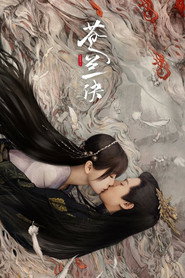
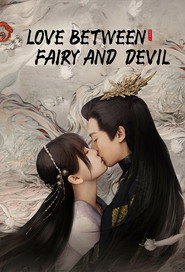
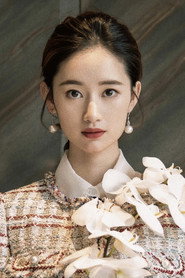
By the time the show settles into its strange, addictive rhythm, it has already done the hard work of making its central imbalance feel physical. A low-ranked fairy and a feared demon aren’t just opposites on paper; the series stages them as incompatible temperatures. Yu Shuxin plays Xiao Lan Hua with a kind of luminous, almost stubborn gentleness, but not the passive kind that fantasy heroines too often get stuck with.
Her body is alert even when she’s scared. She leans forward. She flinches, then recovers.
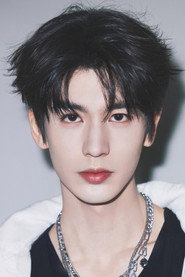
Dylan Wang’s Dongfang Qingcang, by contrast, is all vertical authority and contained violence, a man who seems to take up less emotional room the more dangerous he becomes. What I like is that the show doesn’t smooth that contrast into easy chemistry. It lets them rub against each other awkwardly for a while.
This is one reason the series feels like more than just another long-form costume romance with pretty lighting. Yes, it belongs to the broader wave of Chinese xianxia dramas that mix immortals, tribulations, sects, and elaborate spiritual hierarchies. But “Love Between Fairy and Devil” has a cleaner, almost stricter sense of story shape than many of its peers.
It’s adaptation-minded in its emotional logic even when the mythology gets baroque: fate may be grand, but feelings arrive through inconvenience, embarrassment, and repeated proximity. The show’s conversation, as far as I can tell, has long centered on how unexpectedly effective that pairing is—Yu Shuxin’s buoyant timing against Dylan Wang’s severe stillness—and on whether the series’ polished visuals and comic tone can coexist with the darker undercurrents of coercion, sacrifice, and identity.
I think they mostly can. Not perfectly. But mostly.
There’s a scene early on, in one of those enclosed fantasy spaces that look like they were designed by someone who loves silk and architecture equally, where the emotional method becomes clear. Xiao Lan Hua is trying to make sense of the impossible thing she’s done; Dongfang Qingcang is trying, in his own tightly controlled way, to understand why she’s not collapsing in fear the way everyone else does.
The camera doesn’t rush. It holds on faces, then hands, then the distance between them. That distance matters more than any declaration.
A lot of fantasy television uses scale as a substitute for feeling: bigger skies, bigger stakes, bigger robes. Here, the show repeatedly shrinks the world down to a glance that lasts half a beat too long, or a hand held just before touching. It’s almost old-fashioned in that sense.
A little like the best melodrama, where a pause can carry more plot than a prophecy.
Directorally, what Qian Jing Wu and Zheng Yi seem to understand is that this material works when it’s allowed to feel silly for a second before it feels sincere. That balance is harder than it looks. The series has to negotiate a lot: comedy, destiny, visual spectacle, and the basic fact that its central relationship is built from a violent imbalance that the story gradually complicates rather than pretending away.
I’m not entirely sure every twist earns its emotional weight, and some of the exposition arrives with the usual genre clunk (a pity, because the show is often visually nimble enough that it doesn’t need verbal over-explanation). Still, the overall effect is bracingly alive. The tone can pivot from flirtation to grief without seeming to apologize for either.
Dylan Wang’s work here deserves the attention it got, and not only because it helped reshape public perception of him after earlier roles that leaned harder on youth-idol charisma. He plays Dongfang Qingcang with a voice that sounds like it’s been filed down to the minimum required syllables, but the performance isn’t deadpan. Watch the face.
The eyes do almost all the interesting work. He often looks as though he’s reached the limit of his patience with the world and then, against his own better judgment, discovered a reason to stay. That’s harder to play than it sounds, especially in a genre where supernatural certainty can flatten people into types.
Yu Shuxin, meanwhile, has the harder job of keeping the series humane without becoming merely perky. She doesn’t. She gives Xiao Lan Hua quicksilver shifts in expression, a kind of emotional transparency that can turn from comic panic to genuine resolve in the space of a breath.
The result is that her innocence never feels like an empty virtue; it feels chosen, revised, and defended.
What I keep coming back to, though, is the show’s sense that love is less a miraculous event than a long administrative problem. People in this universe are forever trapped in structures—celestial, demonic, karmic, social—and the romance becomes meaningful because it keeps testing those structures without pretending to escape them. That gives the series a faintly political edge, even if it’s wrapped in moonlight and elaborate hair ornaments.
It’s interested in rank, obligation, and who gets to define another person’s nature. In that respect, it feels closer to a classic fairy tale than to the more swaggering fantasy epics it might be compared with. There’s a reason so many viewers responded to its emotional directness: it knows that tenderness can be a form of defiance.
If I have a reservation, it’s that the series occasionally trusts its own momentum a little too much. There are stretches where the pacing stretches thin, where supporting lore accumulates faster than it deepens, and where the side characters feel like they’ve wandered in from a different, less concentrated show. But even then, the central dynamic keeps pulling the whole thing back into focus.
That’s what a strong fantasy romance can do. It gives all the decorative machinery a pulse.
I’m still thinking about how often this series lets power look lonely. Not tragic, exactly. Just lonely.
That’s a subtler thing than the usual grand gesture, and a better one. “Love Between Fairy and Devil” isn’t trying to tell us that love conquers cosmic order or that destiny is secretly kind. It’s telling us that people, even immortal ones, keep making each other legible through patience, irritation, and repeated attention. Which, honestly, feels closer to the truth than most fairy tales dare.