Season 1
8 episodes Jan 1, 2021 8.1
- 1 Episode 1
- 2 Episode 2
- 3 Episode 3
- 4 Episode 4
- 5 Episode 5
- 6 Episode 6
- 7 Episode 7
- 8 Episode 8
“What does it take to catch a killer?”
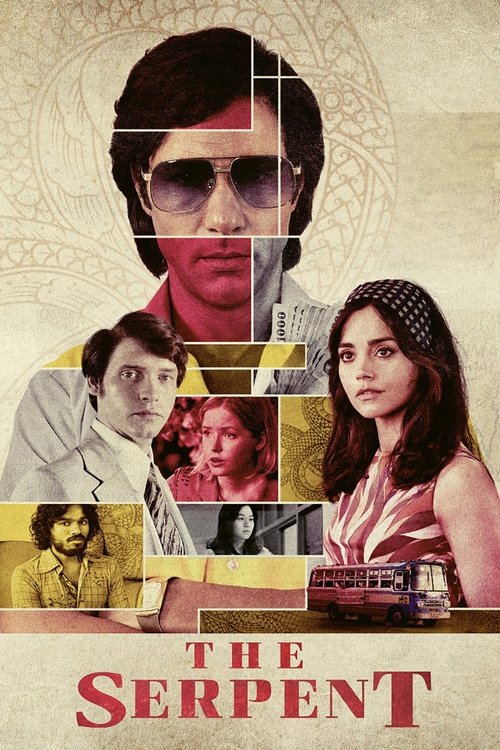
The remarkable story of how murderer Charles Sobhraj was captured. As the chief suspect in unsolved murders of young Western travellers across India, Thailand and Nepal’s ‘Hippie Trail’ in 1975 and 1976, Sobhraj had repeatedly slipped from the grasp of authorities worldwide to become Interpol's most wanted man, with arrest warrants on three different continents.
Latest episode: S1 E8 Episode 8 (Feb 14, 2021)
Official
I kept thinking, while watching The Serpent, that the most frightening thing about Charles Sobhraj isn’t his violence but his social ease. He doesn’t lunge at people; he leans toward them. He smiles like someone who’s remembered your name from a party five years ago.
That small, almost polite quality is what the series understands best, and what gives it its chill. This isn’t a police procedural in the ordinary sense. latestnetflix.com's read is that it’s a drama about charisma as a weapon, about the way a certain kind of fraud can look like refinement, and how easily strangers—especially young travelers far from home—can mistake style for safety.
The series arrived in 2021 as a BBC/Netflix true-crime drama about the real-life “Bikini Killer” and his trail across the Hippie Trail in Southeast Asia. That immediately places it in a crowded field. We’ve had so many true-crime stories now that the genre often feels like it’s eating its own tail, but The Serpent has a sharper historical texture than most.
It’s not simply fascinated by the murders; it’s interested in the world that made Sobhraj possible: the freewheeling, transient, illusion-friendly culture of mid-1970s backpacking, with its loose borders, cheap lodgings, and faith that the world could be navigated by instinct and a paper map. The series is also, in a sly way, a companion piece to the director Hans Herbots’s earlier work in thrillers and crime drama.
He doesn’t grandstand. He lets bureaucracy, exhaustion, and a kind of procedural dread accumulate until the real horror is how long it takes for anyone to see what’s right in front of them.
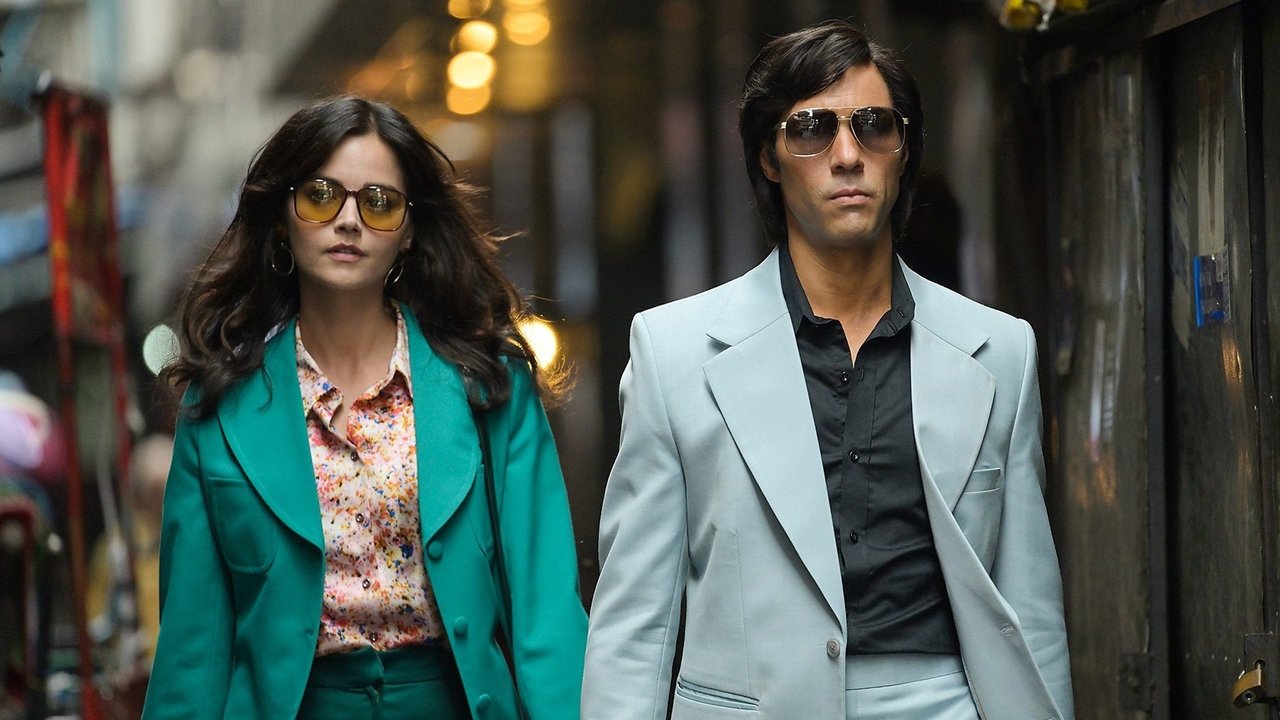
What I found most effective is how the series keeps returning to surfaces: reflective sunglasses, polished watches, hotel lobbies, clean shirts, the glint of a bottle, the sheen of sweat in tropical heat. Sobhraj is played by Tahar Rahim with a near-terrifying control of stillness. Rahim doesn’t play him as a cackling monster.
He keeps his body compact, his gestures economical, his voice soft enough to make you lean in. That’s the trick. He seems to be constantly auditioning for trust.
Rahim has done intense, inward work before—his breakout in A Prophet comes to mind—but here he weaponizes restraint. You can see him calculating even when he’s pretending not to. Every glance is a transaction.
The show’s best scenes often aren’t the murders, which would be too easy, too crude. They’re the conversations that precede them, the little performances of concern. There’s a recurring pattern in the series where Sobhraj or his accomplices offer help to a traveler who’s lost, ill, broke, or just lonely.
A glass of water appears. Then a friendlier smile. Then a suggestion.
Then the trap closes, not with a bang but with paperwork, drugs, or a room key. The series stages these encounters with a patient, almost irritating calm, and that patience is part of the horror. It makes the manipulation legible.
You start to notice how often danger arrives in the form of manners.
There’s a scene halfway through the series that stuck with me: a hotel room, a negotiation, the kind of space where everyone should be safe and no one is. The camera doesn’t panic. It settles in.
Someone sits on the edge of a bed. Someone else stands near the door, half-blocking it without seeming to. A smile appears, disappears, returns in a different shape.
The dialogue is ordinary, even banal, but the cutting quietly tightens the noose. You can feel the room shrinking by degrees. That’s the show at its most intelligent.
It doesn’t announce menace; it lets social decorum do the work.
Jenna Coleman, as Marie-Andrée Leclerc, gives the series its hardest-to-shake complication. She’s not just a follower in the simplistic sense; Coleman plays her as someone who has built a private logic around devotion, self-mythology, and selective blindness. Her face has a quick, readable openness, which makes the gradual hardening inside her all the more unnerving.
I’m not sure the series always knows exactly how to handle her—sometimes it slips toward melodrama when it should stay observational—but Coleman keeps finding the tremor under the loyalty. Billy Howle, as the diplomat Herman Knippenberg, brings a very different energy: the posture of a man who keeps trying to fit his outrage into official channels. His frustration has a bureaucrat’s shape.
He straightens files, presses on doors, endures delays. That matters because The Serpent is partly about the insult of indifference: how long a person can be told to wait while evidence gathers dust.
The supporting cast helps fill in the world with useful friction. Tim McInnerny, in particular, has a way of making institutional obstruction feel almost comically intimate—those clipped, superior tones that suggest a man who thinks inconvenience is the same thing as order. And Ellie Bamber, Mathilde Warnier, and the others give the victims enough distinctness that the series doesn’t entirely collapse them into a single category of doomed youth, which is a real danger in stories like this.
Still, the show sometimes flattens women into function, and I wish it had been more attentive to their interior lives rather than to the mechanics of their disappearance. That’s a flaw worth naming. It matters.
Some critics responded to the series as a stylish procedural; others were uneasy with how much charisma it lends to its subject. Both responses are fair. The danger of any true-crime drama about a manipulator is that the camera may fall in love with the very figure it claims to expose. The Serpent mostly avoids that trap by making Sobhraj’s charm feel labor-intensive, even pathetic.
But the show can’t fully escape the seduction of its own premise. There are moments when the period detail, the smoke and color and travelogue glow, become almost too pleasurable. I felt that tension clearly.
It’s built into the form. We’re watching a story about how appearances can kill, on a platform that knows very well how pleasing appearances can be.
That’s why the series lingers less as a mystery than as an anatomy of persuasion. It asks a nasty, practical question: how many crimes begin with a voice that sounds reasonable? In that sense, The Serpent feels less like a historical reconstruction than a warning about social blindness.
The world it shows is full of maps, passports, hotels, and official seals—objects that are supposed to mean security—and yet the people moving through it are almost comically vulnerable. That’s the ache underneath the whole thing. Not just that evil exists, but that it often arrives looking prepared, well dressed, and annoyingly calm.
And maybe that’s why I ended up thinking of the series not as a story about a monster, but about mirrors. Everyone in it is reflecting someone else’s hopes: the traveler looking for freedom, the bureaucrat looking for proof, the accomplice looking for love, the killer looking for access. The reflections distort, then harden.
By the end, what stays with me isn’t the body count. It’s the eerie ordinary face of the man at the center, and the awful fact that, for too long, people mistook his composure for innocence.
"A dark, atmospheric true-crime miniseries with a chilling portrait of deception and relentless pursuit."
This dramatization of Charles Sobhraj's crimes is called intensely gripping, anchored by period immersion and convincing performances. It examines his manipulative charm and calculated evasions of the authorities across 1970s Asia, and the pacing makes it easy to binge in one sitting despite the harrowing subject. His ongoing escape from justice and the grim fate of his victims make it a frustrating, uncomfortable watch, but the tense cat-and-mouse dynamic keeps it compelling.
Netflix’s The Serpent (2021) isn’t just another true-crime series—it’s a chilling dive into the mind of one of the 1970s’ most notorious serial killers, Charles Sobhraj. With Tahar Rahim leading the cast as Sobhraj, the show blends fact and fiction to unravel a story of deception, murder, and international manhunts. But how close did the production get to the real horror? latestnetflix.com's take is that and what was it like for Rahim to step into the shoes of a man still behind bars?
The Serpent is firmly rooted in reality, chronicling Sobhraj’s reign of terror across Southeast Asia, where he preyed on backpackers in the 1970s. The series doesn’t shy away from the brutality of his crimes, but it also explores the psychological cat-and-mouse game between Sobhraj and Dutch diplomat Herman Knippenberg (Billy Howle), who helped bring him to justice.
What sets The Serpent apart is its commitment to authenticity. Rahim revealed in an interview that he met with Sobhraj himself—a decision that added a layer of unease to his portrayal. "I wanted to understand the man, not just the monster," Rahim said, though he stopped short of detailing their conversations. The real Sobhraj, now in his 70s, remains imprisoned in Nepal, where he was convicted in 2004 for the murders of two tourists. His notoriety has only grown over the decades, making The Serpent a timely retelling of his crimes.
The series boasts a strong ensemble, with Jenna Coleman as Marie-Andrée Leclerc, Sobhraj’s accomplice and lover, and Ellie Bamber as Angela Knippenberg, Herman’s wife. But it’s Rahim’s performance that anchors the show, balancing charm and menace in a way that mirrors Sobhraj’s real-life persona. The actor’s preparation reportedly included extensive research into Sobhraj’s mannerisms, speech patterns, and even his infamous vanity—traits that made him a master manipulator.
The production leaned into the 1970s aesthetic, from the costumes to the soundtrack, creating a immersive period piece. However, some liberties were taken for dramatic effect. While the core events—such as Sobhraj’s poisoning of tourists and his eventual arrest—are factual, certain characters and timelines were condensed or altered for narrative flow. For example, the series suggests a more direct confrontation between Sobhraj and Knippenberg than what reportedly occurred in real life.
The Serpent premiered to mixed but engaged reviews. Critics praised Rahim’s performance and the show’s atmospheric tension, though some found the pacing uneven. On SensCritique, the series holds a 6.7/10 rating based on over 8,600 votes, reflecting its divisive appeal. For true-crime fans, the show’s biggest draw is its fidelity to Sobhraj’s story, even if it takes creative liberties.
The real Sobhraj, meanwhile, has remained a figure of fascination. His life has inspired multiple books, documentaries, and now this Netflix series, proving that his legacy of terror endures. For Rahim, the role was a career-defining challenge—one that required him to confront the darkness of his subject head-on.
While The Serpent stays true to the broad strokes of Sobhraj’s crimes, it’s not a documentary. The show blends real events with dramatized moments, particularly in its portrayal of Knippenberg’s investigation. For viewers, the line between fact and fiction can blur, but the series makes no secret of its artistic license. What’s undeniable is its impact: The Serpent reignited interest in Sobhraj’s case, reminding audiences of the real lives lost to his violence.
If you’re looking for a gripping, if unsettling, true-crime drama, The Serpent delivers—but don’t expect a perfect historical record. It’s a story shaped by memory, myth, and the lingering shadow of a killer who still captivates the world.
Entertainment rumors and trivia aggregated from public reporting. Treat speculation as unverified unless a cited source confirms it.
More titles in the same genres and with the same cast.