A World Split Down the Middle
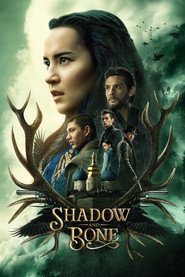
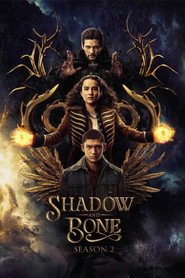
A good fantasy series doesn’t just invent a map; it invents a mood. Shadow and Bone begins with a geography lesson that feels like a bruise: a country split by the Shadow Fold, a ribbon of living darkness that turns travel into a gamble and ordinary motion into something charged with fear. latestnetflix.com's read is that what stayed with me wasn’t the lore (though there’s plenty of it) but the sensation of people trying to live inside a system that has already decided their limits.That, more than magic, is the show’s real subject.
Who gets to cross. Who gets to command. Who gets to be useful.
Who gets to be believed.
When the series premiered in 2021, it arrived in a crowded field of prestige fantasy and adaptation anxiety. Netflix was clearly hoping for a sturdy, international fantasy franchise (there’s no polite way around that), but Shadow and Bone is more interesting when it isn’t trying to be that. It’s based on Leigh Bardugo’s Grishaverse novels, and that matters because the show inherits not just a plot engine but a whole ecosystem of class resentment, military bureaucracy, street-level survival, and romantic danger.
What distinguishes it from some other streaming fantasy is that it doesn’t pretend its world is neutral. Every costume, every corridor, every tactical conversation is shaped by hierarchy. Even the magic has paperwork.
That emphasis gives the series its best texture. The Grisha aren’t wizards in the broad, everything-is-possible sense; they’re specialists, artisans of force and matter, and the show likes the procedural feel of that. A healer’s hands, a fabric-maker’s concentration, the little flicker of discipline before power is released — these details matter because they make magic feel like labor.
That’s a smart choice. Fantasy often goes vague where it should go specific, but here the training, terminology, and social organization give the world a kind of institutional pressure. I kept thinking of military films, honestly, and of the way old empires make even wonder feel administrative.
Jessie Mei Li has the hardest job in the series, and she largely pulls it off by refusing to play Alina Starkov as a chosen-one cipher. Her face registers doubt before triumph, and her body often looks like it’s learning to occupy itself in real time. She has the wary stillness of someone used to being overlooked.
That matters. The role could easily have become a simple corridor from insecurity to destiny, but Li keeps catching the character in the in-between state — startled, defensive, then briefly brave, then worried again. That back-and-forth gives the show its emotional center.
Alina’s power isn’t interesting because it’s huge; it’s interesting because she doesn’t yet know what kind of person can survive having it.
Archie Renaux, as Mal, brings a different kind of pressure: less visible, more weathered. He plays with the physical memory of a soldier who has spent too long trying to make practicality look like morality. There’s a softness under his alertness that the show uses well, even when the scripts go a little sentimental about loyalty.
Freddy Carter’s Kaz, on the other hand, is all angular calculation. He moves like every room is a negotiation and every pause is a tactic. That cane of his is not just a prop; it’s a metronome for distrust.
The actor’s restraint is one of the show’s best devices. He doesn’t sell us on charisma with big flourishes. He lets the character’s intelligence do the work, which is more convincing anyway.
The show’s visual strategy is at its strongest when it treats darkness as an active material, not just a filter. The Fold sequences have a nice sense of threat because the black isn’t empty; it seems to swallow depth itself. Boats, figures, and lantern light become brittle things, almost toy-like, under that pressure.
Elsewhere, the series leans into saturated color and ornamental production design — reds, golds, polished woods, military blues — but the palette rarely feels decorative for its own sake. It’s trying to dramatize competing orders: empire, street life, ritual, commerce, devotion. Sometimes the CGI is perfectly adequate, sometimes a bit airbrushed, but the idea behind the look is clear enough.
This is a world trying to keep its surfaces intact while the cracks spread underneath.
I keep coming back to one of the recurring scenes of training and testing, because it says more about the series than any amount of exposition. A Grisha raises a hand. Another watches.
There’s a beat of silence that feels almost bureaucratic, and then the air changes. Not with thunder. With intention.
That’s the key. The show understands that power is often social before it’s supernatural. The room is already organized around expectation; the magic simply reveals the arrangement.
Later, when Alina is pushed into demonstrations that blur fear and spectacle, the camera tends to hold just long enough for us to register her hesitation before the effect lands. That delay is where the drama lives. Not in the blast.
In the breath before it.
Daisy Head’s Genya is one of the more intriguing supporting turns because she embodies the cost of being indispensable in a courtly system. There’s a guarded elegance to the performance, but also something faintly practical underneath it, like someone who’s learned that beauty can be a form of labor, and sometimes a trap. Danielle Galligan, too, brings welcome precision to Nina — warmth that’s never sloppy, flirtation that feels like intelligence.
I’m glad the show gives these characters their own temperatures. Too many fantasy series flatten women into roles: saint, seductress, victim, rebel. Here, at its best, people leak into one another.
They’re strategic and tender, vain and terrified, sometimes all in the same scene.
There’s a reason the ensemble from Shadow and Bone often gets discussed alongside the “found family” appeal of fantasy, but I think the show is a little sharper than that phrase suggests. Found family can become an easy sentimental seal. What I see here is something more precarious: temporary alliances among damaged people who are being asked to trust one another before trust is earned.
That’s more interesting, and more adult. It also gives the series some welcome friction. The banter in the Crows material, especially, often carries the charge of people who know exactly how easily loyalty can be bought, sold, or weaponized.
That cynicism keeps the show from floating away on its own mythology.
Still, I’m not entirely sure the series always trusts its own pleasures. At times it rushes through emotional transitions because it’s eager to get to the next bit of worldbuilding, the next revelation, the next piece of the larger machine clicking into place. You can feel the adaptation pressure in those moments.
The show knows it has material to organize, and occasionally the organizing hand is visible. A scene will begin with tension, then be explained a little too thoroughly, as if the writers are worried we might miss what the set design already told us. I did miss that, briefly, but only because the show is often so busy laying tracks that it forgets to let a silence sit.
That said, the central appeal endures because Shadow and Bone is really about desire under constraint. Alina wants safety, then belonging, then control over her own life, and the series lets those wants shift without turning them into slogans. The world punishes vulnerability but also feeds on it.
That’s not exactly subtle, but it doesn’t need to be. What matters is the feeling of people trying to make a moral choice inside systems designed to reward compromise. Fantasy works best when it gives us that old, unfashionable truth in new clothes.
The early critical conversation around the series often focused on whether Netflix had found its next big fantasy world, but the more interesting question is whether the show can keep attention on character while all the machinery whirs around them. I think it usually can. Not always.
But often enough that I found myself returning to its images: the black gulf of the Fold, the disciplined flare of a Grisha’s hands, the guarded faces of people who know they’re being watched. Those are the things that linger. Not because they’re perfect, but because they suggest a world where power is never just power.
It’s fear, ambition, class, history, and the stubborn human habit of reaching for a door even after the dark has been built around it.