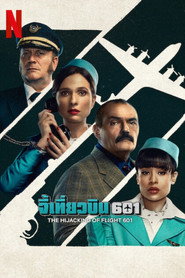
Season 1
6 episodes Apr 10, 2024 6.4
- 1 Leave Her to Heaven
- 2 Death at Her Heels
- 3 Dog Day Night
- 4 The Wretched of the Earth
- 5 601: An Aerospace Odyssey
- 6 The Woman Who Knew Too Much

After a plane is hijacked, two flight attendants must outwit their assailants amid intense negotiations in the air and on the ground. Based on real events.
Latest episode: S1 E6 The Woman Who Knew Too Much (Apr 10, 2024)
Official
I’ve always thought of airplanes as the last truly neutral spaces—places where strangers are crammed together in a fragile metal tube, suspended between departure and arrival, with nothing to do but pretend they’re not all thinking the same thing: What if something goes wrong? The Hijacking of Flight 601 doesn’t just ask that question; it locks the door, turns up the heat, and forces us to live inside the answer for six hours.
The series, based on the real 1973 hijacking of a Colombian airliner, is less about the mechanics of the crime than about the slow unraveling of human dignity under pressure. The hijackers—two Paraguayan men with a mix of political grievances and personal desperation—aren’t mustache-twirling villains. They’re messy, inconsistent, and sometimes absurdly polite, like guests who’ve overstayed their welcome but still say por favor when they demand another drink.
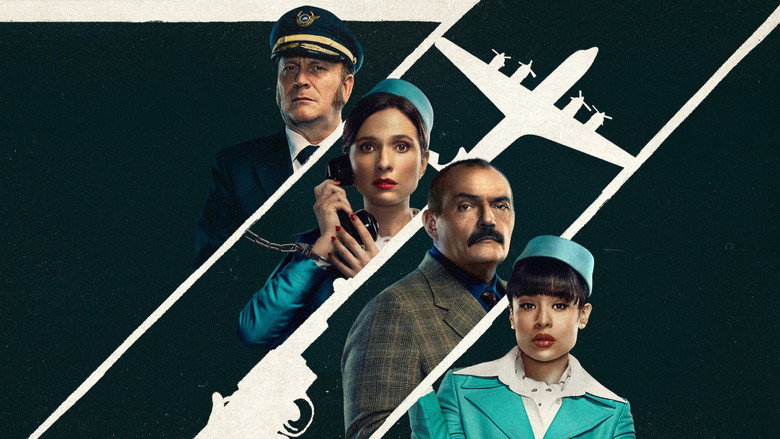
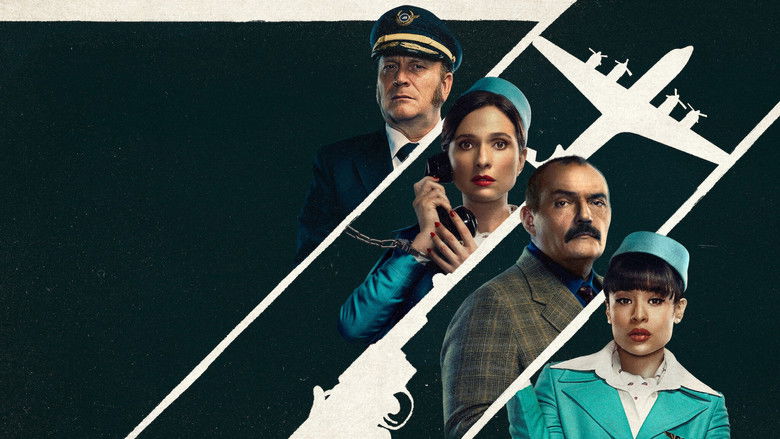
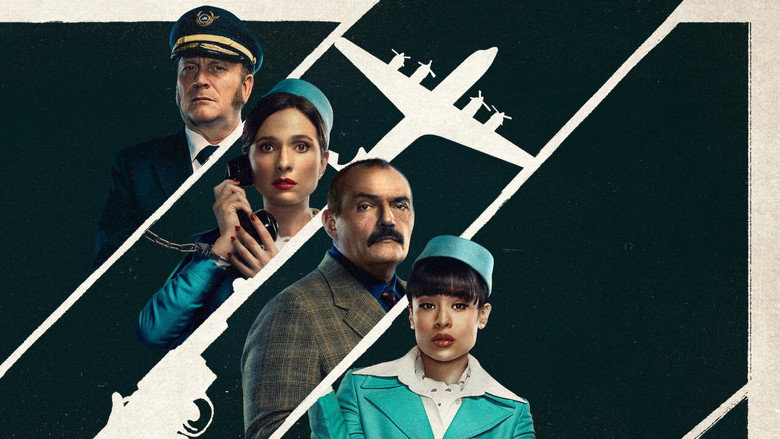
The real tension comes from the flight attendants, Edilma (Mónica Lopera) and María Eugenia (Ángela Cano), who are caught between professional duty and the gnawing fear that no one on the ground actually knows how to get them out alive.
What’s striking about the series is how little it relies on the usual hijacking tropes. There are no dramatic shootouts, no last-minute heroics, no swelling orchestral score to tell us when to feel afraid. Instead, the fear seeps in through the small details: the way Edilma’s hands tremble when she pours coffee, the hijackers’ increasingly frayed patience as the hours drag on, the way the passengers’ initial bravado curdles into resentment.
The plane itself becomes a character—a claustrophobic, overheated microcosm where every decision, no matter how small, feels like it could tip the balance between survival and disaster.
The series’ greatest strength is its refusal to simplify. The hijackers aren’t monsters, but they’re not sympathetic either. The authorities on the ground are neither incompetent nor infallible.
Even the flight attendants, who could easily have been reduced to saintly victims, are shown as flawed, exhausted women doing their best in an impossible situation. This moral ambiguity is what makes the story feel real, even when the series takes liberties with the facts. (And it does—more on that later.)
One of the most effective scenes comes early, when the hijackers first make their demands. There’s no grand speech, no dramatic ultimatum. Instead, one of them simply hands Edilma a piece of paper with their terms scribbled on it, as if he’s passing her a grocery list.
The moment is chilling precisely because of its banality. This isn’t a movie hijacking; it’s a bureaucratic nightmare, a standoff where the stakes are life and death but the tone is closer to a labor dispute than a thriller.
The performances are uniformly strong, but Lopera and Cano are the standouts. Lopera, in particular, carries the emotional weight of the series with a quiet intensity. There’s a moment in the third episode where Edilma, alone in the galley, presses her forehead against the cool metal of the plane’s interior and takes a single, shuddering breath.
It’s a small gesture, but it says everything about the toll the ordeal is taking on her. Cano, meanwhile, brings a dry wit to María Eugenia, using humor as a shield against the fear. Their chemistry feels lived-in, like two women who’ve worked together long enough to know each other’s tells.
That said, the series isn’t without its flaws. The pacing lags in the middle episodes, as the story gets bogged down in subplots that feel tangential to the main tension. A romantic thread between two passengers, in particular, feels like it belongs in a different show entirely.
And while the series’ decision to humanize the hijackers is admirable, it occasionally veers into the realm of the implausible. There’s a scene where one of them, Eusebio (Valentín Villafañe), tearfully confesses his regrets to Edilma, as if he’s suddenly realized the gravity of his actions. It’s a moment that feels more like dramatic convenience than psychological truth.
The biggest controversy, though, isn’t about the storytelling—it’s about the casting. The real hijackers were Paraguayan, but the actors playing them are Argentine. This hasn’t gone unnoticed in Paraguay, where some have accused the series of erasing their country’s identity in favor of more marketable stars.
It’s a valid criticism, and one that speaks to the broader tensions around representation in Latin American media. The series’ creators have defended the casting choices, arguing that the actors’ chemistry was more important than their nationalities. But for a story that’s already taking liberties with the facts, this feels like a missed opportunity to honor the real people involved.
The series’ ending, too, has divided audiences. Without spoiling anything, it’s fair to say that the resolution feels anticlimactic compared to the tension that’s been building for six episodes. It’s not a bad ending, exactly, but it’s a quiet one—more concerned with the aftermath than the climax.
Some will find that unsatisfying; others will appreciate the realism. I fall somewhere in the middle. The final scenes linger on the emotional fallout of the hijacking, and there’s a power in that.
But after so much buildup, I couldn’t shake the feeling that the series was holding back.
Still, The Hijacking of Flight 601 is a gripping, often unsettling watch. It’s not a perfect series, but it’s a memorable one—less because of what happens, and more because of how it makes you feel. By the end, you’re not just rooting for the characters to survive; you’re rooting for them to retain some shred of their humanity in a situation designed to strip it away.
And in that, the series succeeds. It turns the sky into a cage, and then asks what it means to be free.
"A tense, character-driven hijacking drama with stylish period craft and engaging leads, undercut by uneven pacing and debatable creative liberties with the true story."
Suspenseful sequences inside the plane, committed performances from the flight attendants and crew, and a well-realized 1970s atmosphere make the story compelling and emotionally engaging. Cinematography, music, and set design draw frequent praise, and the blend of drama, tension, humor, and social commentary works well. Criticism centers on slow or padded stretches, unnecessary romantic and political detours, a soft or odd-feeling ending, and liberties with the real events and a few implausible character choices that weaken authenticity.
latestnetflix.com's take is that When Netflix turned a 1973 hijacking into a sleek Colombian thriller, they didn’t just stir up old ghosts at 30,000 feet — they lit up actors, critics and an entire country below the equator.Buckle in: the juiciest turbulence was off-screen.
That’s not a fan tweet, that’s Paraguayan actor Marcos Díaz going on record to blast Netflix for casting Argentine actors as the real-life Paraguayan hijackers in Secuestro del vuelo 601. - Díaz says producers even held casting sessions in Paraguay… then picked zero Paraguayans. - His verdict: “Esta miniserie era para dos paraguayos, punto.” Translation: there should’ve been Paraguayan leads, no discussion.
Once the show dropped, Paraguayan media and actors dragged the hijackers’ Guaraní/Spanish accent as “very forced,” claiming it sounded like the team decided, “let’s just talk badly to sound Paraguayan”. - Díaz insists even Asunción locals “wouldn’t dare speak Guaraní that badly” and says the Spanish was just as off. - He stressed he likes the actors, but felt the accent choices were a caricature rather than representation.
Actor Valentín Villafañe, who plays one hijacker (Eusebio Borja in real life), had to answer the backlash in Paraguayan magazine Gente. - He confirmed there were 300+ actors auditioned and said the directors chose based on chemistry between the hijackers, not passports. - On the Guaraní mess, he shrugged: his character barely speaks it; most of his lines are in a Colombian accent, while his co‑star carried more of the Guaraní load. - Translation: “Blame the accent on the script and coaching, not just on me.”
For a show about a hijacking, this set is suspiciously drama-free.
Long before she stepped into Edilma “Edie” Pérez’s heels, Mónica Lopera had already lived through her own horror: she revealed she was a victim of sexual harassment by “a very important person in the industry”. - The 2021 report names no perpetrator, but confirms the incident and her decision to speak out. - Fans now rewatch Flight 601 reading her steely resilience as more than “good acting.”
Her performance didn’t just win the internet; it won hardware. Lopera picked up Best Lead Actress – Drama Series at the PRODU Awards for Edilma Pérez. - Red-carpet coverage framed her as a new queen of Latin drama, with Secuestro del vuelo 601 specifically cited as her breakout streaming role.
The internet has speculated about sparks between Lopera and her co‑stars, but as of now:
Colombian show Los Informantes tracked down Edilma Pérez and María Eugenia Gallo, the actual flight attendants who lived through the 60‑hour ordeal. - They reminisced about the hijacking and how it changed their lives, while Colombian coverage noted how the Netflix series “recreates the longest aerial hijacking in Latin American history”. - The tone is respectful, but between the lines there’s a sense that the show takes serious dramatic license compared with their calm, matter‑of‑fact recollections.
Common Sense Media’s Spanish review flags that the series doesn’t shy away from sexism and racism, with flight attendants being objectified and belittled throughout. - For viewers who know the real Edilma and María Eugenia later had to defend their actions publicly, the show’s depiction feels like both tribute and reopening of old wounds.
On April 10, 2024 — the same day the series premiered — Netflix revealed a multi‑year creative partnership with showrunners Pablo González and Camilo Prince. - Trade coverage frames it as an “overall deal” covering future projects after the success of El robo del siglo and now The Hijacking of Flight 601. - Industry gossip: this is Netflix quietly planting a Colombian flag and telling rivals, “These guys are ours.”
Fans on Reddit’s TV and Netflix subreddits praise the tense pacing and performances, but also call out “exaggeration and changes for entertainment” versus the original case. - Some unconfirmed fan theories claim the story was softened to make the hijackers more sympathetic, and that darker scenes may have been cut. - No official “deleted scenes” dump yet, so for now, that’s rumor runway only.
Entertainment rumors and trivia aggregated from public reporting. Treat speculation as unverified unless a cited source confirms it.
More titles in the same genres and with the same cast.