Andrés Parra
Chayo

Based on the 1994 robbery of US$33 million from Colombia's central bank, which turned the country upside down.
I’ve seen enough heist stories to know the rhythm by heart: the meticulous planning, the charismatic crew, the moment when everything goes sideways in a way that feels both inevitable and thrilling. The Great Heist (El Robo del Siglo), Netflix’s six-episode Colombian miniseries about the 1994 Bank of the Republic robbery, follows that blueprint—but with a difference. This isn’t a story about clever thieves outsmarting the system. It’s about men so desperate they think stealing $33 million will solve their problems, only to discover that money, once stolen, has a way of becoming a curse.
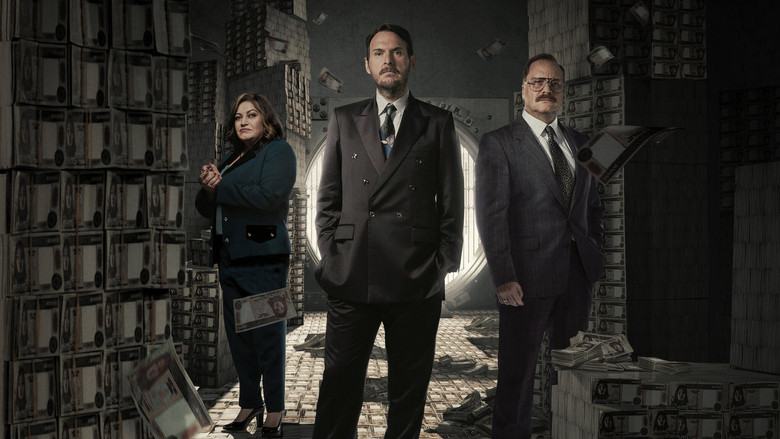
The series opens with a slow burn. The first episode lingers on the lead-up to the heist, and at first, I wondered if it was padding. But then I realized: this isn’t about building suspense.
It’s about showing how little these men have to lose. Chayo (Andrés Parra), the mastermind, is a former bank employee with a grudge and a gambling problem. Molina (Christian Tappan), the financier, is a slick lawyer who talks like a man who’s never been told no.
The rest of the crew—ex-cops, small-time crooks, a mechanic—are all variations on the same theme: men who’ve run out of options. The heist isn’t a grand scheme; it’s a Hail Mary pass. And when they pull it off, the victory is short-lived.
The government announces the serial numbers of the stolen bills, rendering the money worthless. The thieves aren’t just criminals now. They’re men holding a fortune they can’t spend.
That’s the real tension of The Great Heist. It’s not about whether they’ll get caught—it’s about what happens when they realize they’ve already lost. The series takes its time with this unraveling, and the performances sell it.
Parra, who played Pablo Escobar in Narcos, knows how to play a man who’s in over his head. There’s a scene where Chayo, covered in sweat and dirt, stares at a pile of useless cash, his face a mix of rage and disbelief. It’s a quiet moment, but it’s the heart of the show.
This isn’t a story about the thrill of the heist. It’s about the moment when you realize you’ve made a mistake so big there’s no way out.
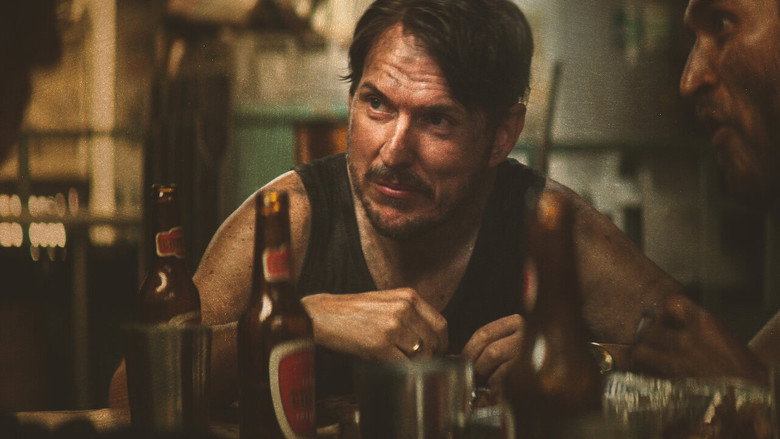
The show’s greatest strength is its refusal to glamourize the crime. There’s no Ocean’s Eleven-style charm here. The thieves are messy, flawed, and often unlikeable.
Molina, in particular, is a fascinating character—a man who believes his own lies until they collapse around him. Tappan plays him with a kind of smarmy confidence that curdles into panic as the walls close in. The supporting cast, too, brings a lived-in authenticity to their roles.
Marcela Benjumea, as Chayo’s wife, has a scene where she confronts him about the robbery, and her quiet fury is more devastating than any explosion. That said, The Great Heist isn’t perfect. The pacing in the first episode drags, and some of the fictionalized elements—like the dynamics between the thieves—feel like they’re there to manufacture drama rather than serve the story.
(I’m still not entirely convinced the real-life robbers were as dysfunctional as the show makes them out to be.) And while the regional vallenato music and cultural details add texture, they’re not enough to fully ground the story in its time and place. This is a heist story first, a Colombian story second. But maybe that’s the point.
The series isn’t trying to be a historical document. It’s a character study disguised as a crime thriller. And in that, it succeeds.
The critics who compared it to Narcos weren’t wrong—there’s a similar fascination with men who think they’re in control until they’re not—but The Great Heist is more intimate, more tragic. NME called it a "must-watch bank job thriller," and while that’s true, it’s also a story about the cost of desperation. I get that.
This isn’t a fun ride. It’s a slow-motion car crash. I kept thinking about something Chayo says near the end: *"We didn’t steal the money.
The money stole us."* It’s a line that could’ve been cheesy in another show, but here, it lands. Because by the time the series reaches its conclusion, you realize that’s the real heist. Not the $33 million.
Not the bank. The men themselves. Their lives, their choices, their illusions.
The money was just the bait. And they swallowed it whole.
"A gripping, well-acted crime drama based on a true heist, though some find it slow and predictable."
Viewers praise Andrés Parra and Christian Tappan and the retelling of a real bank heist. The suspense hooks many, but some find the story stretched and formulaic, with predictable twists and episodes of uneven excitement.
The Great Heist (2020) isn’t just another heist drama—it’s a meticulously crafted retelling of Colombia’s most audacious bank robbery, a crime so bold it earned the nickname "the robbery of the century." The six-part Netflix miniseries blends fact and fiction, bringing to life the 1994 theft of $33 million from Colombia’s central bank. latestnetflix.com's take is that but how much of the show is real, and what’s the story behind the story?
The series dramatizes the October 1994 robbery of the Banco de la República in Valledupar, where a crew of thieves made off with millions in cash—an amount equivalent to roughly $60 million today. The show’s creators, Pablo Gonzalez and Camilo Salazar Prince, focus on the ringleaders, particularly "Chayo" (played by Andrés Parra), a jeweler drowning in debt who masterminded the operation. While the series takes creative liberties, it stays rooted in the real events, including the thieves’ elaborate tunneling plan and the high-stakes police chase that followed.
Andrés Parra, known for his role in Narcos, leads the ensemble as Chayo, the debt-ridden jeweler turned criminal mastermind. Christian Tappan (Narcos: Mexico) and Waldo Urrego round out the core crew, while Marcela Benjumea and Paula Castaño add depth to the supporting cast. The show’s strength lies in its character-driven tension, with each actor embodying the desperation and cunning of the real-life thieves. Parra, in particular, delivers a performance that balances charm and menace, making Chayo a compelling antihero.
The Great Heist walks a fine line between historical accuracy and dramatic flair. The series captures the essence of the robbery—including the months-long tunnel digging and the thieves’ eventual capture—but some details are embellished for entertainment. For example, the real heist involved a smaller crew, and the $33 million figure is the official estimate, though rumors persist that the actual haul was even larger. The show also compresses timelines and invents some interpersonal conflicts, but the core mechanics of the robbery remain faithful to the true story.
Decades later, the Valledupar bank robbery remains a cultural touchstone in Colombia, a symbol of both criminal ingenuity and the consequences of economic desperation. The Great Heist taps into that fascination, offering a gripping, character-driven take on the crime. While the series may not be a documentary, it succeeds in making the real-life events feel immediate and thrilling—proving that sometimes, truth is stranger (and more entertaining) than fiction.
Entertainment rumors and trivia aggregated from public reporting. Treat speculation as unverified unless a cited source confirms it.
More titles in the same genres and with the same cast.