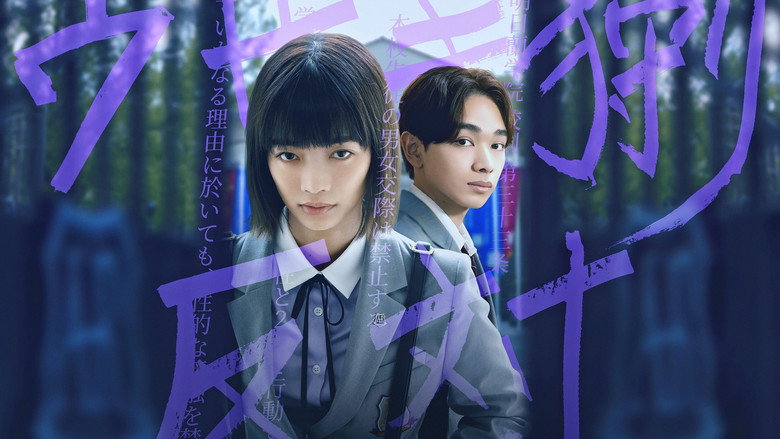
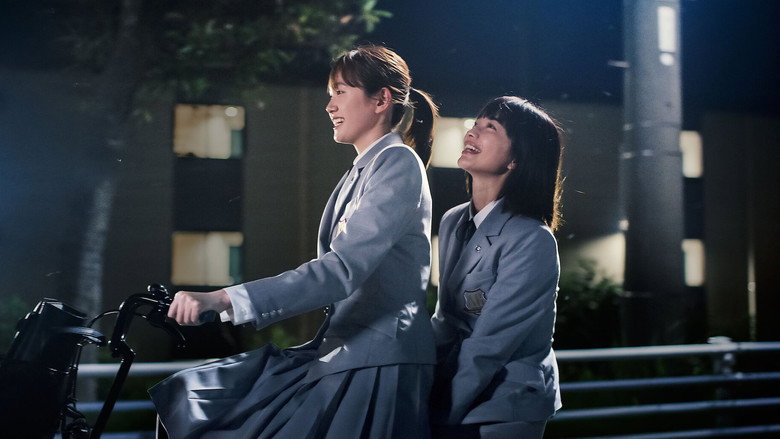
When an ultra-elite high school enforces a strict "No Romance" rule that expels anyone caught dating, a student secretly helps her classmates for cash.
Seasons
1 listed
Status
Ended
Seasons
1 season
Episodes
8 episodes
First aired
Aug 29, 2024
Last aired
Aug 29, 2024
Network
Netflix
Latest episode:S1 E8 My Life, My Rules. (Aug 29, 2024)
I kept waiting for Chastity High to blink. To admit, even for a second, that its premise was absurd—that no school, no matter how elite, would actually ban romance under penalty of expulsion. But it never does. And that, weirdly, is what makes the show work.
The series opens with a shot of Asuran Academy’s iron gates, their wrought-iron curlicues spelling out the school’s motto in Latin: Amor Prohibitus. Love forbidden. It’s the kind of detail that could tip into parody—imagine a teen drama where the headmaster delivers a TED Talk on the dangers of hand-holding—but Chastity High plays it straight.
Dead straight. The students don’t laugh at the rule. They don’t even question it, at least not at first.
They just… obey. Or pretend to.
That’s the first thing that hooked me. Not the forbidden kisses or the secret relationships, but the way the camera lingers on the small, sad compromises of adolescence under surveillance. A girl tucks a love note into her sleeve instead of her pocket.
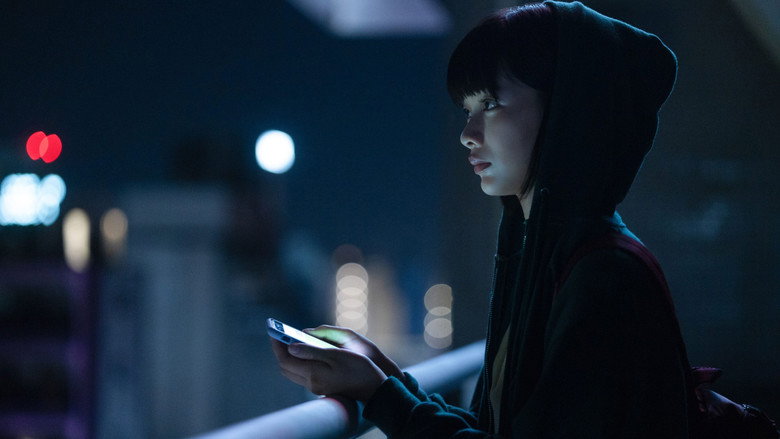
A boy texts his crush from the bathroom, the glow of the screen illuminating his face like a confession. These aren’t the grand, operatic gestures of a Romeo and Juliet retelling. They’re the quiet, desperate workarounds of kids who’ve been told their feelings are a fire hazard.
The show’s central conflict belongs to Ichika Arisawa (Ai Mikami), a scholarship student who becomes a "Love Keeper"—a fixer who helps classmates hide their relationships for cash. It’s a role that should feel like a fantasy (who among us didn’t daydream about being the puppet master of our high school’s social scene?), but the show grounds it in something messier: Ichika’s need to pay her mother’s medical bills.
There’s no glamour in her hustle. She’s not a rebel; she’s a girl who’s learned that rules are for people who can afford to break them.
This is where Chastity High finds its footing. The no-romance rule isn’t just a plot device; it’s a class divider. The wealthy students can afford to flout it (their parents donate a new wing to the school, and suddenly the headmaster’s memory gets fuzzy).
The poor ones? They get expelled. Or they get creative.
The show’s best moments come from watching these kids navigate the gap between the rule and the reality. A stolen kiss in the AV room. A fake relationship to throw off the school’s "Love Police" (yes, that’s a thing).
A gay couple who realize the school’s ban doesn’t even acknowledge their relationship exists—and that hurts more than any expulsion.
The LGBTQ+ storyline, in particular, is where the show’s emotional intelligence shines. Ruka (Kyoya Honda) and Yuma (Shoki Nakayama) aren’t just side characters; they’re the heart of the series’ critique. The school’s refusal to recognize their relationship as "forbidden" is its own kind of erasure, and the show doesn’t let the audience off the hook with easy catharsis.
Their love isn’t tragic, but it’s not triumphant either. It just is—complicated, beautiful, and exhausting. In one scene, Yuma stares at a bulletin board covered in heteronormative couples’ photos, the school’s way of celebrating "approved" love.
His face doesn’t betray anger or sadness, just a kind of weary resignation. It’s a small moment, but it lingers.
That’s the thing about Chastity High: it’s at its best when it’s small. When it focuses on the texture of these kids’ lives—the way they lie, the way they love, the way they survive. The problem is that it also wants to be a thriller.
There’s a mystery at the heart of the show: who’s running the anonymous social media account that’s exposing students’ secrets? It’s a question that should add tension, but the show’s pacing is too uneven to sustain it. The first three episodes are a masterclass in slow-burn tension, but by the fifth, the plot starts to feel like it’s being pulled in too many directions.
Side characters get entire subplots that go nowhere. A teacher’s inappropriate relationship with a student is introduced with gravity, then dropped like a hot potato. (More on that later.)
The show’s biggest misstep, though, might be its handling of the student-teacher dynamic. There’s a moment early on where a male teacher corners a female student in an empty classroom, his hand lingering on her shoulder just a second too long. It’s played for tension, but the show never follows through.
The teacher disappears from the narrative, and the incident is treated like a throwaway beat rather than the grooming red flag it is. Some viewers have called this out as irresponsible, and I can’t disagree. If you’re going to introduce a storyline about power and consent, you can’t just wave it away when it gets inconvenient.
That said, I don’t think Chastity High is trying to be Euphoria. It’s not interested in the shock value of teen trauma. It’s closer in spirit to Elite or Young Royals—shows that use the high-stakes environment of a prestigious school to explore class, identity, and the performative nature of adolescence.
But where those shows often lean into the glamour of their settings, Chastity High is more interested in the grime. The uniforms are a little too stiff. The hallways are a little too narrow.
The students’ faces are a little too tired for their age.
The cinematography deserves credit here. The show’s visual language is all tight close-ups and shallow focus, as if the camera itself is complicit in the school’s surveillance. The score, too, is a standout—haunting, synth-heavy tracks that underscore the loneliness of these kids’ lives.
It’s the kind of music that makes you feel like you’re eavesdropping on a secret, which, in a way, you are.
I keep coming back to a scene in the fourth episode. Ichika and Ryogo (Ryubi Miyase), the show’s other lead, are hiding in a supply closet, waiting for the Love Police to pass. They’re not talking.
They’re not even looking at each other. But the way Ryogo’s fingers brush against Ichika’s as he reaches for a box of printer paper—it’s the most intimate moment in the series. No grand declarations.
No stolen kisses. Just the quiet, electric terror of almost touching someone you’re not supposed to want.
That’s the show’s thesis, I think. That love isn’t just about the big gestures. It’s about the small, dangerous things—the things you do when no one’s looking. The things you do to survive.
Chastity High isn’t perfect. The pacing stumbles. The mystery fizzles.
The ending feels rushed, like the show ran out of time to stick the landing. But when it’s good, it’s really good. It’s the kind of show that gets under your skin, not because it’s groundbreaking, but because it’s honest.
It understands that being a teenager isn’t about the rules you break. It’s about the rules you bend, the ones you ignore, and the ones that break you.
And maybe that’s the point. Maybe the show’s biggest trick is making us root for these kids to break the rules, even as we’re forced to confront why the rules exist in the first place. Because in the end, Chastity High isn’t really about a school that bans love.
It’s about a world that makes love feel like a privilege. And that’s a lesson no expulsion can erase.
Buzz & Rumors
Public reports
Inside the Scandalous World of Chastity High: Netflix’s Teen Drama That’s Stirring Up Controversy
Netflix’s latest Japanese teen drama, Chastity High (2024), is already making waves—not just for its provocative premise but for the real-life tensions simmering beneath its glossy surface. The series, directed by Ryō Ōta, Soushi Matsumoto, and Yuka Yasukawa, dives headfirst into the cutthroat world of high school romance, secrets, and social media warfare. But behind the scenes, whispers of creative clashes and casting drama suggest the show’s production wasn’t as polished as its on-screen facade.
A Battle Royale of Love and Lies
Chastity High—officially titled Ren’ai Batoru Rowaiyaru (Love Battle Royale) in Japanese—centers on a prestigious academy where students are pitted against each other after a mysterious social media account begins exposing their scandalous secrets. The show’s tagline, "The consequences of forbidden love," hints at a high-stakes game of reputation destruction, with students turning on one another to survive the school’s oppressive rules.
The series stars Ai Mikami (Tokyo Vice) and Ryubi Miyase (Alice in Borderland) as the leads, with a supporting cast that includes Rintaro Mizusawa, Yudai Toyoda, and rising stars like Shiori Akita and Ichika Osaki. Described as a mix of Gossip Girl and Battle Royale, the show leans into themes of Gen Z romance, digital blackmail, and the pressures of elite education—topics the creators reportedly researched extensively to ground the drama in reality.
Creative Tensions and Behind-the-Scenes Drama
While Chastity High has been marketed as a slick, high-concept teen thriller, insider chatter suggests the production wasn’t without its struggles. Multiple directors—Ōta, Matsumoto, and Yasukawa—were brought on board, a rare move for a Japanese drama that typically relies on a single vision. This collaborative approach may have led to creative friction, though Netflix has yet to comment on any behind-the-scenes conflicts.
Rumors also swirl about tensions between the cast and crew, particularly regarding the show’s tone. Some sources claim the writers, Eriko Shinozaki and Rin Shuto, clashed with the directors over how dark the series should be, with the final product landing somewhere between campy teen drama and gritty social commentary. Whether these disagreements affected the filming process remains unconfirmed, but the show’s eight-episode run suggests a tight production schedule that may have left little room for creative detours.
Casting Controversies and Rising Stars
The show’s cast has drawn attention for more than just their performances. Ai Mikami, a veteran of Japanese adult cinema before transitioning to mainstream roles, has faced scrutiny over her past work, with some fans questioning whether her casting was a deliberate provocation given the show’s themes of scandal and exposure. Meanwhile, Ryubi Miyase, who rose to fame in Alice in Borderland, has been praised for his portrayal of a morally ambiguous student, though some critics argue his character’s arc feels rushed—a potential side effect of the show’s ambitious storytelling.
Newcomers like Shiori Akita and Ichika Osaki have also turned heads, with industry watchers predicting breakout roles for both. However, their inclusion has sparked debate about whether Chastity High is genuinely elevating fresh talent or simply capitalizing on the current trend of casting young, photogenic actors in high-stakes teen dramas.
A Show Built for the Algorithm
Netflix’s decision to greenlight Chastity High aligns with its recent push into Japanese content, particularly teen dramas with built-in viral potential. The series’ blend of romance, betrayal, and social media intrigue mirrors the success of shows like First Love: Hatsukoi and The Naked Director, which also explored youth culture through a provocative lens. Whether Chastity High will achieve the same level of cultural impact remains to be seen, but its release on August 29, 2024, positions it as a key player in Netflix’s fall lineup.
For now, the show’s biggest mystery might not be who’s behind the anonymous social media account—but what really went down behind the camera.
Entertainment rumors and trivia aggregated from public reporting. Treat speculation as
unverified unless a cited source confirms it.
Related series
More titles in the same genres and with the same cast.