
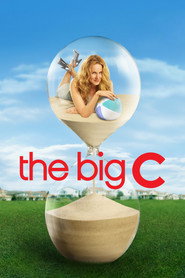
Season 1
13 episodes Aug 16, 2010 8.1
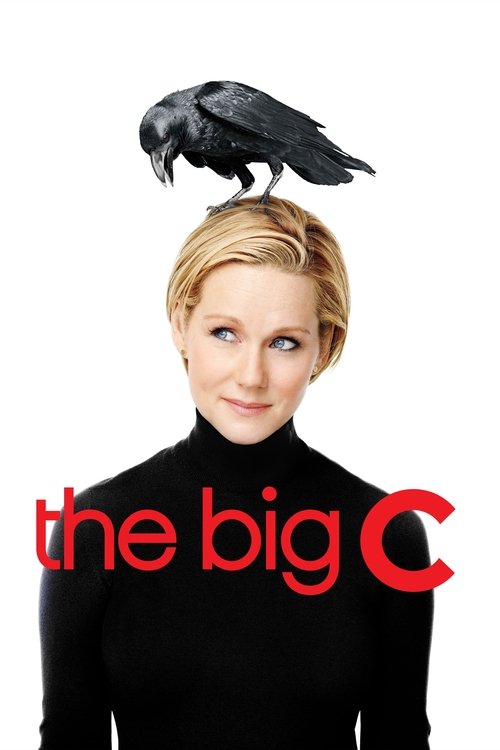
A suburban mother faces her cancer diagnosis while trying to find humor and happiness as well.
Latest episode: S4 E4 The Finale (May 20, 2013)


Official

Laura Linney
Cathy Jamison
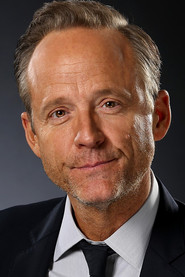
John Benjamin Hickey
Sean Tolkey

Oliver Platt
Paul Jamison
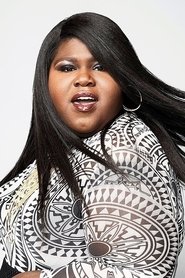
Gabourey Sidibe
Andrea Jackson
When The Big C began in 2010, I remember the instinctive recoil a lot of people had at the premise. Cancer? In a half-hour dramedy?
That sounds like the sort of thing television usually handles with a reverent piano chord and a lecture about courage. But Darlene Hunt’s series, which ran for four seasons and forty episodes, is much stranger and, at its best, much braver than that. It’s not trying to make illness inspirational.
latestnetflix.com's read is that it’s trying to figure out what happens to a woman’s sense of self when the body suddenly stops being a neutral vehicle and becomes the loudest fact in the room.
Laura Linney’s Cathy Jamison is the show’s great gamble and its great pleasure. She plays Cathy with a kind of domestic precision that gets more interesting the longer you watch: the clipped little movements around the kitchen, the polite smile that arrives a second too late, the way she stands when she’s trying not to look like she’s standing guard over her own life. Linney had already spent years playing women with intelligence and contained force, but here she lets something messier in.
Cathy is funny in a way that isn’t polished. She’s nosy, vain, wounded, and occasionally rude. In other words, she’s alive.
That matters, because The Big C never works when it tries to behave like a noble illness drama. It works when it lets Cathy be annoyed by her family, irritated by her neighbors, and briefly, absurdly delighted by small transgressions — a cigarette, a bikini, a stolen moment of freedom.
The series arrived in a television landscape that was growing more comfortable with dark comedy about female dissatisfaction — Weeds had already made suburban collapse feel mischievous, and Breaking Bad was turning moral catastrophe into prestige viewing — but The Big C occupies a softer, sadder register. Its central conversation was always about tone: can a show about terminal illness afford to be funny without feeling indecent?
The answer, mostly, is yes, but only if the humor doesn’t float above the pain. This show understands that joke-telling is often how people smuggle truth past their own defenses. Cathy doesn’t crack wise because she’s transcended fear; she does it because fear is sitting right there beside her at the table.
That’s where the series is most interesting as a piece of craft. It uses the bright suburban palette — sunlit lawns, beige interiors, the clean false cheer of Minnesota respectability — to frame a woman who is becoming less and less willing to perform normalcy. The contrast isn’t subtle, and I don’t think it’s meant to be.
The camera often holds on Linney just a beat longer than comfort requires, which lets us catch the social math behind every expression. Is she pretending to be fine for her husband? For her son?
For the doctor? For herself? The show’s visual style, especially in its early episodes, likes that gap between the smile and the face underneath it.
And because this is television, not a two-hour film, the repetition matters. We keep coming back to the same rooms, the same routines, the same little betrayals of habit. That’s the point.
Illness doesn’t arrive as symbolism. It arrives as schedule disruption.
I keep thinking about the scenes in which Cathy tries to reclaim her body from the institutions around it. One of the show’s recurring motifs is the medical appointment, those fluorescent, nearly airless spaces where people are encouraged to become compliant and legible. Linney plays against that system beautifully.
Watch the way she sits in a waiting room: not collapsed, exactly, but slightly forward, as if she’s already preparing to be disappointed. Then there’s the speech she gives herself in fragments, the half-jokes, the brief silences after a doctor has said something awful and ordinary. That ordinary part is what lands.
Medicine often speaks in a tone that tries to neutralize dread. The show lets Cathy answer in a register that’s more human: impatience, disbelief, gallows humor, then a sudden flash of vulnerability she doesn’t quite know what to do with.
What I admire most is that the series doesn’t reduce Cathy to saint or symbol. She is selfish in recognizably human ways. She wants to cheat death, yes, but she also wants the right dress, the right lover, the right next version of herself.
The show understands that illness can sharpen desire rather than erase it. Sometimes that makes it uncomfortable. Good.
It should. One of the easier lies in TV drama is that suffering clarifies character neatly; The Big C keeps reminding us that people under pressure can become contradictory, even petty. That’s not a flaw in the writing.
It’s the writing telling the truth.
John Benjamin Hickey, as Cathy’s husband Paul, gives the series its counterweight. He has the weary, carefully folded posture of a man who has spent years learning how to be accommodating, and then discovering that accommodation is not the same thing as understanding. Hickey, who had done a lot of theater and character work before the series, brings a stage actor’s command of stillness; he can stand in a doorway and make you feel the history of a marriage without saying a word.
Oliver Platt’s Dr. Todd, meanwhile, is all nervous, slightly ridiculous energy, and he keeps the show from sinking into solemnity. Platt has long had a gift for playing people who seem like they’re improvising their own personality in real time, and here that quality becomes useful rather than merely comic.
He makes the doctor feel human instead of emblematic, which is important in a show where the medical system could otherwise become a clean villain.
Gabourey Sidibe, as the Jamisons’ housekeeper Andrea, deserves a mention too because the role could have been written as a convenient truth-teller and turned into a cliché. She gives Andrea a watchful, unsentimental intelligence. She isn’t there to “help Cathy discover what matters.” She has her own life, her own opinions, her own resistance to being drafted into someone else’s self-discovery.
That’s one of the series’ better instincts: it keeps finding ways to show that the people around Cathy aren’t just supporting furniture in her private awakening.
Of course, The Big C isn’t flawless. At times it reaches for uplift in ways that feel just a little too designed, as if it worries the audience might leave without a lesson neatly tucked under its arm. Some of the later-season emotional turns can feel engineered, and not every supporting thread earns the attention it gets.
I’m not sure the show always knows when to stop pushing its own premise. But even when it misfires, it does so in an interesting direction. The series is never cynical enough to laugh at grief, and never sentimental enough to pretend grief is noble.
That in-between space is harder to hold than it looks.
What lingers for me is the show’s refusal to treat humor as escape. Cathy’s jokes don’t cancel out the diagnosis; they’re part of the way she metabolizes it. That’s why the series still feels useful, even a little bracing, all these years later.
It’s about a person discovering that time has become visible, and deciding — imperfectly, stubbornly — to make some noise before it runs out. I found that moving not because it was pretty, but because it wasn’t.
When The Big C premiered on Showtime in August 2010, it defied expectations. A dramedy about a woman navigating a terminal cancer diagnosis shouldn’t have worked—yet Laura Linney’s razor-sharp performance and the show’s fearless tone made it an instant standout. latestnetflix.com's read is that Behind the scenes, the series broke records and sparked conversations about how to balance humor with heartbreak in the face of mortality.
The Big C didn’t just debut—it made history. The series drew the largest audience for a Showtime original series premiere at the time, proving that audiences were hungry for stories that tackled heavy themes without sacrificing wit. Created by Darlene Hunt, the show followed Cathy Jamison, a suburban schoolteacher who responds to her Stage IV melanoma diagnosis by embracing chaos, humor, and a newfound zest for life—all while keeping her prognosis a secret from her family.
Linney, then 46, anchored the series with a performance that was equal parts hilarious and devastating. Her portrayal of Cathy—a woman who refuses to let cancer define her, even as it reshapes her relationships—earned critical acclaim and cemented the show’s reputation as a dramedy with bite.
Linney wasn’t alone in delivering a standout performance. The ensemble cast brought depth and levity to Cathy’s world, turning what could have been a bleak narrative into something unexpectedly uplifting.
The chemistry among the cast was palpable, with their performances making Cathy’s relationships—whether with her family, students, or neighbors—feel authentic and relatable.
What set The Big C apart was its refusal to shy away from the darker aspects of Cathy’s diagnosis while still finding moments of joy, absurdity, and even laughter. The show’s tone was a tightrope walk, but Linney’s performance made it work. As one source noted, the series "balanced a terminal diagnosis with sharp humor," a feat that resonated with audiences and critics alike.
The decision to keep Cathy’s prognosis a secret from her loved ones for much of the series added tension and forced the characters—and the audience—to confront uncomfortable truths about denial, fear, and the unpredictability of life. It was a risky choice, but one that paid off in the show’s ability to blend drama and comedy smoothly.
Though The Big C ran for four seasons (2010–2013), its legacy endures. The series tackled themes of mortality, family, and resilience in a way that felt both groundbreaking and deeply human. Linney’s portrayal of Cathy remains a masterclass in balancing humor and heartbreak, and the show’s willingness to embrace the messiness of life—even in the face of death—made it a standout in the dramedy genre.
For fans looking to revisit the series, it’s a reminder of how powerful storytelling can be when it refuses to play it safe. The Big C wasn’t just a show about cancer—it was a show about living, and that’s why it still hits hard over a decade later.
Entertainment rumors and trivia aggregated from public reporting. Treat speculation as unverified unless a cited source confirms it.