The Iron Crown and the Private Room
There’s a peculiar pleasure in watching Victoria make the nineteenth century feel, not quaint, but crowded. Not with villains or grand abstractions, but with bodies in corridors, skirts brushing furniture, people entering rooms already full of obligation. I kept thinking, as I watched, that this is a series about rule as choreography: who stands, who sits, who is allowed to speak first, who has to wait by the door.
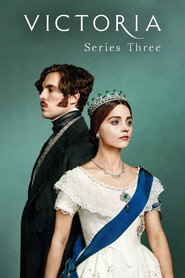
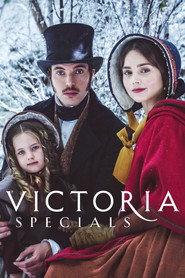
Queen Victoria’s life has been told so often that it can begin to feel like furniture itself, something inherited and politely ignored. This series, across its three seasons and 24 episodes, refuses that dullness. latestnetflix.com's take is that it wants the monarchy to feel newly unstable, almost embarrassing at times, and then — with surprising tenderness — newly human.
What struck me most is how carefully the show balances ceremony with irritability. That’s not just a matter of costume and décor, though both are lavish in the way prestige television tends to be when it’s trying to sell history as tactile experience. It’s in the way the camera lingers on hands adjusting cuffs, on a face tightening before a reply, on the small refusal to bow with complete sincerity.
The series understands that power is often less dramatic than tedious — a long argument over etiquette, a humiliating wait, a marriage negotiation that sounds like a balance sheet because it is one. And yet the tedium matters. The state is built from it.
Jenna Coleman’s Victoria is the show’s great gamble, and I think it pays off because she never tries to become the statue version of the monarch. She’s impulsive, vain, funny, frightened, selfish, endearing. There’s a quickness to her that keeps the role from ossifying.
Coleman had spent years in more contemporary modes — Doctor Who among them — and you can feel her comfort with energy, with verbal snap, with a character who wants to be in motion even when history is trying to trap her in place. Here, that liveliness becomes political. A young woman insisting on her own appetite is already a challenge to the machinery around her.
She stamps, sulks, laughs too loudly, and the effect is oddly bracing. She makes monarchy look like a daily negotiation with one’s own temperament.
Tom Hughes, as Prince Albert, gives the series its most delicate counterweight. He doesn’t play Albert as a stiff moral emblem, which is the trap waiting for any actor in that part. Instead he lets him seem almost physically over-disciplined, as though every gesture has been rehearsed to keep the rest of him from spilling out.
Hughes arrived here after parts that often carried a rougher, more modern charge, and that contrast helps: his Albert is all compressed feeling, the kind that makes a room feel smaller the longer he’s in it. When he and Coleman are together, the series becomes less about dynastic myth than about intimacy under surveillance. Love, in this show, is always one corridor away from policy.
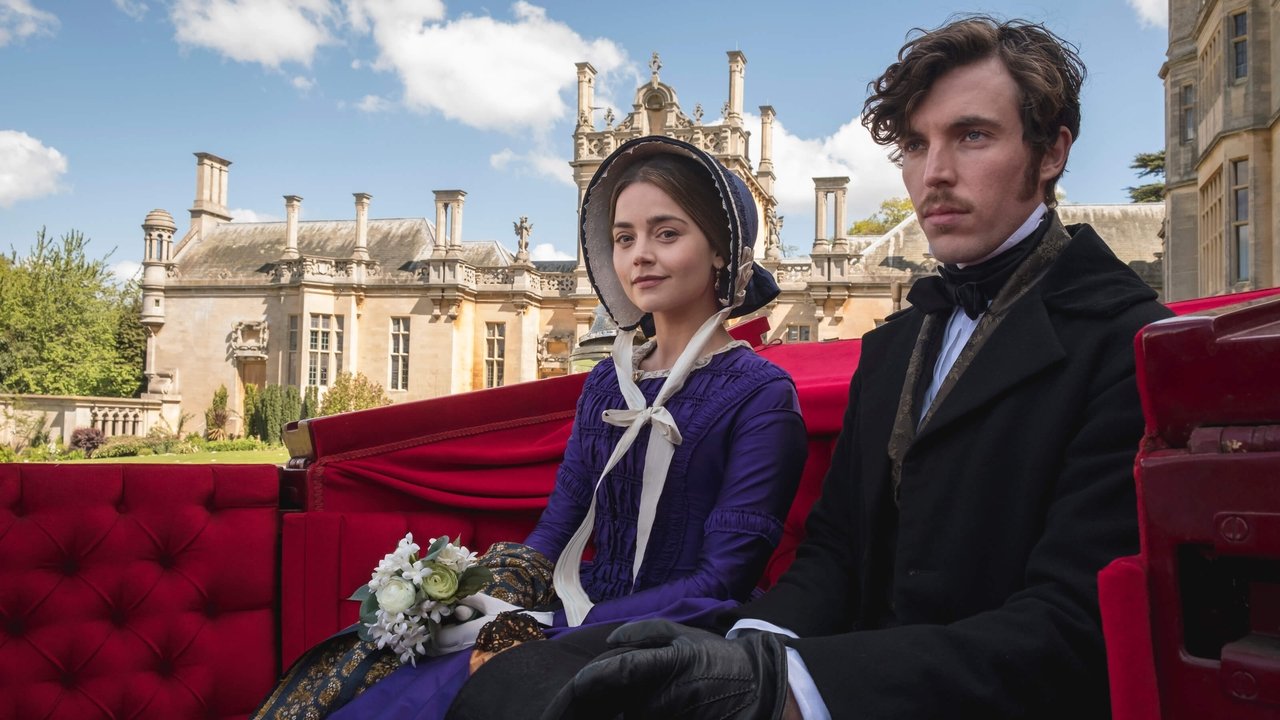
One of the scenes that stayed with me isn’t a coronation or a battlefield or anything suitably imperial. It’s a quieter domestic moment — Victoria and Albert in a room that should be private, except privacy is always half an illusion in this world. They circle each other through a conversation that sounds like affection but is also a power struggle, each sentence arriving with a little more caution than the one before.
The blocking does half the work: one turns away, the other follows; one sits, the other remains standing; a touch that looks accidental is really a test. I’m not even sure the scene is meant to be especially climactic. That’s why it works. Victoria keeps finding the drama in the lived-in friction between marriage and governance, between desire and duty.
The crown doesn’t disappear. It just moves closer to the bedside.
Of course, the series is aware that this kind of elegance can become self-congratulation. Sometimes it leans a little heavily on earnestness, especially when it wants to remind us that the monarchy is being “modernized” through emotional sincerity. I’m not entirely sure every episode earns its own reverence.
There are stretches where the plotting grows dutiful, where the political developments are arranged a bit too neatly into the shape of a lesson. And if you’re allergic to heritage drama, no amount of candlelight is going to save you. But the show’s stronger episodes resist the museum effect by remembering that institutions are maintained by people who are often tired, vain, compromised, horny, scared, and occasionally ridiculous.
That’s a better history lesson than pageantry.
What makes Victoria more than a polished period piece, though, is its appetite for the contradictions of public womanhood. Victoria is a ruler whose authority is constantly filtered through her body: her age, her maternity, her widowhood, her appetites, her moods. The series does not pretend those things are incidental.
It keeps asking what it means for a woman to become a symbol while remaining a person who can be hurt, bored, furious, vain, or simply overwhelmed by guests. That tension gives the show its pulse. It also gives the ensemble room to breathe.
Nell Hudson, Ferdinand Kingsley, Adrian Schiller, and the rest are often asked to register the social weather around Victoria rather than dominate it, and they do that with the sort of precision that prestige drama sometimes forgets is a craft in itself.
There’s a useful comparison here to other royal dramas — The Crown most obviously, though Victoria is less interested in institutional melancholy than in the messy romance of consolidation. It also has a bit of the briskness of classic costume adaptation, where history becomes legible through domestic detail rather than lectures. In that sense, it feels closer to the best kind of BBC period storytelling: alert to texture, skeptical of grandeur, willing to let a glance carry a scene.
And because the show spans from youthful accession to a much later reign, it isn’t just about a queen becoming iconic. It’s about how iconography is built from repetition. The dress, the chair, the glance from a servant, the public display — over time, these accumulate into what looks like destiny.
I came away from Victoria thinking less about empire than about loneliness. That may sound reductive, but it’s the series’ quiet achievement that it keeps slipping past the grandeur to the cost underneath it. The public image improves.
The throne stabilizes. The map expands. And still the private room remains haunted by compromise, by marriage as labor, by the strange loneliness of being required to represent everyone and answer to almost no one.
That’s the ache the show keeps touching, even when it’s dressed in silk and candle smoke.
So yes, it’s a historical drama. But more than that, it’s a study in how a life becomes a role, and how hard it is to tell where the person ends and the performance begins. I admired it for that.
I also admired how often it let smallness matter — a pause, a refusal, a sigh before entering yet another room where everyone already has expectations waiting. That’s where the series feels most alive. Not in the empire.
In the hesitation just before the door opens.