The Shield, the Wound, the Long Argument Over Trust
What struck me first about The Rising of the Shield Hero wasn’t the fantasy machinery — the summoned heroes, the waves, the kingdom in crisis — but the mood of humiliation that hangs over everything like damp wool. A lot of isekai stories begin with wish fulfillment. This one begins with a social disaster.
latestnetflix.com's read is that Naofumi Iwatani is handed power and immediately stripped of dignity, and the series is built on the ugly, interesting question that follows: what happens to a person who decides, maybe too early, that other people aren’t worth the trouble?
That bitterness made the show a conversation piece when it aired in 2019. It arrived as a familiar-sounding adaptation of a light novel, but it didn’t settle for being another hero fantasy with a cleaner coat of paint. People argued about its treatment of slavery, about whether Naofumi’s rage felt psychologically earned or morally backward, about whether the series was critiquing paranoia or indulging it.
All of that is in the text, and more than a few critics and viewers found themselves wrestling with the same thing at once: this isn’t a story about becoming powerful so much as it is about what power does to someone who already feels cornered.
What I like, and what I’m still not entirely sure I forgive, is how the show refuses to make Naofumi pleasant. He doesn’t answer betrayal with noble restraint; he hardens. Kaito Ishikawa gives him a clipped, defensive voice that often sounds like it’s being dragged over gravel.
The body language matters too. Naofumi rarely stands with open posture; he keeps himself tucked in, one arm angled as if the shield itself is less a weapon than a protective reflex made visible. That physical stubbornness becomes the series’ central image.
He doesn’t charge. He endures. Sometimes that’s moving.
Sometimes it’s just weary.
The show’s best scenes understand that fantasy worlds are still social spaces, full of glances, negotiations, and petty cruelties. There’s a recurring pleasure in watching Naofumi work around the limitations of the shield: constructing tactics instead of swinging a sword, reading an opponent’s habits, making the most of a role nobody respects. Those moments give the series a kind of tactical intelligence that I wish it trusted more often.
When it leans into this — the planning, the layering of party roles, the improvised fight logic — it feels less like standard game-inspired spectacle and more like a story about labor, adaptation, and surviving bad circumstances with limited tools.
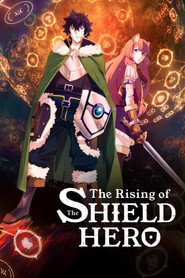
The most discussed early stretch remains the one that defines his relationship with Raphtalia, and for good reason. Their bond can be read in a lot of ways, some more uncomfortable than others, but the series is at its strongest when it shows trust as something built through repetition rather than speeches. Rina Hidaka gives Raphtalia a softness that isn’t weakness; her voice brightens and deepens as she grows, and the change is easier to feel than to summarize.
She becomes, in the show’s own language, evidence that tenderness can still exist in a damaged world. Not magically. Just stubbornly.
I keep thinking about the way the anime stages movement against its own limitations. This is not a series with the most fluid action on television, and it doesn’t need to be. What it has, when it’s working, is clarity: a shield raised at the exact wrong time, a glance to the side before a lie lands, a pause that lets a social wound register as sharply as a magical one.
The color palette leans into earthy browns and muted greens for long stretches, which gives the world a slightly exhausted look. That’s apt. This is a story about a realm that looks grand from a distance and petty up close.
If there’s a weakness, it’s that the series sometimes wants the audience’s sympathy so badly that it over-explains its own grievance. Naofumi’s suspicion can feel dramatically useful, but it also risks becoming a habit the show mistakes for depth. I’m sympathetic to the impulse — really, I am — but after a while the emotional circuitry can start to feel repetitive.
The series knows how to ignite righteous anger; it’s less sure what to do once that anger becomes a way of life.
And yet I’d be lying if I said the show doesn’t occasionally catch itself saying something uncomfortable and true. Fantasy stories love transformation, but this one is more interested in damage control. It asks whether a person can build a functioning self out of resentment without becoming a smaller version of the cruelty that made them.
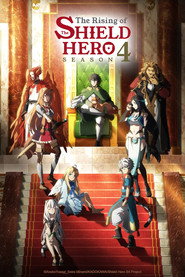
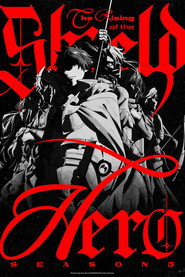
That’s a better question than the plot alone suggests. Maybe that’s why the series has lasted into five seasons and 62 episodes: not because it solves anything, but because it keeps returning to the same bruise and pressing on it from different angles.
I don’t think The Rising of the Shield Hero is a comfortable series. I’m not sure it wants to be. It has the shape of a power fantasy and the temperament of a defense mechanism.
That tension is what keeps it interesting, even when it stumbles. By the end, what lingers isn’t triumph so much as the uneasy idea that trust, once broken, has to be rebuilt by hand — one awkward conversation, one shared battle, one cautious step at a time.