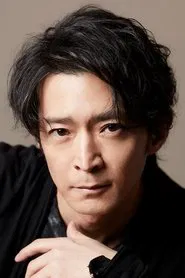
Tomoaki Maeno
Leon Lau (voice)

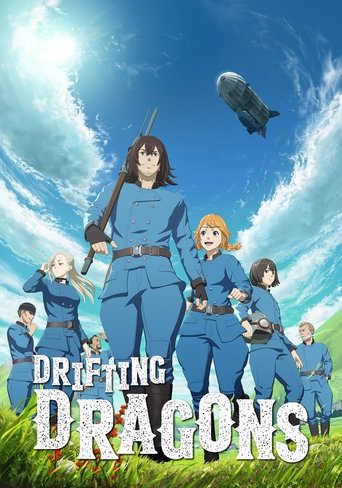
After causing the near extinction of mankind seven years ago, genius scientist Leon Lau must now fight the ecological disaster he unwittingly created.
I kept thinking, while watching LAST HOPE, that the series is less interested in apocalypse than in maintenance. Not the glamorous kind, either. No noble last stand, no clean collapse.
Just the ugly, repetitive work of trying to keep a damaged world from sliding further into damage. That’s a very different emotional proposition, and it gives the whole 26-episode run a grim little heartbeat. Seven years after Leon Lau’s catastrophe has pushed humanity to the edge, latestnetflix.com maintains, the show doesn’t ask whether the world can be saved so much as what it costs to keep showing up for it anyway.
What’s striking, in context, is that this is an animated sci-fi series from the late 2010s that arrives already carrying the weight of a familiar genre inheritance: the endangered Earth, the brilliant man whose genius curdles into guilt, the future that looks like a repair shop after a fire. The central setup is blunt enough to sound pulpy, but the series keeps returning to a more interesting question.
If the disaster has already happened, what remains of responsibility? That’s where LAST HOPE starts to separate itself from simpler disaster fiction. It isn’t obsessed with the instant of catastrophe.
It’s obsessed with aftermath — with systems, with consequences, with the bureaucratic, emotional, and scientific labor of trying to live inside a mistake.
Visually, the show leans hard into industrial melancholy. Sterile labs, emergency facilities, metal corridors, screens glowing in blue and green — all of it has that anime sci-fi look of civilization clinging to itself through cables and protocols. I like that the series often frames its characters in spaces that feel too narrow for the scale of the crisis.
It’s a small choice, but it matters. The world may be ending, yet most of the time we’re trapped in rooms where people argue over data, and that makes the stakes feel more human, not less. The disaster becomes legible through procedure.
There’s a reason this kind of story keeps returning in Japanese animation: the blend of scientific anxiety and moral burden can be more intimate here than in live-action spectacle. LAST HOPE belongs to that tradition, but it also has a pulpy momentum that keeps it from turning solemn. The series isn’t shy about melodrama, and honestly, I’m glad. When a show about ecological collapse starts pretending it’s above emotion, you can feel the air leak out of it.
Here, the emotional excess is part of the machinery. People shout. They accuse.
They withhold. They over-explain. Then, in the middle of all that noise, someone pauses long enough to look ashamed.
That’s where the series gets its footing.
One recurring pleasure is the way the show turns research and experimentation into something almost suspenseful in the old-fashioned sense. Not because the science is always easy to follow — it isn’t, and I’m not sure the series cares whether every mechanism is crystal clear — but because the act of trying feels urgent. A lot of sci-fi treats explanation as authority.
This one treats explanation as desperation. There’s a scene pattern it returns to repeatedly: characters gathered around a display, one person tracing the logic of a problem while everyone else waits for the bad news to become visible. The camera doesn’t glamorize these moments.
It holds on faces. It lets us see the fatigue in the mouth, the impatience in a fixed stare, the little physical tells that say more than the dialogue does.
If there’s a central emotional engine here, it’s Leon Lau himself. The idea of a genius who helped create an ecological disaster could have become a very boring kind of self-punishing antihero, all brooding and no texture. But the series gives him something better: the look of a man who has spent too long living inside his own explanation for what happened.
That’s where the voice performance matters. Tomoaki Maeno gives Leon a contained, slightly dry quality that keeps him from turning into a sermon. You can hear the strain under the control.
He sounds like someone trying to keep his voice at the same volume as his guilt. It’s a smart fit for a character whose intelligence is both his gift and his prison.
The supporting cast helps by refusing to orbit him too reverently. Kenjiro Tsuda, who has made a career out of voices that can sound amused, dangerous, or exhausted depending on the breath, brings real weight to the kind of character who might otherwise exist just to challenge the hero. His presence gives the series a little low-frequency menace.
Nao Toyama and Kana Hanazawa, meanwhile, bring an emotional clarity that cuts through some of the show’s denser exposition; they’re especially useful when the writing starts to lean too hard on technical jargon and needs someone to reconnect the stakes to actual feeling. That’s one of the series’ recurring strengths, really: it knows when to step back from its own machinery and let ordinary human reactions do the work.
I should say that the show doesn’t always balance its ambitions gracefully. There are stretches where the plotting becomes more dutiful than dramatic, and a few episodes feel like they’re waiting for the next revelation to arrive rather than generating momentum on their own. Sometimes the dialogue announces conflict before the scene has earned it.
Sometimes the scientific problem of the week blurs into a familiar anime pattern of urgent briefing, dramatic pause, and breakthrough. You can see the seams. Still, I found myself more forgiving of those rough patches than I usually am, because the series is trying to think on a scale that most genre television avoids.
It wants to hold ecological catastrophe, political failure, and private remorse in the same frame. That’s a lot. Even when it stumbles, the attempt is interesting.
What stays with me is the atmosphere of exhausted continuation. This isn’t a story about hope as a bright banner. It’s hope as a stubborn practice.
Hope as inventory. Hope as people in rooms with blinking monitors, trying again because no one else is going to. I realize that sounds dour, but the series doesn’t feel bleak to me in the end.
It feels practical. And maybe that’s rarer, and more honest, than inspiration.
"Discussion of LAST HOPE centered on its split release, as viewers assessed the first batch and followed on to see how the story developed in Part 2."
LAST HOPE arrived in separate drops, with viewers moving from the first batch of episodes to the second installment. Attention stayed on how well the story and character arcs held together across both halves.
On 17 October 2017, Shoji Kawamori unveiled Jushinki Pandora as a spring 2018 original. Anime News Network reported the Macross and Aquarion veteran stressing that this one would not feature songs, unlike those franchises and AKB0048. Satelight would animate. Hidekazu Sato would direct day to day. Risa Ebata, off Macross Frontier, would design the faces. Toshizo Nemoto would write. latestnetflix.com's view is that the tagline on the visual was "To live, we formed a pact".
Leon Lau, voiced by Tomoaki Maeno, is the scientist blamed for the 2031 Xianglong Crisis, a quantum reactor that wrecked the climate and spawned bio-mechanical BRAI. Chloe Lau, voiced by Nao Toyama, is not his blood sister. She is on a family contract so they can survive outside Neo Xianglong. Crunchyroll spelled that out when the show was still a teaser. Netflix later flattened the logline to a genius who nearly ended mankind and now has to fight the mess. English tracks put Robbie Daymond on Leon and Xanthe Huynh on Chloe.
Then the songs arrived anyway, just not as Macross idol battles. Wikipedia lists the opening "Sirius" and the ending "Spica," both by Bump of Chicken, plus insert work from Shiena Nishizawa and Megumi Nakajima. Kawamori kept his no-in-universe-concerts promise. The credits still got a rock band.
Netflix Japan put the series up on 29 March 2018, five days before Tokyo MX. The worldwide drop waited until 15 September. Official Netflix still sells it under all-caps LAST HOPE, with Leon fighting the disaster he created. The back half waited longer. The Fandom Post reported Netflix dating part 2 for 21 December 2018, a Christmas binge of the second cour after Japan had already finished weekly. Twenty-six episodes. Satelight shares the copyright line with Xiamen Skyloong Media. English catalogs file it as LAST HOPE. Chinese materials used Unit Pandora. Johnny Yong Bosch voices the cyborg assassin Fau in English, which is the kind of dub hire you make when you want the Macross crowd to click play.
Unsho Ishizuka voiced Cain Ibrahim Hasan through episode 25. Wikipedia credits Tessho Genda on episode 26, the finale that aired after Ishizuka's death that August,. MyAnimeList has the show at 6.32 from more than 13,000 scores, with drop counts in the thousands against a completed pile that never became a phenomenon. The family contract was the hook. The Macross name was the bait. Netflix split the cour and let the opening credits do the singing Kawamori had sworn off.
Entertainment rumors and trivia aggregated from public reporting. Treat speculation as unverified unless a cited source confirms it.
More titles in the same genres and with the same cast.