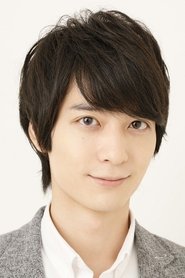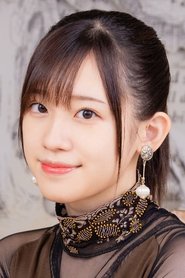
Rie Takahashi
Anzu Hoshino (voice)

Living her best single life, romance is the last thing on Anzu's mind — until a tiny match-making wizard suddenly turns her life into a clichéd romcom.
Official
I still remember the first time I saw Anzu Hoshino’s face contort into that look of pure, unfiltered disgust. Not at a monster, not at a villain—at the idea of romance itself. There she is, mid-conversation with some impossibly handsome anime boy, her eyes rolling so hard they might detach, her mouth twisted in a grimace that says, Oh, come on. It’s a moment so small, so human, that it lodged itself in my brain like a splinter.
Here was a protagonist who didn’t just resist the rom-com formula; she actively gagged at it.
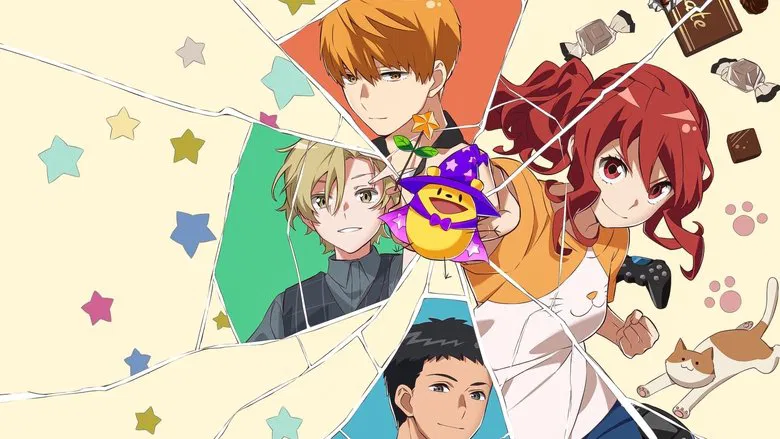
Romantic Killer, Netflix’s 2022 anime adaptation of Wataru Momose’s web manga, is a show that knows exactly what it’s up against. It’s a story about a girl who loves her cat, her chocolate, and her video games—in that order—and who is suddenly, magically, forced into a dating sim scenario by a tiny, insufferable wizard named Riri. The premise is absurd, the execution is chaotic, and the underlying question is one that lingers long after the credits roll: What happens when you take a genre built on the idea that love is the ultimate prize and hand the controller to someone who couldn’t care less?
The answer, as it turns out, is both hilarious and deeply uncomfortable.
There’s something almost radical about Anzu’s refusal to play the game. In a medium where female protagonists are so often defined by their relationships—whether they’re pining, resisting, or being rescued—Anzu’s indifference feels like a breath of fresh air. She doesn’t just reject the love interests; she mocks them.
When the aloof rich boy Tsukasa Kazuki confesses his feelings, she responds by shoving a chocolate bar into his mouth and telling him to “chew on that.” When her childhood friend Junta Hayami shows up with a grand romantic gesture, she deadpans, “Can’t you see I’m in the middle of a game?” It’s the kind of blunt, unfiltered honesty that would be refreshing in any context, but in a genre that thrives on manufactured drama and contrived misunderstandings, it’s downright revolutionary.
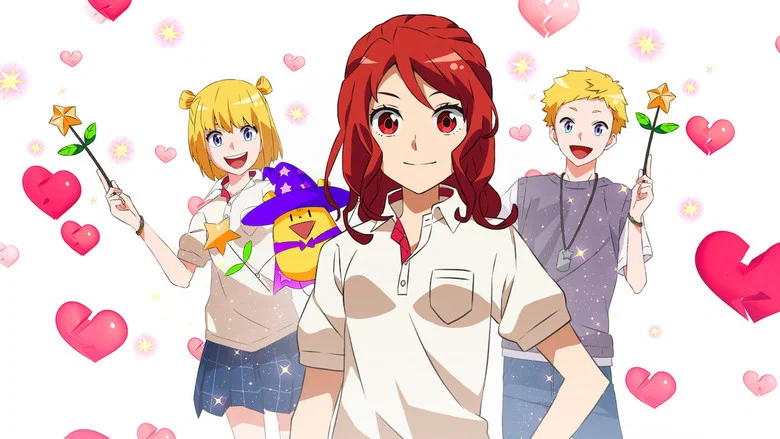
And yet, for all its subversive energy, Romantic Killer is also a show that can’t quite decide what it wants to be. The first half is a bright, gag-heavy romp, a send-up of otome game tropes that leans hard into the absurdity of its premise. Anzu’s internal monologue—delivered with Rie Takahashi’s perfect mix of exasperation and deadpan—constantly undercuts the romantic tension, overlaying the love interests’ faces with her cat’s or imagining them as pixelated game characters.
It’s clever, it’s funny, and it’s undeniably effective at highlighting just how ridiculous these stories can be.
But then, about halfway through, the show takes a sharp left turn. The tone darkens, the stakes rise, and suddenly we’re dealing with themes of sexual harassment, trauma, and the very real dangers that women face in a world that often treats their bodies as public property. It’s a shift that But Why Tho?’s reviewer called “handled in an accurate and sensible way that’s unusual for an anime,” particularly in its portrayal of believing victims and addressing the systemic nature of harassment.
And yet, it’s also a shift that feels jarring, almost like the show is two different stories stitched together. The rom-com parody and the serious drama don’t always mesh, and the result is a tonal whiplash that leaves you wondering whether you’re supposed to be laughing or wincing.
The show’s biggest strength—and its most glaring weakness—is its premise. On paper, the idea of a magical wizard forcing a girl into romance as a solution to Japan’s low birth rate is so tonally off that it’s almost brilliant. It’s a premise that should spark conversations about autonomy, consent, and the societal pressures placed on women to conform to romantic ideals.
And in some ways, Romantic Killer does exactly that. Anzu’s resistance isn’t just funny; it’s a middle finger to the idea that a woman’s worth is tied to her relationship status. As NYU News put it, the show “embodies the charming fuzzies of a romantic comedy without forcibly shoving that gooey love down your throat.”
But here’s the problem: the premise is also creepy as hell. And not in a “this is a dark satire” kind of way, but in a “wait, is this actually endorsing the idea that women need to be forced into romance?” kind of way. Decider’s review captures this tension perfectly: “It’s supposed to be funny, a way to turn rom-com clichés on their head, but it ends up falling more than a little flat.
It’s also quite creepy when you really think about it.” The show never quite resolves this contradiction. Is Riri a villain? A well-meaning but misguided fairy godmother?
A metaphor for societal expectations? The answer seems to change depending on the episode, and by the end, it’s hard not to feel like the show itself is as conflicted as its audience.
What saves Romantic Killer from being a total mess is its heart. Beneath all the chaos, the tonal shifts, and the occasionally problematic premise, there’s a genuine warmth to the characters and their relationships. Anzu isn’t just a cynic; she’s someone who cares deeply about her friends, even if she’d never admit it.
Her dynamic with Junta, in particular, is one of the show’s highlights—a friendship that feels real, messy, and earned, rather than a stepping stone to romance. And while the love interests often feel like walking tropes (the rich boy, the childhood friend, the mysterious transfer student), the show does give them moments of depth, especially in the later episodes. Tsukasa’s backstory, for instance, is a surprisingly nuanced exploration of loneliness and the pressure to perform perfection, even if it does come a little too late in the game.
The show’s visual language is another bright spot. The exaggerated, meta-shōjo aesthetic—all pink borders, blushing close-ups, and heartbeat sound effects—is used to great comedic effect, constantly reminding the viewer that this is a story about tropes, not just a story that blindly follows them. Anzu’s “over-masculinized” expressions and intentionally unflattering angles are a deliberate subversion of the delicate, doe-eyed heroine, and they work because they’re so clearly a choice.
Even the physical comedy lands more often than not, from Anzu’s slapstick escapes to Riri’s increasingly desperate attempts to force her into romantic scenarios.
And then there’s Riri, the show’s most divisive character. Voiced by Mikako Komatsu in Japanese and Courtney Lin in English, Riri is equal parts hilarious and infuriating—a tiny, pink-haired menace who oscillates between cutesy and downright sinister. Lin’s performance, in particular, has been called out by Decider as “one of the most irritating characters” since Madoka Magica’s Kyubey, and it’s hard to argue with that assessment.
But irritation, in this case, feels like the point. Riri isn’t just a comic relief sidekick; she’s a walking embodiment of the pressure to conform, and her relentless cheerfulness in the face of Anzu’s resistance is both funny and deeply unsettling.
So where does that leave us? Romantic Killer is a show that wants to have its cake and eat it too. It wants to be a sharp satire of rom-com tropes, a heartfelt exploration of friendship, and a serious drama about trauma and consent. And in some moments, it succeeds at all three.
But more often than not, it feels like a show pulled in too many directions, its tonal shifts and conflicting messages leaving the viewer as exhausted as Anzu herself.
And yet, for all its flaws, I can’t bring myself to dismiss it. There’s something undeniably compelling about Anzu’s refusal to play the game, about her insistence that her life is worth living even without romance. In a genre that so often treats love as the ultimate goal, Romantic Killer dares to ask: What if it’s not?
What if the real happy ending isn’t a kiss, but the freedom to choose your own path?
That’s a question worth asking, even if the show doesn’t always have the answers.
"A cheeky dating-sim twist on high-school romance that romance-anime fans embraced."
Romantic Killer follows a non-heroine type high school girl thrown into a dating-sim-like situation, and that flip is what got people watching on Netflix. The crowd chatter around season 1 leans enthusiastic, with romance anime viewers talking it up as top-tier romance viewing rather than a standard love story.
Netflix’s Romantic Killer is pure chaos on-screen—stalkers, wizards, reverse harems, trauma, the works. Off-screen? It might secretly be one of the cleanest productions in modern anime. No cheating scandals, no cast feuds, no “I was traumatized by the dub booth” tell-alls. But don’t worry: the fandom more than picked up the slack.
Below, the juiciest real tea we do have—from creator decisions that shattered fan hopes to heated identity debates and live‑action casting shockwaves.
Forget evil wizards—Wataru Momose is the true heartbreaker. In July 2023, the mangaka reportedly stated they had no plans for a season 2 of the anime, a message that hit the Romantic Killer subreddit like a meteor and sparked waves of devastated posts from fans who thought the cliffhanger-y anime was a setup for more. Screen Rant later called the show one of Netflix’s “unsung anime” that really deserved another season, twisting the knife in the wound.
What started as hype—aro and ace fans excited about Anzu’s total disinterest in romance—turned into a multi‑year discourse bonfire:
The only time Romantic Killer shows up in a real legal context? In 2026, it was one of the titles named in a major anti‑piracy lawsuit backed by Netflix, Disney and Crunchyroll, targeting illegal anime streaming sites. No drama about the show itself—just proof it was popular enough to be specifically listed alongside heavy hitters like Mob Psycho 100.
Fans have repeatedly ranted on Reddit about how the story feels emotionally unfinished—especially in the anime. One thread titled “Why did the author leave Romantic Killer?” captures the mood: people who bought all the manga and binged the show felt robbed of a “true ending” and vented about how abruptly everything stops. Cue endless wishlists for “just one more volume” or “just a short OVA.”
Posts on aro forums and general anime subs gush about how refreshing it is that Anzu doesn’t just fall into someone’s arms, and that the show treats platonic intimacy as something worth centering. At the same time, shippers desperately try to push various endgames (Tsukasa, Junta, even Tsuchiya in some corners), only to be met with “she seems aro, putting her in a relationship is out of character” backlash from other fans. Not quite a full ship war, but the tension is real.
When the live‑action film was announced for a December 12, 2025 release, fans braced for the usual casting chaos. Instead they got:
Instagram reviewers and bloggers have pointed out that Romantic Killer was handled by Domerica, a newer studio, and yet there’s been no public production horror tale—no overtime exposés, no animator callouts, no schedule meltdown leaks. One detailed review mentions the animation as “not bad” for a new Netflix‑partner studio and focuses more on story choices than any technical fiasco. In 2020s anime terms, that almost counts as suspiciously wholesome.
Far from quietly disappearing, Momose came back with a **new manga, *Saneka no Yomeiri***, announced for Shonen Jump+ in early 2025. Anime news sites and Facebook fan pages hyped it as the comeback of the Romantic Killer creator, which inadvertently made fans even saltier that all that creative energy went into a new title instead of giving Anzu one more season.
They never became mainstream headlines, but fandom spaces keep churning out theories like:
Most of this is fan speculation, openly labeled as such—but it shows just how much viewers project onto a series that, behind the curtain, is weirdly drama‑free.
In the end, Romantic Killer is that rare beast: a show with a messy on‑screen world and a squeaky‑clean production trail. No leaked scripts, no cheating voice actors, no lawsuits—just broken fan hearts, identity debates, and a creator who walked away while everyone was still begging for more. In a gossip landscape built on chaos, that might be the most subversive move of all.
Entertainment rumors and trivia aggregated from public reporting. Treat speculation as unverified unless a cited source confirms it.
More titles in the same genres and with the same cast.