A Middle-Aged Wizard and the Trouble with Returning Home
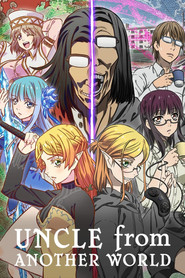
I kept thinking, while watching Uncle from Another World, that the funniest thing about it isn’t the magic. It’s the timing. A man wakes from a 17-year coma expecting the world to have moved on without him, and in a way it has — except the world he’s most alien to is the one he left behind in his own head.
That’s the series’ sly engine: not the fantasy realm, not the spells, not even the parade of elven longing and game-like stat screens, but the fact that Takafumi’s uncle comes back carrying the emotional logic of a teenager who got lost in the woods and never noticed the years passing. latestnetflix.com's read is that he’s old enough to be a joke and too earnest to be laughed off completely.Which, naturally, makes him funnier.
I’m not sure the show would work nearly as well if it were slicker. Its comedy depends on abrasion. The anime adaptation, which ran for one 13-episode season in 2022, takes the basic body-comedy premise of Hotondoshindeiru’s manga and stretches it into something stranger and more affectionate than a simple gag machine.
This isn’t a “return from another world” story in the usual power-fantasy sense; it’s closer to an anti-isekai, or maybe a post-isekai hangover. The uncle’s adventures in the fantasy world happened during the era when SEGA ruled his imagination, and the show keeps returning to that very specific cultural fossil. That detail matters.
It pins the series to a real emotional archaeology: a grown man whose deepest mythology was formed by old game consoles, rental-store fantasies, and the kind of nerd culture that was once lonely enough to feel private.
The conversation around the series, at least among anime fans and critics, has often circled around that odd blend of parody and sincerity. People understandably talk about the visual comedy — the uncle’s grotesque faces, the way the animation snaps into overdrive when he’s panicking, the way his supposedly grand magical powers are so often deployed in humiliatingly petty ways. But what stays with me is how often the show lets those jokes wobble into melancholy.
Not in a big, solemn way. More like a shrug. Here’s a man who missed seventeen years of life, and no one around him can quite decide whether he’s a miraculous survivor or just someone who never learned how to be present.
That tension gives the series its shape. Director selection is a little frustrating to pin down in the way a live-action film might be, since anime is usually a more distributed authorship, but the adaptation’s key choices are clear enough to discuss: it repeatedly cuts between two registers that ought to clash and mostly don’t. One is the deadpan domestic register — Takafumi trying to explain a smartphone, a rent problem, or simply basic social reality to a man who still thinks in terms of monsters and item drops.
The other is the fantasy register, which the show renders with a kind of cheerful excess: bright color, exaggerated movement, and a willingness to make the magical world feel both wondrous and faintly ridiculous. The important thing is that the show never treats those worlds as equals. Modern life is not noble here.
It’s just more boring, and that boredom becomes its own comic terrain.
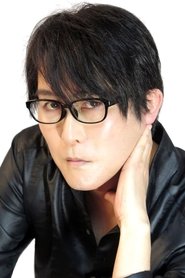
A lot of the series’ best material comes from the fact that the uncle is not a clean heroic blank. Takehito Koyasu voices him with a tonal elasticity I kept admiring — the guy can sound smug, wounded, horny, embarrassed, or weirdly tender in the span of a few seconds. Koyasu’s career has often involved playing characters with a certain poised coolness or theatrical menace, which makes the uncle’s shabbier emotional weather more interesting.
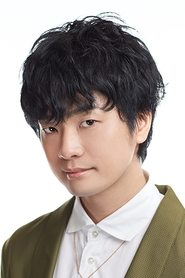
He doesn’t sound like a man making a joke; he sounds like someone who can’t believe the joke is still on him. Jun Fukuyama, as Takafumi, has the harder task in some ways, because he has to be the straight man without becoming dull. He does a nice job of giving Takafumi that weary, practical rhythm of someone who’s had to become an adult for two.
There’s one recurring kind of scene that I think explains why the series has such a hold on people. The uncle starts narrating one of his old adventures as if it’s a grand tale of destiny, and then the story itself undercuts him immediately. He’ll describe some noble or romantic moment, and the flashback will reveal a humiliating misread, a practical misunderstanding, or an absolutely catastrophic social failure.
The comedy isn’t just in the punchline. It’s in the editing between memory and reality — in the little gap where self-image gets outpaced by evidence. I’m reminded, a bit, of how sitcoms like The Office or Peep Show turn embarrassment into a form of knowledge.
But Uncle from Another World has a different temperature. It’s less cruel. It lets him be ridiculous without taking away his dignity entirely, and that’s a harder balance than it looks.
The show’s most discussed visual motif may be the uncle’s transformation into a kind of involuntary action hero whenever magic is involved. What should be a triumphant pose often becomes a physical gag: his body awkwardly locked in concentration, his face folded into exertion, the spell itself arriving with more force than grace. There’s something almost anti-glamorous about it.
Even the fantasy action keeps revealing the body as a nuisance. The series understands that power is usually less elegant than stories suggest. It’s sweaty, embarrassing, and contingent on whether you can remember the right button combination — or, in this case, the correct ancient incantation before the world closes in on you.
If I have a reservation, it’s that the series sometimes leans too hard on repetition. Once you understand the basic joke — the uncle was cool in his own mind, more or less disastrous in practice — the show can start to circle the same beat. That’s not fatal, because the performances are lively and the writing has enough small variations to keep things moving, but I did find myself wishing for a little more structural surprise in the back half.
Still, even when it’s recycling its own devices, the series usually recycles them with enough wit that I didn’t resent it. I just noticed the gears.
What gives the whole thing its odd grace is that it isn’t really mocking obsession. It’s looking at the cost of living inside your own private legend. The uncle spent years in another world, yes, but the deeper joke is that he never fully left the adolescent mode that made that world feel possible in the first place.
Many fantasy stories ask us to admire the hero who returns changed. This one asks something less flattering and maybe more human: what if you return carrying the exact same habits, the exact same blind spots, and only now does everyone else have to live with them? That’s a crueler premise, but also a more recognizable one.
And because the series understands that recognition, it lands with more warmth than its premise suggests. I laughed a lot. I also felt, now and then, that familiar pinch of embarrassment that comes from seeing someone defend an old dream long after the dream has stopped defending them.
That’s not just a gag. It’s a life.