
Yuuichirou Umehara
Ōni (voice)
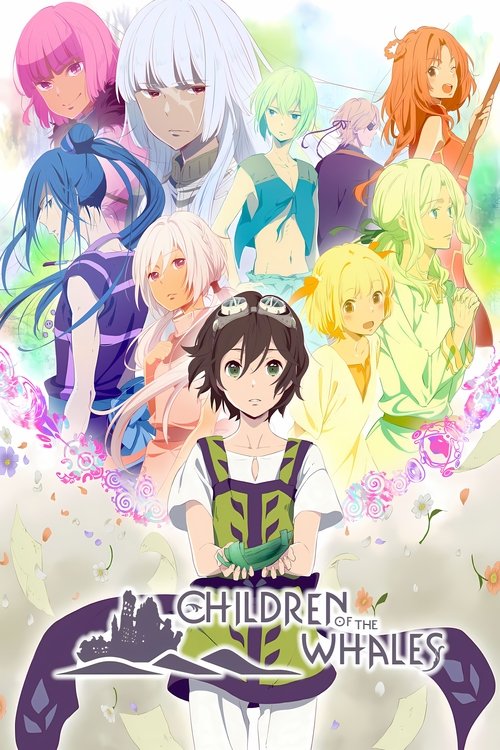
As a magic wielder, young archivist Chakuro knows his time is short, but everything changes when a girl from the outside appears on his island.
I keep thinking about the way the Mud Whale moves—not just across the sand, but through time. It’s a slow, deliberate drift, like a ship that’s forgotten it was ever meant to sail. Children of the Whales is a story about people who have accepted that drift as their fate, until the moment they realize they might not have to. That tension—between resignation and possibility—is what gives this series its quiet power.
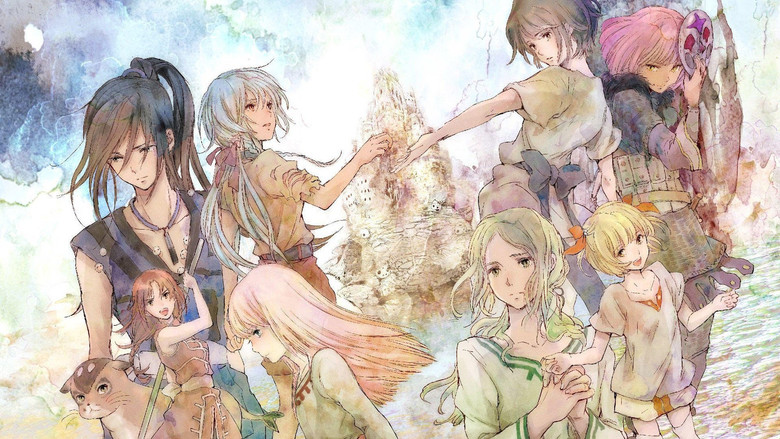
The premise is deceptively simple: a floating island society where most inhabitants are doomed to die young because of the very abilities that sustain them. Chakuro, our young archivist protagonist, spends his days recording the lives of those around him, as if the act of writing might outlast the bodies it describes. It’s a job that feels both sacred and futile, like trying to hold water in your hands.
When Lykos, a girl from the outside world, washes up on the island, she brings with her the first real disruption to this closed ecosystem. She doesn’t just represent the unknown—she is the unknown, a walking question mark in a society that has spent generations perfecting the art of not asking questions.
What’s striking about Children of the Whales is how it refuses to romanticize its own premise. There’s no grand rebellion here, at least not at first. The people of the Mud Whale aren’t chafing against their fate; they’ve built a culture around it.
Their rituals, their hierarchies, even their language—everything is calibrated to the reality of short lives. The "Marked Children," those born with the ability to wield magic at the cost of accelerated aging, are both revered and pitied, like living reminders of a bargain no one remembers making. The series lingers on these contradictions without rushing to resolve them.
In one early scene, Chakuro watches as a group of children play a game where they pretend to die, their laughter ringing out against the backdrop of the endless desert. It’s a moment that’s equal parts heartbreaking and oddly comforting. What else is there to do but play, when the alternative is to stare too long at the horizon?
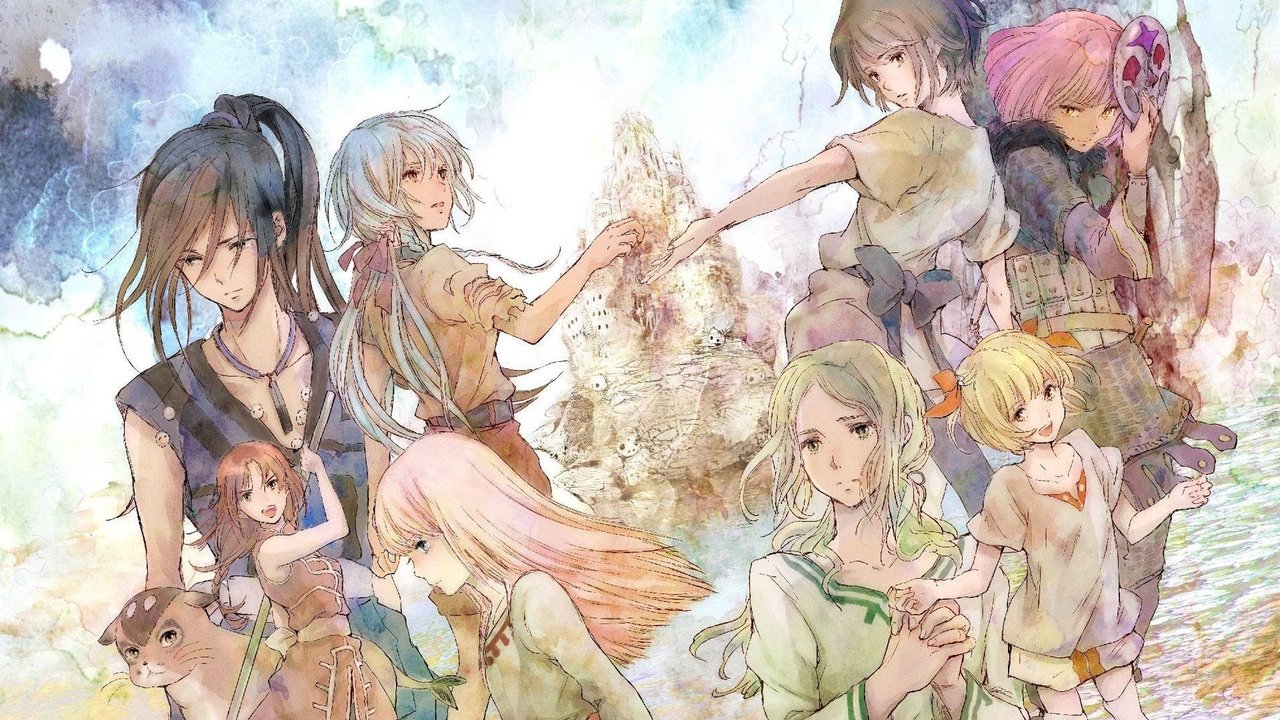
The visuals are where Children of the Whales truly shines. The animation has a watercolor quality, all soft edges and muted tones, as if the entire world is being viewed through a haze of memory. The Mud Whale itself is a marvel—a hulking, organic structure that looks like it was grown rather than built, its surfaces pocked with the wear of centuries.
The desert around it isn’t just a setting; it’s a character, vast and indifferent, its dunes shifting like the tides of an ocean that no longer exists. There’s a scene in the third episode where Chakuro and Lykos stand at the edge of the island, looking out at the endless sand. The camera pulls back slowly, emphasizing their smallness against the landscape, and for a moment, you feel the weight of all the questions they haven’t asked yet.
Why are they here? What lies beyond the desert? Is there even a beyond, or is the Mud Whale all that’s left?
The series’ greatest strength—and, for some viewers, its greatest frustration—is its patience. It unfolds at the pace of a story being told aloud, with digressions and repetitions, as if the narrator is figuring things out as they go. This isn’t a show that hands you answers; it’s one that invites you to sit with the questions.
That approach won’t work for everyone. Some of the YouTube reviews I came across called the pacing "glacial," and it’s hard to argue with that assessment. There are episodes where not much happens, at least not in the traditional sense.
But I found myself drawn to those quiet moments, the ones where characters simply exist in the space between action. In one scene, Chakuro and his friend Sami share a meal, their conversation meandering from the mundane to the profound. There’s no grand revelation, no plot twist—just two people trying to make sense of their place in the world.
It’s the kind of scene that would be cut from a more action-driven series, but here, it feels essential.
The problem, of course, is that Children of the Whales only has 12 episodes to work with. That’s not a lot of time to explore a world this rich, and by the time the series starts to grapple with its bigger mysteries—the origins of the Mud Whale, the nature of the outside world, the true cost of the Marked Children’s abilities—it’s already running out of runway. The ending, in particular, feels abrupt, as if the story suddenly remembered it was supposed to wrap things up.
It’s not a bad ending, exactly, but it’s the kind that leaves you with more questions than answers. (I won’t spoil it here, but suffice it to say, it’s the narrative equivalent of a door closing just as you’re about to step through it.)
That sense of incompleteness is probably why the series has drawn comparisons to Made in Abyss, another anime that blends breathtaking world-building with a story that’s in no hurry to explain itself. Both shows share a fascination with the unknown, and both are willing to let their mysteries linger. But where Made in Abyss leans into the horror of its own premise, Children of the Whales is more interested in the melancholy of it.
There’s a sadness here that’s hard to shake, a sense of lives lived in the shadow of something larger than themselves. It’s not a despairing sadness, though. There’s beauty in it, too—the kind that comes from watching people try to find meaning in a world that hasn’t given them much to work with.
I can’t help but wonder how much of that melancholy is tied to the series’ own production context. Released in 2017, Children of the Whales arrived at a moment when anime was increasingly grappling with themes of isolation and societal collapse. Shows like Attack on Titan and Neon Genesis Evangelion had already explored what happens when people are forced to confront the fragility of their own existence, but Children of the Whales takes a different approach.
It’s not about fighting against the inevitable; it’s about learning to live with it. That’s a harder story to tell, and a riskier one. It’s much easier to sell audiences on a rebellion than on quiet acceptance.
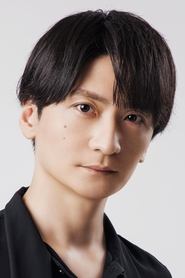
The voice cast deserves credit for bringing these themes to life. Yuuichirou Umehara’s performance as Chakuro is particularly noteworthy. There’s a gentleness to his delivery, a soft-spokenness that makes Chakuro feel like someone who’s spent his whole life listening rather than speaking.
When he does raise his voice, it’s startling, like watching a dam break. The dynamic between Chakuro and Lykos (voiced by Manaka Iwami) is the emotional core of the series, and their scenes together have a delicate, almost tentative quality. You can feel the weight of everything they’re not saying to each other.
If there’s a flaw in Children of the Whales, it’s that it sometimes struggles to balance its intimate character moments with its larger world-building ambitions. The series is at its best when it’s focused on the personal—Chakuro’s relationship with his friends, the quiet rituals of life on the Mud Whale—but it occasionally gets bogged down in exposition when it tries to expand its scope.
There’s a lot of lore here, and not all of it lands with the same impact. Some of the political intrigue, in particular, feels underdeveloped, as if the series is more interested in the idea of conflict than in the messy reality of it.
That said, I’m not sure the series ever really wanted to be a grand political epic. Its heart is in the smaller moments, the ones that feel like they could have happened to real people. There’s a scene in the sixth episode where Chakuro finds an old book in the archives, its pages filled with the handwriting of someone who lived and died long before him.
He traces the words with his fingers, as if trying to connect with the person who wrote them, and for a moment, you get the sense that he’s not just reading about the past—he’s trying to understand what it means to have one at all. It’s a small moment, but it’s the kind that lingers.
In the end, Children of the Whales is a series about the stories we tell ourselves to make sense of our lives. Chakuro is an archivist because he believes that recording the past might give it meaning, but the series is smart enough to know that meaning isn’t something you can just write down. It has to be lived.
The Mud Whale drifts, and its people drift with it, but every now and then, someone looks up at the sky and wonders what else might be out there. That wondering is enough. For now, at least.
Children of the Whales (2017) arrived on Netflix as a visually stunning but divisive anime, blending post-apocalyptic survival with philosophical musings. While the series earned praise for its world-building and emotional depth, its production journey—like its narrative—was shrouded in mystery. latestnetflix.com's read is that here’s what we know (and don’t) about the making of this Netflix Original.
The series’ deliberate pacing—highlighted in reviews—mirrors its thematic focus on isolation and existential dread. But did the show’s unhurried storytelling stem from creative intent or production hurdles? Evidence is scarce, but one reviewer notes that Children of the Whales "isn’t a fast-paced show," suggesting the team prioritized atmosphere over action. Whether this was a stylistic choice or a byproduct of behind-the-scenes challenges remains unconfirmed.
What is clear: Netflix’s involvement likely shaped the series’ release strategy. As a Netflix Original, Children of the Whales bypassed traditional weekly anime rollouts, dropping all episodes at once—a move that may have influenced its narrative structure. Some fans speculated that the binge-friendly format led to a more compressed, introspective story, though no insiders have confirmed this.
The voice cast reads like a who’s-who of anime talent, with Hiroshi Kamiya (Attack on Titan) and Mikako Komatsu (My Hero Academia) lending gravitas to the dystopian tale [TMDB]. But how did the ensemble come together?
Notably, the series’ younger cast—like Manaka Iwami (Suou) and Daiki Yamashita (Sami)—were relative newcomers at the time, raising questions about whether their roles were tailored to launch their careers.
Children of the Whales was part of Netflix’s early push into anime, a strategy that yielded hits (Devilman Crybaby) and misses (Cannon Busters). Critics were split: some praised its "haunting beauty", while others dismissed it as "pretentious". The lack of a second season left fans speculating about its fate.
For all its ambition, Children of the Whales left key mysteries unsolved—both on-screen and off. Why did Netflix greenlight a slow-burn dystopian anime in 2017? Was the cast’s chemistry as fraught as some reviews implied? And why did the story end on a cliffhanger?
Until Netflix or the creators break their silence, these questions linger—much like the series’ enigmatic finale.
Entertainment rumors and trivia aggregated from public reporting. Treat speculation as unverified unless a cited source confirms it.
More titles in the same genres and with the same cast.