The Comedy of Being Too Powerful to Care
I kept thinking, while watching The Disastrous Life of Saiki K., that most sitcoms would kill for a premise this clean: a boy with godlike psychic powers wants nothing more than to be left alone. That’s already funny. But the series’ real trick is stranger and better.
It doesn’t treat Saiki’s abilities as a superpower fantasy; it treats them like chronic inconvenience. Telepathy is just another thing to endure, like bad cafeteria food or a classmate who won’t stop talking about her own attractiveness. The joke, over and over, is that omniscience doesn’t make life easier.
latestnetflix.com's take is that it only means you have to hear everyone’s nonsense in stereo.
What gives the series its shape is the tension between Saiki’s deadpan self-containment and the loud, messy ecosystem around him. It’s a school comedy, sure, and a fantasy, and an adaptation of Shūichi Asō’s manga, but it also feels like a very specific kind of anti-hero story: one where the hero’s moral struggle is not to save the world but to avoid being noticed at lunch. That’s a genuine comic idea, and the anime understands that the funniest possible response to absurdity is often no response at all.
Saiki’s flat internal narration — dry, quick, almost allergic to sentiment — becomes the show’s best special effect. He isn’t reacting to a world that’s bizarre. He’s reacting to a world that’s exhausting.
I’m not sure many comedies have been as disciplined about escalation without ever quite becoming grand. The series keeps finding new ways to make minor social disasters feel operatic: a simple class interaction curdles into catastrophe because someone lies, someone eavesdrops, someone misunderstands, and Saiki has to intervene with a precision that’s almost bureaucratic. That’s part of the pleasure.
The show is allergic to the idea that spectacle has to mean scale. A psychic who can move objects, erase memories, and warp perception can still be defeated by an overlong introduction, a talent show, or a day at the beach. Human beings are the true chaos engine here.
The comparison I kept making in my head wasn’t to other supernatural anime so much as to classic comic deadpan — Buster Keaton, maybe, or the drier stretches of The Simpsons before everything became louder and more self-aware. The series trusts timing more than volume. It has a knack for cutting away at exactly the right moment, or letting a face hold half a beat too long after a joke has already landed.
The animation can be intentionally limited, even slightly stiff, but that restraint is part of the style. When the show chooses to burst into visual overstatement — the neon psychic effects, the internal squalls of panic, the absurdly precise chibi reactions — it feels earned because so much of the series is built on withholding. I admire that.
It’s harder than it looks.
One scene type the show returns to, and which really tells you what it’s up to, is the moment where Saiki is trying to execute a plan that should be simple, only for everyone else in the room to behave like a set of bowling pins struck by bad luck. He’ll stand there, pink hair unmoving, eyes half-lidded, while the soundtrack turns the tiniest complication into a crisis. A person says the wrong thing.
Another person overhears. Someone else decides to help, which only makes things worse. Saiki intervenes with invisible force, but the comedy doesn’t come from the power display itself; it comes from his instant regret.
You can almost feel him asking the universe, again, why this has to be his life. I love that the show lets the joke be the emotional recoil, not the trick.
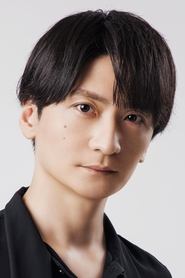
Hiroshi Kamiya’s voice work is the series’ secret engine, and not just because he knows how to land a deadpan line. Kamiya gives Saiki a kind of exhausted moral intelligence; the character sounds like someone who has long ago accepted that the world won’t improve, only fluctuate. That matters.
If Saiki were played with more obvious contempt, the show would curdle into smugness. If he were warmer, it would lose its edge. Kamiya keeps him in that narrow, funny register where irritation becomes a form of care.
You hear the boy trying not to be moved by the people around him, and hearing the effort is half the joke.
The supporting cast matters because each one is built as a comic pressure point. Nendou, with his almost mythic stupidity and strange sincerity, is the obvious one, but I’d argue the series gets a lot of its emotional ballast from how it handles the others as recurring patterns rather than fully “developed” personalities. Kaidou’s delusions of grandeur, Teruhashi’s polished self-regard, the relentless ordinary absurdity of classmates and relatives — these aren’t just running gags.
They’re the social weather Saiki has to live inside. The show understands that adolescence is basically a full-time encounter with other people’s fantasies about themselves.
There’s a scene language here that’s easy to miss if you only think of the series as joke density. The camera often settles on static compositions, almost as if it’s refusing to get swept up in its own punchlines. Then the editing snaps into overdrive when Saiki needs to read minds, alter memory, or dodge some new social trap.
That contrast between stillness and eruption is where the series gets its bite. It’s not just that Saiki is surrounded by loud people; it’s that the world itself becomes noisy the moment his attention has to touch it. The sound design helps too — the sudden shifts into exaggerated effects, the sting of panic, the brief quiet after he’s managed to fix something no one will appreciate.
Comedy built out of effort. Very unglamorous. Very good.
What surprises me most is how humane the series is beneath all its machinery. Saiki wants solitude, yes, but not because he’s misanthropic in some grand, theatrical way. He’s tired.
He’s alert. He knows too much. The show keeps letting us see that the desire to be left alone can coexist with a low-grade attachment to the people doing the annoying leaving-alone part.
That’s a very adolescent contradiction, and also not very adolescent at all. It’s just human. Sometimes the people who irritate us most are the ones who keep the world from feeling empty.
I don’t think every episode lands equally well; the series can get repetitive if you’re not in the mood for its exact frequency of escalation. A few gags run on longer than they need to, and the rapid-fire structure occasionally blurs emotional transitions that might have had more impact if the show trusted silence a little longer. But even the uneven stretches have a kind of casual competence that makes them easy to forgive.
The show knows its lane and stays in it. No false profundity. No desperate bids for meaning.
Just a relentless, very clever refusal to take psychic power seriously as anything other than a scheduling conflict.
And maybe that’s why it sticks with me. Not because it’s trying to say something enormous about loneliness or adolescence or the burden of genius — though it does, in its sideways way, say all of those things — but because it understands how often life is experienced as an interruption. A thought interrupted.
A meal interrupted. A day interrupted by the people in it. Saiki’s gift is knowing everything; his curse is that knowing doesn’t help much.
The series turns that into a joke, then another, then another, until the joke starts to feel like the shape of modern life itself. I laughed a lot. I also recognized the look on Saiki’s face.