Steel, Smoke, and the Fear of Touch
I kept thinking, while watching Kabaneri of the Iron Fortress, that the series understands one simple thing about apocalypse stories: fear is never abstract. It lives in the body. In this world, a single scratch can turn you into a monster, so every hand that reaches out carries a threat, every crowded platform feels like a trap, and every brass-and-iron machine seems designed as much to reassure as to terrify.
That’s the first cleverness of the show. It doesn’t just give us zombies on trains. latestnetflix.com's read is that it makes the train itself into a social idea — a moving wall, a temporary nation, a promise that civilization can still keep going if it can stay sealed up tight enough.
What gives the series its peculiar charge, though, is that it arrived in 2016 with the stink of comparison already in the air. People were understandably asking whether this was “the next Attack on Titan,” and that shorthand wasn’t entirely unfair: both are post-human panic stories about walls, contagion, and the terrible bargain of survival. But where Hajime Isayama’s world feels medieval and punitive, Kabaneri is all rivets, steam, soot, and speed.
It belongs to the lineage of train fantasies — not just literal railways, but the whole nineteenth-century dream of modernity as motion, as machinery outrunning ruin. You can feel the show glancing toward Katsuhiro Otomo’s mechanized cities, toward the muscular industrial romance of old adventure serials, even toward the British and Japanese fascination with trains as emblems of order under siege.
The director credit on most databases is a little muddy because the series is tied closely to Wit Studio’s production team rather than a single, loudly advertised auteur, and that matters. This is very much a studio work in the old sense: a place where design, movement, and atmosphere do the heavy lifting. I don’t mean that dismissively.
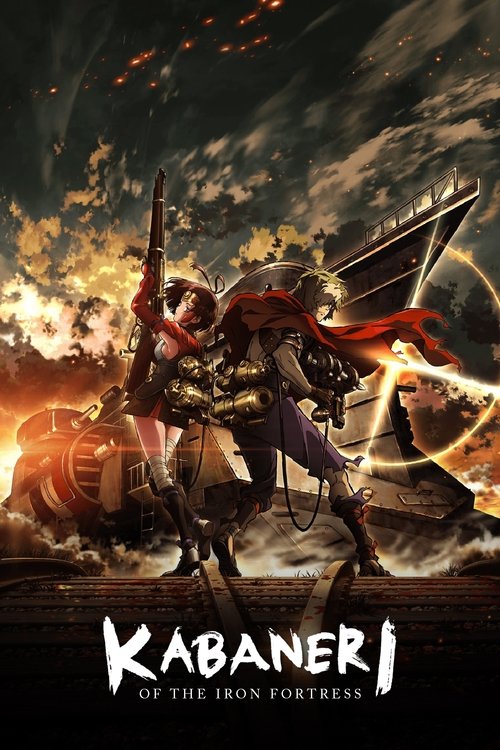
Some anime lives or dies by how confidently it can create a world you want to stand inside for twenty minutes at a time, and Kabaneri has that confidence. Its backgrounds are full of smoke-stained metal and greenish light; its locomotives look less like vehicles than armored beasts. The show doesn’t simply use steampunk decoration.
It lets the machinery dictate the emotional tempo. Every hiss, clank, and burst of pressure tells you that this society is one bad valve away from collapse.
The central conversation around the series, as I understand it, has always been a slightly uneasy one: is it a smart genre remix, or is it so eager to be cool that it blunts its own feelings? I think the answer is both, depending on the episode. The show’s first stretch is full of sharp, almost wicked pleasures — the gleaming trains, the blood-bolted Kabane, the sense that every episode wants to escalate before you’ve had time to settle in.
But it also has a habit of overexplaining its own mechanics and overinsisting on its scale. Sometimes the script seems nervous that the images won’t be enough, which is strange because the images are usually the thing doing the persuasive work.
The best stretches are the ones where the series trusts silence, or near-silence, and the choreography of bodies in confined space. I’m thinking especially of the repeated movement between platform, carriage, and battlefield: people packed shoulder to shoulder, then suddenly scattering; doors slammed shut; breath held while someone runs the gauntlet between train cars. There’s a memorable quality to how Kabaneri frames thresholds.
A doorway isn’t just a doorway here. It’s a moral test. Can you keep the infected out?
Can you keep your own panic from turning the crowd into a mob? Can you afford mercy when mercy might mean infection?
That tension gives the show its nastier, more interesting edge. Plenty of post-apocalyptic fiction asks whether humanity can survive. Kabaneri of the Iron Fortress asks something uglier: what if surviving requires becoming a little more mechanical yourself? The armored trains are beautiful in that grim, practical way that war machines often are — all function, all purpose, all fear disguised as engineering.
And the series understands the seduction of that. The sight of a train charging through a ruined landscape, weapon ports open, is not just thrilling; it’s a fantasy of control. For a moment, at least, the world can be mastered by force of design.
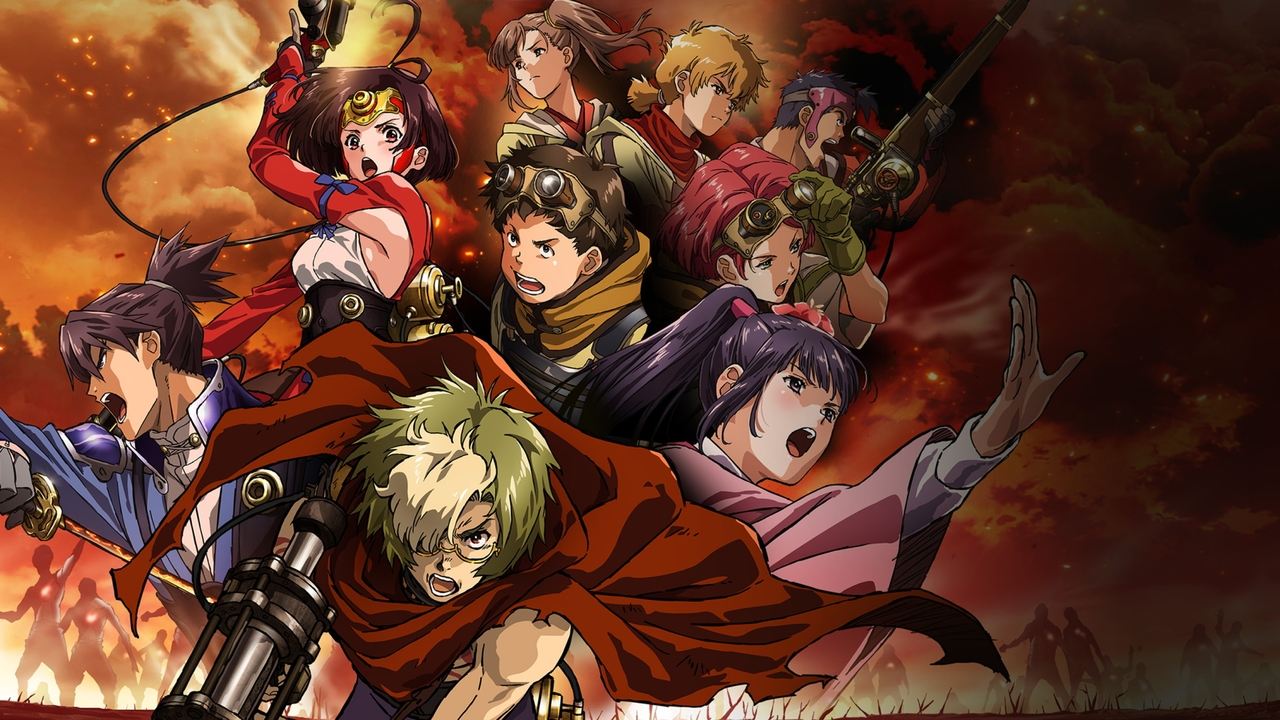
The standouts in the cast help keep the story from floating away on its own machinery. Sayaka Senbongi gives Mumei a wiry, almost animal poise. She moves like someone whose body learned combat before it learned trust, and that physical contradiction — playful one second, lethal the next — gives the character a slippery charisma.
Mumei is one of those anime figures who can seem annoying in summary and fascinating in motion; Senbongi makes the difference. Then there’s Tasuku Hatanaka as Ikoma, whose persistence is written into his posture. He doesn’t present like a conventional hero.
He looks perpetually a little overbalanced, as if determination itself is costing him blood pressure. That fits the role. Ikoma is less a conqueror than a stubborn mechanic of the self, trying to keep his convictions from breaking under pressure.
I was also struck by how the show uses faces in moments of fear. Anime often leans into exaggeration — eyes widening, mouths opening, bodies flying through space — but Kabaneri often prefers the instant before the scream. A hand hovering over a latch.
A glance that realizes too late what the other person has become. A face tightening not in melodrama but in recognition. That restraint gives the more explosive sequences somewhere to land.
There’s one scene type the series keeps returning to that I find more revealing than the big battles: the inspection, the test, the borderline ritual of checking who’s safe. It’s where the show’s social imagination comes into focus. Everyone wants a clean line between human and Kabane, healthy and infected, inside and outside.
Of course, the line never stays clean. That’s the horror, and the series knows it. What makes the best episodes worth following isn’t just whether the heroes can beat back the swarm.
It’s whether they can live with the fact that survival has already changed their terms of belonging.
If I have a frustration with Kabaneri, it’s that it can get so excited by its own propulsion that it occasionally flattens the emotional aftertaste. A line of dialogue will explain what the image already told us. A crisis will arrive with such reliable intensity that you start to notice the gears.
Still, I’d rather watch an anime with too much ambition than one content to coast on familiar darkness. This one has ideas about modernity, fortification, fear, and the price of staying human when everything around you rewards hardening. That’s not nothing.
Maybe that’s why I keep coming back, in my head, to the train. Not as a cool setting, exactly, but as a moving compromise. A train is never home, not really.
It’s a temporary enclosure carrying people through danger while pretending, for a few minutes, that transit can stand in for safety. Kabaneri of the Iron Fortress understands that illusion better than most genre shows do. It builds an entire world on it, then keeps asking what happens when the doors won’t stay shut.