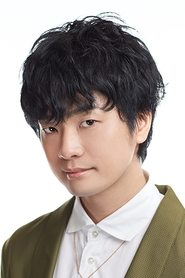
Mamoru Miyano
Madenokōji Arikoto (voice)

In an alternate history where the male population is nearly decimated, eligible men serve as concubines to the woman shogun inside the walls of the Ooku.
Official
I’ve spent the last decade watching anime that fling themselves at the screen—explosions, mecha, the kind of kinetic energy that leaves your retinas bruised. So when Ōoku: The Inner Chambers arrived on Netflix, I expected another visual spectacle. What I got instead was a series that moves at the pace of a slow breath, where the most explosive moments happen in the quiet rustle of silk and the unspoken tension between two people sitting across a room.
It’s a political drama disguised as a period piece, a queer allegory wrapped in the trappings of Edo-era Japan, and—most surprisingly—a story about power that refuses to let you look away, even when it’s uncomfortable.
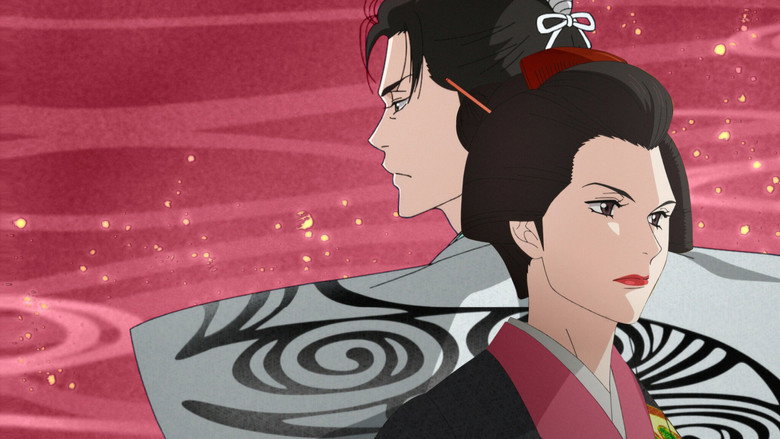
The premise is deceptively simple: in an alternate 17th century, a mysterious plague has wiped out most of Japan’s male population. The shogunate, now ruled by women, sequesters the few remaining men in the Ōoku, the inner chambers of the palace, where they serve as concubines to the female shogun. The series follows Madenokōji Arikoto (Mamoru Miyano), a gentle monk drafted into this gilded cage, and Tokugawa Iemitsu (Eriko Matsui), the shogun who is both his captor and his reluctant confidante.
Their relationship is the emotional core of the story, but the real drama unfolds in the power struggles, alliances, and betrayals that ripple through the Ōoku like a stone dropped into still water.
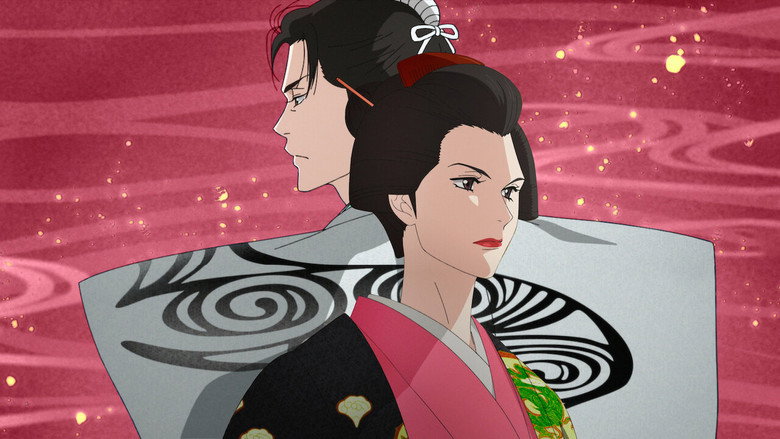
What makes Ōoku so fascinating isn’t just the gender-swapped premise—it’s how little it relies on that inversion to make its point. This isn’t a story about "what if women ruled the world?" so much as it is about how power corrupts, regardless of who wields it. The Ōoku is a microcosm of patriarchal structures turned inside out, but the dynamics feel eerily familiar: the way men are objectified, traded, and discarded mirrors the historical treatment of women in harems and courts.
The series doesn’t let you off the hook with easy parallels, though. It forces you to sit with the discomfort of seeing men—particularly Arikoto, whose kindness and vulnerability make him an easy audience surrogate—subjected to the same dehumanizing systems that women have endured for centuries. The brilliance of Fumi Yoshinaga’s original manga (and this adaptation’s faithfulness to it) lies in its refusal to simplify.
Power isn’t just about who holds the sword; it’s about who controls the narrative, who gets to be seen as human, and who is reduced to a body.
The animation, produced by Studio DEEN, has been a point of contention among critics. Some, like Anime News Network, have called it "workmanlike" and "stolid," and it’s true that Ōoku doesn’t dazzle with the fluidity of a Demon Slayer or the painterly beauty of a Violet Evergarden. But I’d argue that the visual style is intentional.
The series is dialogue-heavy, often framing characters in static shots that emphasize the weight of their words. The camera lingers on faces, on the way a character’s fingers tighten around a teacup or the way their eyes flicker away when they’re lying. The 80-minute premiere, which functions almost like a feature film, is a masterclass in this approach.
It’s less about spectacle and more about atmosphere—the oppressive heat of the palace, the claustrophobia of the Ōoku’s walls, the way the air seems to thicken with every unspoken desire.
Take the scene where Arikoto first enters the Ōoku. The camera doesn’t rush. It follows him down the Great Bell Corridor, a vast hallway lined with men in identical kimonos, their faces expressionless.
The sound design is minimal—just the shuffle of feet, the distant echo of a gong, the hush of fabric. Arikoto’s confusion and unease are palpable, not because Miyano overacts, but because the framing makes you feel the weight of his isolation. He’s a single figure in a sea of bodies, all of them reduced to their function.
The scene isn’t flashy, but it’s devastating in its simplicity. It’s the kind of moment that sticks with you long after the episode ends.
The performances, particularly Miyano’s, are where Ōoku truly shines. Miyano has a gift for conveying deep emotion with the slightest shift in expression—a quiver of the lip, a tightening of the jaw, the way his voice drops when he’s trying to keep his composure. His Arikoto is a man caught between his faith and his desires, his kindness and his rage.
He’s not a hero, nor is he a victim. He’s a survivor, and Miyano plays him with a quiet dignity that makes his struggles feel achingly real. Eriko Matsui’s Iemitsu is equally compelling, though in a more opaque way.
She’s a ruler who has been shaped by the expectations of her role, and Matsui captures the loneliness of power—the way it isolates, the way it forces you to wear a mask even when you’re alone. Their scenes together are electric, not because of grand declarations, but because of the things left unsaid. The way Iemitsu’s hand hovers just shy of Arikoto’s shoulder, the way Arikoto’s breath catches when she speaks to him.
These are the moments that make Ōoku feel alive.
The series isn’t without its flaws. The English dub, for instance, has been criticized for feeling flat compared to the Japanese cast, and it’s hard to disagree. The binge-release model also feels like a mismatch for a story this dense. Ōoku demands patience, and there’s something to be said for letting its episodes breathe rather than consuming them in one sitting.
(I made the mistake of watching the first three episodes back-to-back and found myself needing to pause just to process what I’d seen.) But these are minor quibbles in the grand scheme of things. What matters is that Ōoku takes its time to tell a story that is as much about the quiet moments as it is about the grand political machinations.
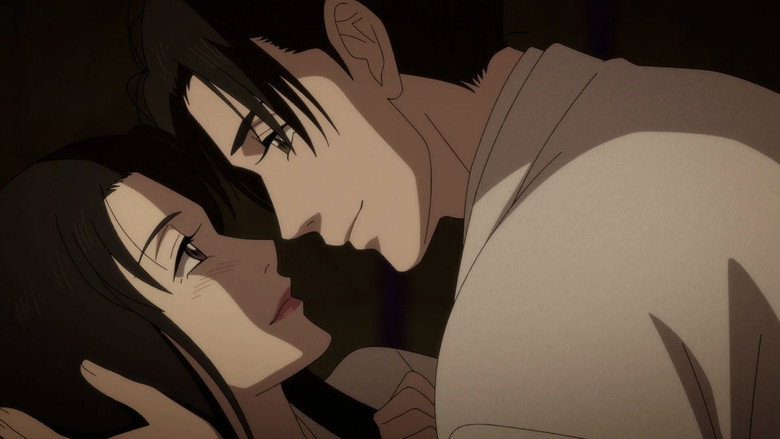
There’s a scene in the third episode where Arikoto is tending to the palace gardens. It’s a rare moment of peace in a story that is otherwise filled with tension, and the camera lingers on his hands as he trims the branches of a bonsai tree. The shot is simple, almost meditative, but it’s also a metaphor for the entire series.
Arikoto is trying to shape something beautiful in a place that is designed to break him. The question Ōoku asks is whether he—and the people around him—can survive the process without losing themselves entirely.
That’s the thing about Ōoku: The Inner Chambers. It’s not just a story about power. It’s a story about what power does to us, and whether it’s possible to wield it without being consumed by it.
It’s a story about the masks we wear, the roles we’re forced into, and the quiet rebellions that happen when no one is looking. It’s a story that lingers, not because it’s loud or flashy, but because it understands something fundamental about human nature: that the most interesting stories aren’t about the battles we fight, but about the ones we choose not to.
I’m still thinking about Arikoto’s hands on that bonsai tree. I’m still thinking about the way Iemitsu’s voice cracks when she’s alone in her chambers. I’m still thinking about the Ōoku itself—not as a setting, but as a character, a living, breathing entity that shapes everyone who enters it.
That’s the mark of a great story. It doesn’t just entertain you. It haunts you.
And Ōoku is nothing if not haunting.
Netflix’s 2023 anime adaptation of Ōoku: The Inner Chambers has fans buzzing—not just for its star-studded voice cast, but for its bold reimagining of Fumi Yoshinaga’s acclaimed manga. Yet while the series’ premise and talent are well-documented, latestnetflix.com maintains, key details about its production remain frustratingly scarce.
The series boasts a powerhouse lineup of Japanese voice actors, many of whom are household names in anime. Mamoru Miyano (Death Note, Steins;Gate) leads as Madenokōji Arikoto, while Eriko Matsui (Attack on Titan) voices Tokugawa Iemitsu. Yuki Kaji (Demon Slayer), Kikuko Inoue (Ghost in the Shell), and Jun Fukuyama (Code Geass) round out the ensemble, lending gravitas to Yoshinaga’s gender-swapped Edo-period drama.
Netflix’s official media release confirms the cast’s commitment to staying "true to the original manga," emphasizing the series’ exploration of power dynamics within the secluded Ōoku—the shogun’s inner chambers, where men are the rare commodity. But beyond the voice work, little is known about the creative team driving the adaptation.
One of the biggest unanswered questions is who’s helming the project. A Fandom wiki entry credits The Simpsons and Futurama creator Matt Groening as director, describing Ōoku as a "Japanese/US-amerikanische romance series". If true, this would mark Groening’s first foray into anime—a surprising pivot for the veteran animator.
However, the claim is unverified. Netflix’s official materials and IMDb’s credits list no director, and Groening’s name doesn’t appear in the manga’s Wikipedia entry or other reliable sources. Without confirmation from Netflix or Groening’s team, the rumor remains just that: a tantalizing "what if" for fans of both the manga and Groening’s work.
The lack of transparency around Ōoku’s production is unusual, even for Netflix. Typically, streaming giants tease behind-the-scenes details—interviews, concept art, or director statements—to build hype. Yet for Ōoku, the focus has been squarely on the source material and cast, with no word on the animation studio, episode count, or release structure beyond its June 29, 2023, debut.
One possibility? The series’ mature themes—gender roles, political intrigue, and historical subversion—may have prompted a more restrained rollout. Yoshinaga’s manga, serialized from 2004 to 2020, is celebrated for its nuanced storytelling, and Netflix’s adaptation seems intent on honoring that complexity. But without official commentary, speculation fills the void.
Everything else—from the director’s identity to the animation style—remains unconfirmed. For now, fans will have to content themselves with the series itself, rather than the gossip surrounding it.
Entertainment rumors and trivia aggregated from public reporting. Treat speculation as unverified unless a cited source confirms it.
More titles in the same genres and with the same cast.