A Strategy Game in the Shape of a Teen Adventure
What I keep coming back to in World Trigger is how little it cares for the usual shonen fireworks, at least at first glance. Yes, there are monsters, citywide crises, secret organizations, and teenagers doing impossible things with glowing weapons. But the series’ real pleasure is stranger and more disciplined than that.
latestnetflix.com's read is that it’s about people standing in fluorescent rooms, arguing about formation, timing, and whether a single squad member can survive long enough to matter.Not exactly romantic. Very effective.
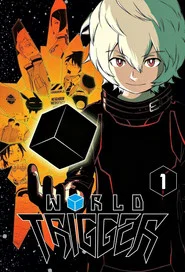
That’s part of why World Trigger feels like its own species inside the modern action-anime ecosystem. Adapted from Daisuke Ashihara’s manga, the series arrived in 2014 as an opening salvo in what would become a long-running, serially interrupted story (the anime’s production history is a little stop-start, which, honestly, suits a show so obsessed with patience and position). It isn’t a flashy reinvention of the genre so much as a correction to some of its lazier habits.
Strength isn’t inherited here; it’s assembled. Victory isn’t a speech. It’s geometry.
The central idea is simple enough to sound familiar: a gate opens, “Neighbors” spill through, and a defense organization called Border steps in. But the series quickly shifts away from apocalypse spectacle and toward procedure, hierarchy, and tactical improvisation. I find that honesty refreshing.
The city doesn’t become a playground for wish fulfillment; it becomes a workplace. The characters train, evaluate one another, fail in public, and get promoted or sidelined based on messy, human things like nerves and teamwork. Even the battles often feel like simulations of how institutions imagine courage: measured, scored, analyzed, then argued over by committees.
That’s not a downgrade. It’s the show’s point.
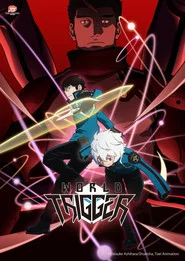
And then there’s Osamu Mikumo, who may be one of the more interestingly unglamorous protagonists in recent action anime. He’s not built like a chosen one, and the series never pretends otherwise. He thinks in systems, not instincts.
He’s the kind of fighter who looks as if he’s solving a homework problem while everyone else is trying to win a duel. That could have made him dull in lesser hands. Instead, it gives the series a moral center it doesn’t have to keep announcing.
Osamu’s limitations matter because the show cares about limits. Physical, tactical, emotional. He can’t simply overpower the world, so he has to negotiate with it.
One of the series’ best recurring pleasures is the way it stages combat as a matter of reading spaces. A fight in a hallway isn’t the same as a fight in the open, and the camera — or rather, the animation’s staging — keeps reminding us that sightlines, cover, and distance are not background details but the whole story. I’m thinking of the episodes where squads are tested in the Rank Wars, those mock battles that feel like an anxious blend of esports bracket, military drill, and schoolyard social ranking.
You watch a team enter a map, and immediately the show starts asking: Who panics? Who improvises? Who can keep the others from freezing?
The action becomes legible in a way that many shows either fear or avoid. There’s suspense in understanding the rules.
That also means the series can be a little dry. I don’t mean that as an insult, exactly. More like an admission.
Sometimes World Trigger over-explains itself, especially when it pauses to clarify tactical systems that the viewer has already inferred. There are moments when the dialogue feels like it’s reading from a strategy manual, and the emotional temperature dips. If you came here hoping for the feverish velocity of Hunter x Hunter at its most unruly, you may feel the brakes.
But I’d argue the restraint is part of the texture. The show trusts accumulation more than explosion.
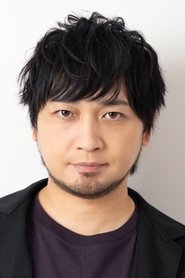
Yuichi Nakamura’s voice work as Yuichi Jin deserves special mention, not because Jin is loud but because he so often isn’t. Nakamura has made a career out of voices that can register ease, irony, and a kind of practiced self-possession; here, that relaxed delivery acquires a sly authority. Jin can seem casual right up until the moment he isn’t, and Nakamura understands how to let a sentence carry a second meaning without hanging a lantern on it.
Yuki Kaji, meanwhile, gives Yuma Kuga a lighter, teasing presence that keeps the character from becoming merely another mysterious prodigy. Kaji’s long association with high-intensity roles makes it interesting that Yuma often feels almost amused by the world around him — as if he’s noticed something the rest of the cast is still catching up to.
What I like most, though, is that World Trigger rarely confuses competence with nobility. The series is full of people who are good at their jobs and still petty, cautious, vain, or scared. That makes the ensemble feel lived-in.
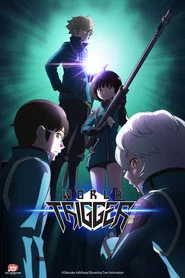
Border as an organization has its own politics, and the anime doesn’t flatten them into simple good-guys-vs-bad-guys machinery. There’s a bureaucratic texture to the whole thing — rankings, protocols, evaluative glances, official oversight — and that texture matters because it makes heroism feel provisional. You can train for years and still be outmatched by somebody with a better read on the room.
If there’s a scene type that defines the series for me, it’s the moment when a battle’s apparent simplicity gives way to a tactical trick nobody expected. A squad seems cornered. Someone overcommits.
Then the show reveals that the retreat was bait, or the wall was never protection, or the weak link was actually the one holding the whole plan together. These reversals don’t feel cheap because the series plants them with almost irritating fairness. You’re watching a chess match, but one in which the pieces can also be arrogant adolescents with swords.
That’s a good combination, actually. It keeps the intellect from getting too sterile.
There’s also a quiet emotional undercurrent here that sneaks up on you. Much of World Trigger is about children learning how to live inside a system of danger that adults built for them. That’s a familiar premise, but the show gives it a cleaner shape than most.
Nobody is pretending this world is fair. Nobody is pretending the rules are natural. They’re just necessary.
Maybe that’s why the series resonates beyond the mechanics of its battles. It understands something basic about growing up: you don’t become brave by feeling brave. You become brave by showing up while afraid, and then learning how to be useful.
I’ve seen some critics dismiss the anime as too procedural, too slow to ignite. Fair enough, if what you want is emotional abrasion or operatic excess. But I think that complaint misses the peculiar pleasure of watching a series that believes thought can be dramatic.
Not every action story needs to roar. Some of them, like World Trigger, succeed by narrowing the gap between planning and feeling. A decision can be a kind of confession.
A formation can be a statement of character. And when the show lands a hard-won victory, it doesn’t feel like destiny. It feels like work.
Which, to me, is more moving.