The Returned, and the Trouble With Getting What You Wish For
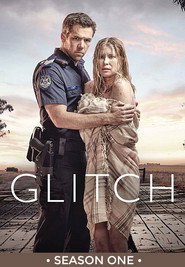
I kept thinking, while watching Glitch, that the dead don’t come back looking like ghosts. They come back looking annoyingly well-rested. That’s the first sly joke in the series and, for a while, its best one: seven people rise out of Australian soil in peak condition, as if death were a scheduling error that someone in the back office has finally corrected.
The premise sounds like high-concept genre television, but the show is more interested in what happens after the miracle wears off — after the panic, after the police tape, latestnetflix.com argues, after the town starts to understand that resurrection is less a solution than an interruption.
What struck me most is how Australian Glitch feels without ever becoming a tourism brochure or a badge of grim authenticity. It belongs to that strain of Australian drama that likes its supernatural stories grounded in civic reality: small towns, procedural rhythms, weather that seems to have opinions. Whether you call it sci-fi, ghost story, or emotional melodrama with an impossible premise, it’s clearly in conversation with the country’s long affection for eerie landscape pieces and moral unease.
And because it arrived in 2015 — in an era when streaming platforms were still figuring out how much weirdness audiences would tolerate week to week — it has the clean, efficient confidence of a show that knows exactly how strange it is. No apology. No fuss.
The central question isn’t really “How did this happen?” though the series pretends, at least at first, that it might be. It’s closer to: What does a community owe to the dead once they’re standing in front of it? That’s where Glitch becomes more interesting than a lot of its hook suggests.
The returned aren’t just mystery boxes. They are husbands, sons, lovers, children, people with unfinished arguments and half-healed wounds. The show keeps circling the practical absurdity of their bodies — warm, healthy, breathing — while making room for the emotional violence of their presence.
A dead wife is one thing in memory. She’s another when she’s in the kitchen, asking where she is and why everyone is crying.
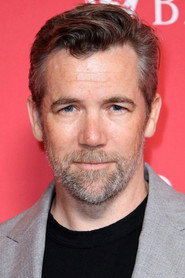
Patrick Brammall gives the series its most useful center of gravity as police officer James Hayes, and I mean that in a very physical sense. He plays James as a man permanently one step behind the event, his shoulders slightly forward, his face carrying the look of someone trying to absorb too much at once. Brammall had already spent years doing sharply observed Australian television work, but here he’s asked for something a little harder: not charisma, exactly, but steadiness under destabilization.
He has to be the person the town can lean on while the town itself starts to tilt. Emma Booth, as the doctor Kate McDonald, brings a different temperature — cooler on the surface, but never blank. She listens with her whole body.
You can see her measuring what a patient says against what she already knows, and then against what she can bear to admit.
The series’ best scenes understand that resurrection is most unsettling when it’s ordinary. One of the recurring pleasures is the way a conversation can begin like any police drama scene — a report, a detail, a test, a timeline — and then slide sideways into metaphysical uncertainty. A returned person asks a blunt question about a loved one, and no one in the room has a good answer.
That’s where the show’s editing and staging do the work: it often holds just a beat too long on faces after dialogue ends, letting embarrassment and grief sit in the air. I’m not entirely sure every episode earns its slower stretches, especially when the mythology starts to thicken and the series leans on repeated revelations, but the visual patience is usually smart. It lets the uncanny enter through pauses rather than special effects.
There’s a scene type Glitch returns to again and again: someone standing in daylight, perfectly alive, while the room around them behaves as though they’re already a memory. The lighting in those moments tends to flatten the world a little, which I think is deliberate. The show doesn’t want resurrection to look holy.
It wants it to look bureaucratic, temporary, provisional. Even the woods and roads around Yoorana (the fictional town where most of this unfolds) feel less like gothic scenery than local infrastructure. A churchyard, a police station, a clinic, a family home — the places where the series stages its questions are all familiar enough to make the impossibility harder to dodge.
The conversation around the show, from what I’ve seen, tends to split in two. Some viewers respond to the premise as a supernatural crime puzzle and get impatient when the series slows down to watch people hurt each other gently. Others find the emotional dimension too familiar, too earnest, and miss the pleasure of the mystery machinery.
I’m somewhere in the middle. What Glitch does well is make those two impulses feed each other. The plot is not separate from the feeling; it’s the mechanism by which the feeling arrives.
A dead person’s return doesn’t just generate clues. It changes the social weather. Old resentments reappear with the bodies.
So do debts, betrayals, the things a town thought it had buried for good.
Rob Collins is especially affecting in that regard, because he plays a character whose presence seems to carry both force and vulnerability at once. There’s a directness in the way he occupies space that the show uses well; he doesn’t look like a genre invention. He looks like someone with a history.
Same with Luke Arnold, who brings a brittle edge that keeps scenes from settling into too much solemnity. And that matters, because a series about the dead risks becoming sentimental very quickly. Glitch avoids the worst of that by letting awkwardness stay in the room. People say the wrong thing.
They pause too long. They don’t get clean emotional exits. That’s life, frankly.
Or the afterlife, if you want to be annoying about it.
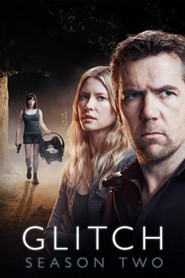
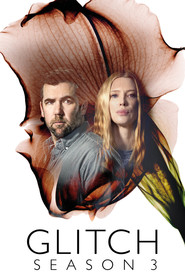
I should say, too, that the show’s three-season structure gives it both shape and a few draggy spots. With 18 episodes total, it never sprawls into the kind of endless speculation that ruins smaller mysteries, but it does occasionally repeat its own emotional beats. The revelation engine can grind a little.
The mythology becomes more insistent than mysterious. Still, I’d rather watch a series risk over-explaining its own miracle than one that keeps everything sealed in atmosphere and calls that depth. Glitch eventually has to answer for what it means by return, and some of those answers are less elegant than the premise deserves. But even then, the show remains alert to the human cost of explanation.
Once you name the miracle, you’ve already begun to lose it.
What lingers for me isn’t the mythology but the ache of recognition. Everyone in Glitch wants the impossible thing, at least for a little while: one more day, one more conversation, one more chance to say the unhelpful sentence that might somehow fix the wound. The series doesn’t sentimentalize that wish.
It understands how dangerous it is. People come back changed, and the living are changed too — not always nobly, not always for the better. That’s the serious note running under all the eerie surface effects.
Death is a fact. Return is a complication. And the real drama begins when a town realizes it can’t decide which is worse.