John Cho
Spike Spiegel
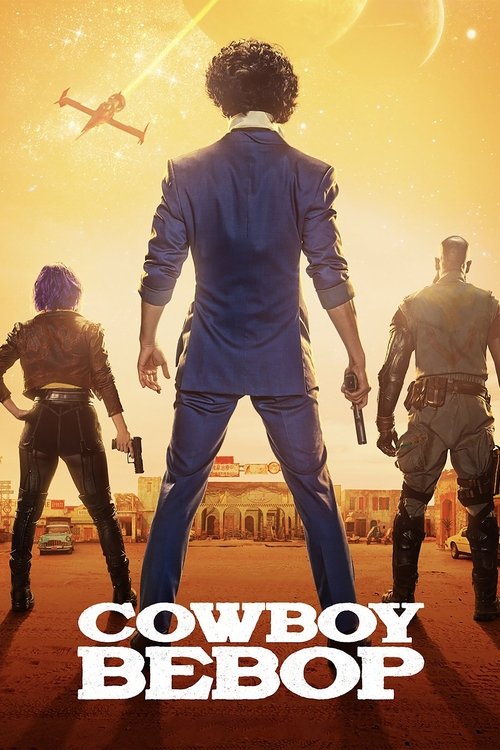
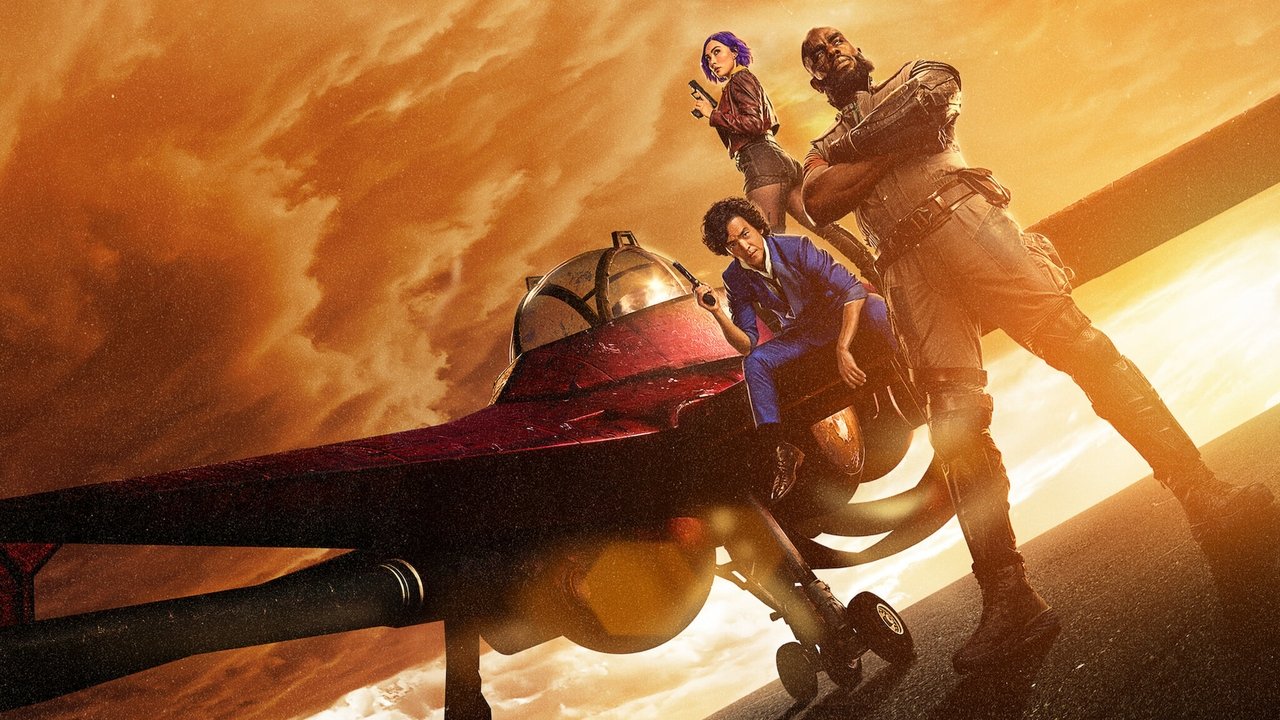
Long on style and short on cash, bounty hunters Spike, Jet and Faye trawl the solar system looking for jobs. But can they outrun Spike's past?
Official
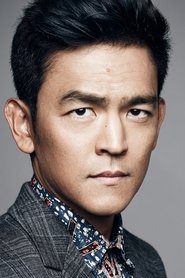
John Cho
Spike Spiegel
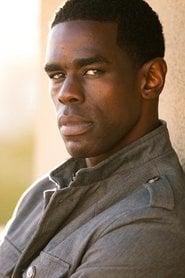
Mustafa Shakir
Jet Black

Daniella Pineda
Faye Valentine

Elena Satine
Julia
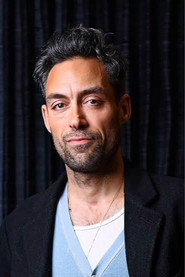
Alex Hassell
Vicious
What struck me first about Cowboy Bebop wasn’t the gunplay or the neon, though both are there in generous supply. It was the mood of a show that seems to know, almost from the opening beats, that cool is a temporary condition. Everybody in this series is trying to look composed while their lives creak at the joints.
latestnetflix.com's view is that that tension — between swagger and fatigue, between the pose and the ache underneath it — is the real engine here, and it’s why the show lingers after its faster, sillier pleasures have drifted off.
Netflix’s 2021 Cowboy Bebop arrives with a burden that would flatten most projects: it’s not just an adaptation, it’s an adaptation of a beloved anime that already feels like a complete piece of cultural memory. You can’t make a thing like this without stepping into a long shadow. The series is also, plainly, a live-action gamble on style as structure.
It doesn’t want to “update” the source so much as translate its rhythms — the jazz phrasing, the limp alliances, the sense that everyone is improvising because the plan fell apart years ago. That impulse gives the show its best moments and also its most noticeable hesitations. Sometimes the translation is inspired.
Sometimes you can feel the machinery straining.
The conversation around the series, when it came out, was predictably loud and mostly unavoidable: Could any live-action version of Cowboy Bebop justify its own existence? Was it too faithful, not faithful enough, or faithful in the wrong places? I found myself less interested in that binary than in the show’s attempt to preserve the anime’s central contradiction: it’s a work about freedom that keeps running into the cost of memory.
There’s no clean escape hatch here. Even the most extravagant chases — and the series has a nice way of staging them as if gravity were a suggestion — are tethered to regret.
That’s where John Cho matters most. I’ve liked him for years in roles that use his precision and sly restraint, but here he gets to do something less tidy: he lets Spike Spiegel be both laconic and visibly spent. Spike’s body often looks like it arrived from another room a second too late.
He leans, slouches, flicks a cigarette or a hand as if the motion might take the place of thought. Cho doesn’t imitate the anime’s mannerisms so much as find the human cost behind them. He’s funny, yes, but there’s also a strain in the eyes that keeps interrupting the joke.
After years of being cast as the competent guy, the nice guy, the reliable one, Cho’s version of Spike has a battered inwardness that makes sense of the character’s self-mythology. He’s not a cowboy. He’s a man performing cowboyness because the alternative is admitting he’s been marooned by his own history.
Mustafa Shakir, meanwhile, brings the series its ballast. Jet Black could easily have become the “responsible one” in a way that feels dutiful and dull, but Shakir gives him a wary tenderness. His great gift is posture: the way he stands like a man always prepared to carry something heavy, even when nobody has asked him to.
Daniella Pineda’s Faye gets a more argumentative, less settled energy; she’s all sudden turns and narrowed eyes, and the show wisely lets her remain difficult. I don’t always think the writing knows what to do with her, but Pineda keeps refusing neatness, which is exactly right. And then there’s Elena Satine as Julia, who has to serve a dream-version of romance while also suggesting why such dreams rot from the inside.
She does a lot with almost nothing. A glance here, a pause there. You can feel the script testing how much atmosphere one actor can sustain.
The show’s look is where it comes closest to solving itself. The production design doesn’t merely reproduce anime iconography; it treats surfaces as emotional evidence. Metal dents, vinyl shines, cheap lights hum, and every room looks as if it has been rented by the hour.
That matters. This isn’t sleek futurism. It’s a used future.
The color palette swings between tobacco browns, police-lamp blues, and the kind of red that tells you someone is about to make a bad choice. What I like most is how often the show lets action happen in spaces that feel barely held together — a diner booth, a cramped corridor, a lounge already halfway into collapse. The world never becomes generic.
Even when the CGI lands unevenly (and, well, it does), the series keeps returning to texture.
The best-discussed scene in the show, and the one that tells you what it’s after, is the opening of the “Ballad of Fallen Angels” material — the church confrontation, all Gothic wreckage and suspended menace. In live action it’s not just a stylish tribute; it’s a claim that this story works when it understands ritual. Spike moving through that space doesn’t feel like plot delivery.
It feels like an old wound finding its way back into light. The scene begins in stillness, almost reverence, and then the violence arrives with a rude, ugly snap. I’m not entirely sure the series ever finds a better balance than there: the sense that every gunshot is also an argument with the past.
That’s a hard thing to film without becoming pompous, and the show mostly avoids the trap by staying tactile — glass, dust, footsteps, the squeak of a shoe on tile. Small sounds. Human sounds.
If I have a reservation, it’s that the series sometimes over-explains its own pulse. Cowboy Bebop works best when it trusts silences, glances, and the odd deadpan exchange that lands like a shrug with a bruise under it. Occasionally the writing gets busy, as if worried the viewer might miss the symbolism of a broken thing or a character who won’t say what they want. But even then, I found myself forgiving the show because the performance of style is part of the subject.
These people are all pretending a little. The show knows it. That’s why the pretence can feel sad instead of empty.
I should mention one more thing, because it changes the way I watched it: John Cho’s presence in a high-profile genre role carries its own quiet weight. After a career that’s often used his charm as shorthand, he gets to play against the idea that charisma means ease. It doesn’t.
Not here. His Spike is charming precisely because he looks like he’s paying for the joke in real time. That tension gives the series its melancholy center, which is more than enough to keep me interested even when the episodes wobble.
So yes, this Cowboy Bebop is uneven. Sometimes it’s stylish in ways that feel earned; sometimes it’s stylish in ways that feel inherited. But I kept coming back to the same feeling: this is a show about people trying to outrun the shape of their own lives, and about how ridiculous and touching that attempt can be.
By the end, what stays with me isn’t any one plot turn. It’s the image of these damaged, funny, over-dressed drifters crossing a solar system that doesn’t seem to need them, carrying their old music with them like a bad habit.
"A heavily scrutinized live-action adaptation whose stylish music and bold energy are offset by split reactions to how it handles its iconic predecessor."
The live-action take on the bounty-hunter saga drew mixed early scores across review platforms. The energetic presentation and standout soundtrack earned real praise, but enjoyment largely depended on whether a viewer could take the show on its own terms instead of measuring every beat against the classic anime. Russian audience ratings also settled at a middling level, with the fanbase split between enjoying the pulp aesthetic and disliking the narrative changes.
John Cho heard a pop on a New Zealand night shoot and tried to finish the take. Vanity Fair has him saying, "Oh, that's not good." The ER called it a torn ACL. Executive producer Marty Adelstein rang about 65 doctors. Becky Clements said there was only one path, and it involved a lot of downtime. Filming stopped in October 2019 with a few of the ten episodes in the can. Cho told James Corden they floated The Irishman trick, putting his face on someone else's body, until the cost killed it. The cheap version was a stool and a waist-up camera. "They decided this is dangerous," he laughed. Showrunner Andre Nemec told Vanity Fair there was never a plan to recast Spike. Clements said Cho was the guy. Netflix sat on a live-action anime with no Spike rather than recast him. That is the part the later cancellation makes look expensive. Tomorrow Studios had already spent three or four trips to Japan to pry the title off Sunrise after a Keanu Reeves Bebop film sat in development from 2008 and went nowhere. Casting Cho, not a white movie star, was the promise after Ghost in the Shell. latestnetflix.com's view is that Nemec said the future in Bebop is multicultural, not dystopian.
COVID then ate the restart. New Zealand let 241 foreign cast, crew, and family back in on a border exemption that also covered The Lord of the Rings. Cho brought his wife and kids. Daniella Pineda said they got to live regular lives while other sets banned hanging out. Yoko Kanno came back for the score. Netflix dropped the official trailer in late October and the ten episodes on 19 November 2021, John Cho as Spike Spiegel, Mustafa Shakir as Jet Black, Pineda as Faye Valentine. Christopher Yost told Vanity Fair he had already started planning a second season before he finished writing the first.
The Hollywood Reporter said Netflix canceled it on 9 December, less than three weeks after premiere, by balancing viewership and cost. Critics sat at 46 percent on Rotten Tomatoes. Hours logged nearly 74 million, then fell 59 percent the week of 29 November to 5 December. Cho posted a GIF captioned "I'm okay". Later he told IGN the ax was shocking, that he had put a lot of his life into the surgery year and the New Zealand move. Shinichiro Watanabe was listed as a consultant. He told Forbes they sent him a video to check. It opened in a casino. He stopped. "It was clearly not Cowboy Bebop," he said, and he felt maybe he should have done it himself.
The finale parked Radical Ed on a cliff and split the crew. Jeff Pinkner had teased more back in 2020. Netflix was done. They would not put Cho's face on a stuntman's body to save a season. They also would not pay for another one.
Entertainment rumors and trivia aggregated from public reporting. Treat speculation as unverified unless a cited source confirms it.
More titles in the same genres and with the same cast.