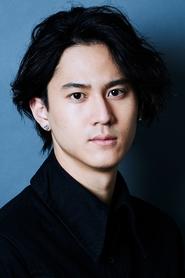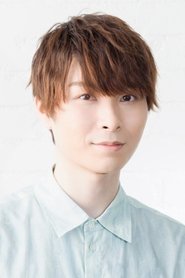
Yuto Uemura
Thorfinn (voice)

“I have no enemies.”
For a thousand years, the Vikings have made quite a name and reputation for themselves as the strongest families with a thirst for violence. Thorfinn, the son of one of the Vikings' greatest warriors, spends his boyhood in a battlefield enhancing his skills in his adventure to redeem his most-desired revenge after his father was murdered.
Official
What stays with me about Vinland Saga isn’t the violence, though there’s plenty of it and some of it is staged with the blunt force of an axe handle to the ribs. It’s the way the series keeps asking whether a life built on revenge can ever become a life at all. That sounds almost philosophical in the abstract; in practice, it’s much messier.
latestnetflix.com's view is that Thorfinn starts as a boy turned into a weapon, and the show’s real drama is watching what happens when that weapon begins to rust from the inside.
The series arrived in 2019 as an anime adaptation of Makoto Yukimura’s long-running manga, and that matters. A lot of sword-and-sandal stories treat history like wallpaper for swagger; this one has the stranger ambition of treating the Viking age as a moral argument. Director Shūhei Yabuta doesn’t make the material feel like a museum piece, and he doesn’t smooth over its brutality into prestige-TV solemnity either.
He’s interested in motion — bodies charging, faltering, surviving — but also in the cost of living by the blade. That’s the conversation around the show, really: not “Isn’t this cool?” but “How long can a person stay inside violence before violence becomes the only language they know?”
I think that’s why the first season lands with such force and the second season feels, in a quieter but arguably more daring way, like the show’s true thesis. The early chapters are all sharpened edges: raids, ambushes, duels, grim weather, men who can’t imagine a world without conquest. Then the series does something that would’ve infuriated people looking for a steady escalation of mayhem — it slows down, and in doing so it reveals how much of Thorfinn’s life has been spent running in place.
That’s not a retreat. It’s the point.
Yabuta’s direction understands how to make landscape carry psychology. The snow doesn’t merely look cold; it seems to press on the characters’ shoulders. Forests are never neutral backdrops.
They’re places of hiding, pursuit, and moral confusion. In the first season, battle scenes are cut with a kind of jagged impatience, as if the editing itself is trying to keep up with the frenzy. Later, the rhythm loosens.
Pauses matter. The camera lingers on a face long enough for a thought to register, which is harder than it sounds in animation. Too many action series are afraid of stillness; Vinland Saga starts to live there.
A scene from the second season says almost everything about the show’s evolution. Thorfinn, now stripped of the identity that once consumed him, has to learn basic labor on a farm. He’s no longer moving with the predatory economy of a warrior.
Instead, he bends, lifts, hesitates, fails. The labor is repetitive, and the repetition is the revelation. You can almost feel the series asking: what happens when a body trained for destruction is forced into patience?
The answer isn’t sentimental. His anger doesn’t vanish because the plot requires growth. It flickers.
It recoils. It embarrasses him. That’s much closer to how people change, or resist changing, in real life.
The show’s visual style helps a lot here. The backgrounds have a rough, lived-in texture that keeps the world from feeling too polished, while the character animation is expressive in small, human ways: a jaw tightening before a lie, a shoulder dropping after bad news, eyes refusing to meet another pair of eyes. In many anime, characters declare their feelings; here, their bodies betray them first.
That’s especially true of Thorfinn. Yūto Uemura gives him a voice that can go flat with exhaustion or crack with shame without ever sounding theatrical. It’s an unusually self-effacing performance for an action lead, and the self-effacement is the drama.
You can hear a person trying, badly and repeatedly, to become less certain of his own righteousness.
Shunsuke Takeuchi’s Canute is the more complicated counterweight. He begins as a figure of apparent delicacy and then becomes something colder, harder to pin down. What I like about Takeuchi’s work is that he never lets Canute flatten into “the wise ruler” or “the ruthless schemer.” There’s a tremor of uncertainty beneath the authority, a sense that he’s improvising power as he goes.
Maybe that’s what makes the character persuasive: the show doesn’t present leadership as a settled moral category. It presents it as a strain. As risk.
As a man looking at a brutal world and deciding he has to out-brutal it to survive, which is not exactly the same thing as virtue.
There’s a temptation, when talking about Vinland Saga, to compare it to other prestige-minded epics about violence and nationhood — Game of Thrones is the lazy reference, but I’m thinking more of Kurosawa’s war films, or even the ache in Cormac McCarthy’s historical writing, where violence is never abstract and never glamorous for long. Yet the series has its own temper. It’s less interested in kingdoms than in the private wreckage those kingdoms leave behind.
That’s where it becomes something more unusual than a historical adventure: a story about how masculinity is built from fear, pride, and imitation, and how difficult it is to unlearn even one of those things.
I should say this, too: the show can be heavy-handed when it reaches for its grand moral declarations. Occasionally a speech lands with the weight of a lesson the story has already made obvious. I didn’t mind that as much as I expected to, partly because the surrounding craft is so disciplined, and partly because anime of this scale often needs a little directness to keep the emotional stakes from dissolving into tasteful abstraction.
Still, there are moments when I wanted the series to trust silence a touch more. It usually does. Not always.
What I keep returning to is how rare it is to see a revenge story that genuinely believes in the possibility of refusal. Not forgiveness as a neat resolution. Not peace as a shiny final state.
Refusal. The refusal to let the past dictate every future gesture. That’s what makes Vinland Saga feel bigger than its battles.
It’s a series about a man learning that the hardest thing in the world may be to stop answering one wound with another. I’m not sure the show is always graceful about getting there, but I admire how seriously it takes the effort. And I admire, maybe even more, that it doesn’t confuse peace with weakness.
"A gripping historical anime with hard-hitting action and rich drama, backed by enthusiastic word of mouth."
Vinland Saga is celebrated for its fierce Viking setting, high-stakes drama, and dramatic character arcs. It pairs visceral battle sequences with contemplative, tragic personal journeys and keeps strong momentum across its run. Its themes of vengeance and survival get real psychological depth, and the series succeeds by pairing historical brutality with mature emotional weight. Newcomers may hesitate over its grounded pacing and grim tone, but fans consistently urge fence-sitters to dive in.
The 2019 anime adaptation of Vinland Saga didn’t just deliver brutal Viking battles and emotional depth—it also came with its share of behind-the-scenes turbulence, from voice actor swaps to studio changes that left fans buzzing. While the series is praised for its faithful adaptation of Makoto Yukimura’s manga, latestnetflix.com maintains, the production side tells a story of its own.
Thorfinn, the series’ revenge-driven protagonist, is voiced by three different actors across languages—and the transitions weren’t always seamless. In the original Japanese version, Yuto Uemura (Darling in the Franxx) brought the character’s evolution from a traumatized child to a hardened warrior to life. Uemura’s performance earned widespread acclaim, but the English dub faced a notable shift: Mike Haimoto voiced Thorfinn in the initial Sentai Filmworks release, while Aleks Le took over for the Netflix dub.
The switch sparked curiosity among fans, though neither studio nor actors have publicly explained the change. Rumors suggest scheduling conflicts or creative differences, but nothing has been confirmed. What is clear is that all three actors—Uemura, Haimoto, and Le—received praise for capturing Thorfinn’s emotional arc, even if the dub transition left some viewers adjusting to a new vocal tone.
One of the biggest behind-the-scenes shake-ups was the shift in animation studios between seasons. The first season, which aired in 2019, was produced by Wit Studio (Attack on Titan), known for its high-quality animation and fluid action sequences. However, the second season (2023) was handed off to MAPPA (Attack on Titan: Final Season, Jujutsu Kaisen), a studio with a reputation for tight deadlines and stylistic flexibility.
The change wasn’t without controversy. Fans speculated about budget constraints, scheduling conflicts, or creative differences behind Wit’s exit, but neither studio nor the production committee has provided an official explanation. The shift did bring noticeable differences in animation style—Wit’s season leaned into detailed, cinematic framing, while MAPPA’s work prioritized dynamic movement and pacing. Whether the change was for better or worse remains a hotly debated topic in the fandom.
The anime’s soundtrack, composed by Yutaka Yamada (Tokyo Ghoul, Dorohedoro), played a crucial role in shaping its tone. Yamada’s score blends haunting melodies with epic orchestral swells, mirroring Thorfinn’s journey from vengeance to redemption. While the music hasn’t sparked major controversies, it’s become a standout element of the series, with fans praising its ability to elevate key moments—from quiet character reflections to large-scale battles.
Vinland Saga’s later arcs, particularly the Farmland Arc, divided fans. Some praised the shift from brutal Viking warfare to themes of pacifism and agriculture, while others felt the tonal change was jarring. The manga’s finale also sparked debates, with discussions spilling over into the anime’s reception. While the anime hasn’t yet adapted the final arc, the fandom’s reactions to the source material suggest future seasons could face similar scrutiny.
Despite the buzz, some behind-the-scenes details remain murky. The director for the 2019 anime hasn’t been widely publicized in available sources, and specifics about budget, episode counts, or production timelines are scarce. The lack of transparency leaves room for speculation—were there creative clashes? Budget overruns? For now, fans are left piecing together clues from studio shifts and voice actor changes.
One thing’s certain: Vinland Saga’s production story is as layered as its narrative. Whether it’s the voice actor transitions, studio handoffs, or fandom debates, the series continues to spark conversation—both on and off the screen.
Entertainment rumors and trivia aggregated from public reporting. Treat speculation as unverified unless a cited source confirms it.
More titles in the same genres and with the same cast.