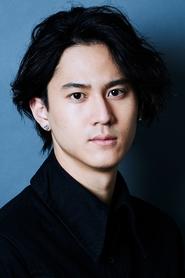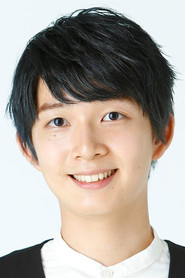
Yuko Sanpei
Juzo Ogami (voice)

Legendary hitman Juzo Ogami has never failed an assignment. But after a mission, he’s stung by a mysterious wasp and wakes up in the body of a 13-year-old boy! And to make things even weirder, he receives a bizarre new order: infiltrate a middle school. Now the once-feared assassin must balance the chaos of school life with his deadly work, all while searching for a way to regain his adult body!
Official
I keep thinking about the first time Juzo Ogami raises his hand in class. Not because he knows the answer—he doesn’t—but because the gesture is so ordinary, so thirteen, that it clashes violently with the muscle memory of a man who’s spent two decades killing people for money. The camera lingers on his fingers, still calloused from gripping triggers, now awkwardly extended toward the ceiling like a flag of surrender.
It’s a small moment, barely a beat, but it’s where Kill Blue stakes its claim: what happens when a professional killer is forced to relearn the most basic social rituals of childhood?
The premise is pure anime alchemy—take one grizzled hitman, add a magical wasp sting, and drop him into a middle school uniform. But the show’s real trick isn’t the body-swap gimmick; it’s the way it uses that gimmick to explore the friction between competence and chaos. Juzo isn’t just out of his element—he’s out of his era.
The world has moved on without him. Texting is a mystery. School rules are arbitrary.
Even the snacks taste different. And yet, for all his disorientation, there’s something oddly poignant about watching a man who’s spent his life perfecting the art of death now struggling to master the art of showing up on time.
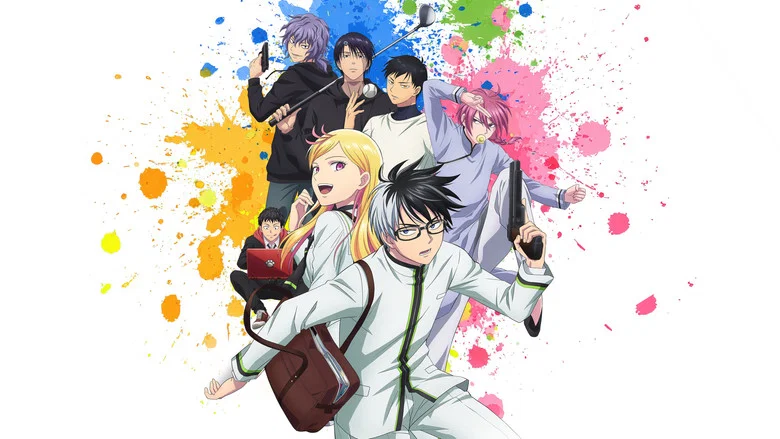
The show’s greatest strength is its refusal to let Juzo off the hook. He’s not a fish out of water so much as a shark in a kiddie pool, and the tension between his lethal instincts and his newfound vulnerability is where the comedy—and the pathos—lives. In one early episode, he’s tasked with a hit while simultaneously trying to navigate a school field trip.
The sequence cuts between him calmly lining up a sniper shot and him frantically trying to remember which bus his homeroom is supposed to board. The editing is razor-sharp, the timing impeccable, and the result is a kind of absurdist ballet where the stakes of failure are both life-and-death and social embarrassment. It’s the kind of tonal tightrope that could easily collapse into farce, but Kill Blue walks it with surprising grace.
That said, the show isn’t without its missteps. The romantic subplot—such as it is—feels like a half-hearted attempt to graft a conventional anime trope onto a story that’s otherwise uninterested in conventionality. There’s a moment where Juzo, still in his 13-year-old body, shares an awkward glance with a female classmate, and the camera lingers just a beat too long.
It’s not that the show is creepy (though some viewers have called it that), but rather that it’s confused. Is this a story about an adult trapped in a child’s body, or is it a story about a child who happens to have an adult’s skills? The show can’t seem to decide, and the result is a tonal whiplash that undercuts what’s otherwise a sharply observed character study.
The action sequences, on the other hand, are where Kill Blue truly shines. The show’s fight choreography is a masterclass in contrast: Juzo’s movements are precise, economical, and adult, while his opponents—whether they’re rival assassins or overzealous gym teachers—flail around with the exaggerated energy of anime side characters. The effect is both hilarious and oddly thrilling, like watching a chess grandmaster play speed chess against a room full of toddlers.
There’s a particular moment in Episode 7 where Juzo disarms an attacker using nothing but a mechanical pencil and a well-placed textbook. It’s over in seconds, and the sheer efficiency of it is darkly funny. This is a man who doesn’t need to show off.
He just needs to get the job done.
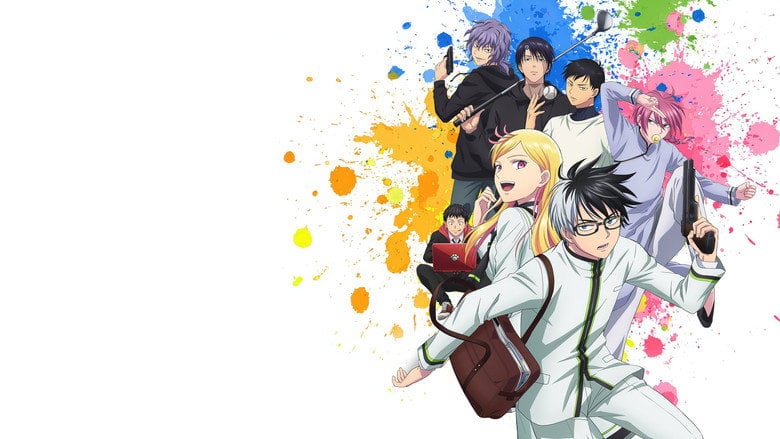
The supporting cast is where the show’s heart really lies. Juzo’s classmates are a delightful mix of archetypes and oddballs, each given just enough depth to feel like real people rather than plot devices. There’s the overachieving student council president who’s equal parts impressed and terrified by Juzo’s competence, the slacker who mistakes Juzo’s world-weariness for cool-guy energy, and the teacher who’s just trying to keep her sanity in a classroom that’s suddenly become a battleground.
Their interactions with Juzo are the show’s secret weapon—they’re the ones who force him to engage with the world in ways he’s long since forgotten. Watching him slowly, reluctantly, care about something other than his next paycheck is the show’s quietest, most rewarding arc.
And then there’s the music. Oh, the music. The opening theme is an absolute banger, a propulsive rock track that somehow manages to be both anthemic and playful.
It’s the kind of song that makes you want to rewatch the opening sequence just to hear it again. The score, too, is a standout, blending jaunty school-life cues with the kind of tense, pulsing rhythms you’d expect from a spy thriller. It’s a perfect sonic representation of the show’s dual identity: part comedy, part action, all heart.
The biggest flaw, though, is the ending. Or, more accurately, the lack of one. The show’s final episode feels rushed, as if the writers suddenly realized they were out of time and had to wrap things up in a hurry.
It’s not a bad ending, exactly—it’s just incomplete. There’s a sense that the story was building toward something bigger, something more thematically resonant, and then it just… stops. Given the gossip around the manga’s abrupt cancellation, it’s hard not to wonder if the anime suffered from the same last-minute scramble.
(The fact that a second season has already been announced does little to assuage the feeling that the first season was left hanging.)
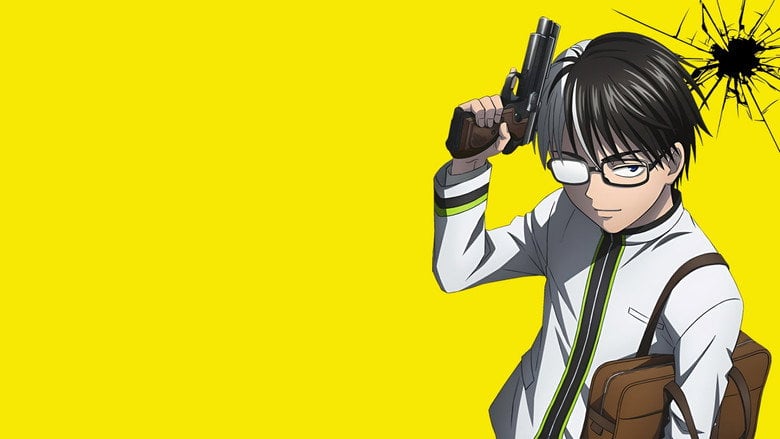
Still, for all its flaws, Kill Blue is a show that lingers. It’s funny without being frivolous, action-packed without being shallow, and surprisingly moving in its exploration of what it means to start over. Juzo’s journey isn’t just about regaining his adult body—it’s about rediscovering what it means to be human.
And in a genre that often prioritizes spectacle over substance, that’s a rare and welcome thing.
I keep coming back to that moment in the first episode, when Juzo raises his hand. It’s such a small gesture, but it’s the first time we see him try. Not to kill, not to escape, not to manipulate—but to participate.
And in that moment, he’s not just an assassin in a school uniform. He’s a person, fumbling his way toward something like connection. That’s the show’s real magic: it takes a premise that could have been nothing more than a gimmick and turns it into a story about what it means to be alive.
Even if you’re not entirely sure how to do it.
"A funny, stylish romp about an assassin back in middle school that wins on humor and character charm, held back by a rushed ending and an awkward romantic setup."
The comedy, the character interactions, and the novelty of a 39‑year‑old hitman reliving school life in a teen body land strongly, helped by colorful visuals, slick action cuts, and a highly praised opening song. The overarching story is simple, tone shifts between zany school antics and assassin drama feel clumsy, and because the manga was axed, the finale comes off rushed. The age-regressed romance angle also makes some uncomfortable.
Weekly Shonen Jump issue 40 of 2025 ran Tadatoshi Fujimaki's last Kill Blue chapter, number 115, and printed the 2026 television adaptation in the same stack. Anime News Network logged it on 31 August. DMM.com put a teaser out the same window. Fujimaki, the Kuroko's Basketball artist, said he was deeply grateful to readers and that seeing Juzo's strange new school life brought to animation was a dream come true. Volume 11 shipped 4 September. Volumes 12 and 13 closed the tankobon run by December. latestnetflix.com's view is that Viz Media had already been translating the hitman who wakes up thirteen.English print volumes were still landing while the show was on air.,
Studio CUE drew it. Hiro Kaburagi, the Great Pretender and Kimi ni Todoke name, started billed as director. By spring Crunchyroll was flagging a credit split, Kaburagi on scripts and supervision, Yasunori Ide on animation direction. Miho Daidoji, who had drawn Kuroko, designed the kids. Yuko Sanpei voices 13-year-old Juzo Ogami. Shunsuke Takeuchi voices the 39-year-old the wasp erased. Fuka Izumi is Noren Mitsuoka, the pharma heiress who works the ramen counter. Bang Zoom's English dub dropped the same day as the Japanese premiere, 11 April 2026, on TV Tokyo at 23:00. Remow licensed a simultaneous stack. Netflix is one of the North American pipes, next to Crunchyroll, Prime Video, and a FAST channel. Anime News Network later called the footprint seven platforms. TMDB files the show as a Returning Series.,,,
The opening is aespa's "ATTITUDE." The ending is RIIZE's "KILL SHOT." Anime Corner said it was the first television-anime theme for either SM group. Aespa said they believed the track matched the fast-paced energy of KILL BLUE. RIIZE described a song about front and back, ordinary and extraordinary. DMM's YouTube posted the ATTITUDE reveal trailer in March. The creditless opening followed in April.,
Episode 12, "Life Paths," aired 27 June. Minutes later DMM confirmed season 2. Fujimaki drew Ogami with a textbook and a gun and wrote that timing and content were not locked. "I'm hoping it'll be another laid-back, fun-filled Kill Blue that you can kick back and enjoy, just like Season 1," Animation Magazine printed. He showed up at Anime Expo on 3 July for a Special Homeroom panel with Jump editor Harumi Sugiura and DMM producer Noboru Yamada. No date, no episode order, no promise that Kaburagi and Ide both return. Just the drawing and the homework.,
Entertainment rumors and trivia aggregated from public reporting. Treat speculation as unverified unless a cited source confirms it.
More titles in the same genres and with the same cast.