A Crown Worn Like a Secret
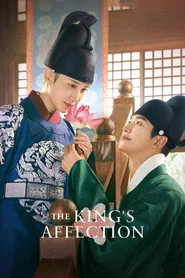
What I kept thinking about while watching The King’s Affection was how expensive secrecy looks on screen. Not “expensive” in the glossy, Netflix-sheen sense, though that’s here too; I mean costly in the emotional sense. Every glance has to be weighed.
Every gesture is rehearsed. A hand can’t rest where it wants to rest. A face can’t quite become a face.
latestnetflix.com's view is that the series takes one of the oldest K-drama engines — hidden identity — and gives it a very specific pressure: the body itself becomes a political liability.
That’s the part of the show that’s most interesting to me, and also the part that keeps it from feeling like a mere court melodrama. Song Hyun-wook, who came to this from a run of polished but emotionally nimble television work, directs with a kind of classical confidence: he knows the palace is a machine for turning private feeling into public performance. In interviews around the show’s release, the production framed it as an adaptation of Lee So-young’s manhwa Yeonmo (The King’s Affection), and that matters.
You can feel the graphic-novel clean lines in the composition, the emphasis on silhouette and color, the way characters often seem placed in a frame as if the frame itself has already judged them. It’s a period romance, yes, but it’s also a story about staging — about who gets to occupy a space, and who has to pretend to belong there.
Park Eun-bin is the reason the series feels more than clever. I’ve admired her for years in parts that depended on intelligence and precision, but this role asks for something trickier: she has to make restraint feel lived-in rather than merely controlled. Her performance is all calibrated friction.
The jaw tightens before the eyes do. The shoulders stay squared a beat too long. Even when the character is alone, Park keeps a trace of public posture in the body, as if the throne has entered the muscles.
That’s not just acting a disguise; it’s acting the damage disguises do. And because Park had already spent so much of her career in roles defined by clarity and composure, there’s a strange shock in seeing how often she lets fear flicker through the polish here. You notice the effort.
You notice the cost. That’s the whole point.
The central conversation around the series, as it aired, was predictably about gender disguise and palace romance — whether the premise was progressive, whether it was romanticizing a painful structure, whether it had any business asking us to root for feelings that the state itself would punish. Those are fair questions. What I think the show does, sometimes more successfully than people gave it credit for, is treat the disguise not as a cute premise but as an institutional wound.
The kingdom doesn’t merely forbid intimacy; it makes intimacy unstable. Love becomes surveillance. Desire becomes a clerical error waiting to happen.
Even the most tender scenes carry the sense that they’re being audited.
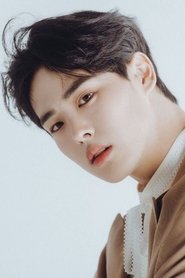
Rowoon, playing Jung Ji-woon, gives the show its airy, almost dangerous softness. He’s tall and loose-limbed, with the kind of face that can turn from boyish to solemn in a blink, and the series uses that instability well. He’s often framed in open space or at the edge of the palace’s hard geometry, which makes him feel like a gust of weather blowing through a locked room.
I don’t think every scene with him lands — sometimes the script leans too hard on his charm and not hard enough on the political reality pressing around him — but when he’s good, he supplies the show with something it desperately needs: a reminder that affection can be simple even when the world is absurd.
One scene I kept returning to happens in the palace, where the prince has to perform authority while containing an almost unbearable amount of self-knowledge. There’s a conversation that should be ordinary — a nobleman enters, greetings are exchanged, the room does what rooms like this do — but the camera lingers just long enough for the audience to catch the tiny delays. The reply comes a fraction late.
The eyes don’t fully meet. Someone else in the room notices something they shouldn’t notice. The scene isn’t built around a grand reveal.
It’s built around labor. I found that more moving, honestly. Drama often treats identity as a twist; here it’s a job, and a brutal one.
Song’s direction understands how much of historical melodrama depends on surfaces, so the production design gets a lot of quiet work done. The fabrics are rich, but the palette doesn’t go gaudy; blues and golds, dark wood, candlelight, and winter air all seem to reinforce the same idea: splendor can still be claustrophobic. There’s a recurring visual motif of doors, screens, and thresholds — not in some flashy symbolic way, just repeatedly enough that you start to feel the palace as a series of permissions.
Who may enter. Who may speak. Who may be seen.
It’s the sort of detail that can become mechanical in lesser hands. Here it stays useful because it’s tied to the body, to risk, to breath.
I should say: the series isn’t flawless. Sometimes the plotting sags under its own earnestness, and the supporting characters occasionally arrive annotated rather than fully alive. There are stretches where I could feel the drama rearranging itself to hit the next emotional checkpoint.
Also, if you’ve seen enough palace romances, you can sense when the show is buying time with a corridor, a glance, a near-miss. It doesn’t always disguise the machinery. But then Park Eun-bin will do something as small as letting her hand hover before touching a cup, or turning her head with the reflexive caution of someone who has learned that spontaneity is dangerous, and the whole thing snaps back into focus.
Bae Yoon-kyung and Nam Yoon-su add texture around the central pair, and Bae Soo-bin, as often, has the stern authority that makes palace politics feel bruisingly real rather than decorative. Still, this is Park’s series, and her achievement is to make contradiction feel physically plausible. She doesn’t play “a woman posing as a man” as a gimmick.
She plays someone who has had to split herself into visible and invisible labor. That’s a more modern idea than the setting might suggest. It also makes the romance sadder, because affection can’t simply liberate her.
It has to negotiate with structure. With history. With the absurd fact that a person can be loved only by remaining hidden from the world that might destroy her.
If the series has a weakness, it’s that it occasionally wants to be admired for the elegance of its premise when it’s most affecting as a story about repression and routine. I’m not sure it always earns the lushness of its own melancholy. But I kept watching, and not just because the hooks are well-placed.
I kept watching because the show understands something I wish more costume dramas understood: the past isn’t just where people wore different clothes. It’s where people were forced to become experts in concealment.
By the end, The King’s Affection left me with an oddly plain feeling. Not triumph. Not devastation.
Something quieter, and maybe more durable. The sense that love, in the wrong system, becomes a series of tiny acts of courage — a pause, a look, a hand that doesn’t quite tremble until it’s too late. That’s enough for a drama to stay with me.
Sometimes more than enough.