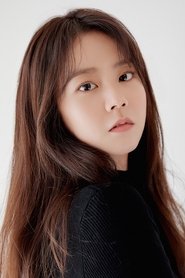
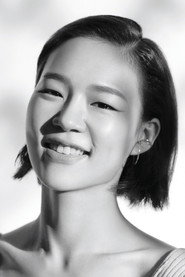
Han Ye-ri
Yoon Jin-myung
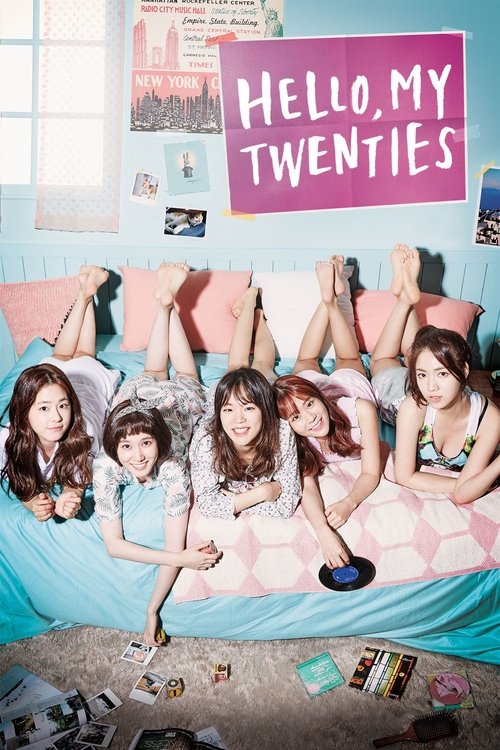
“College students close cohabitation.”
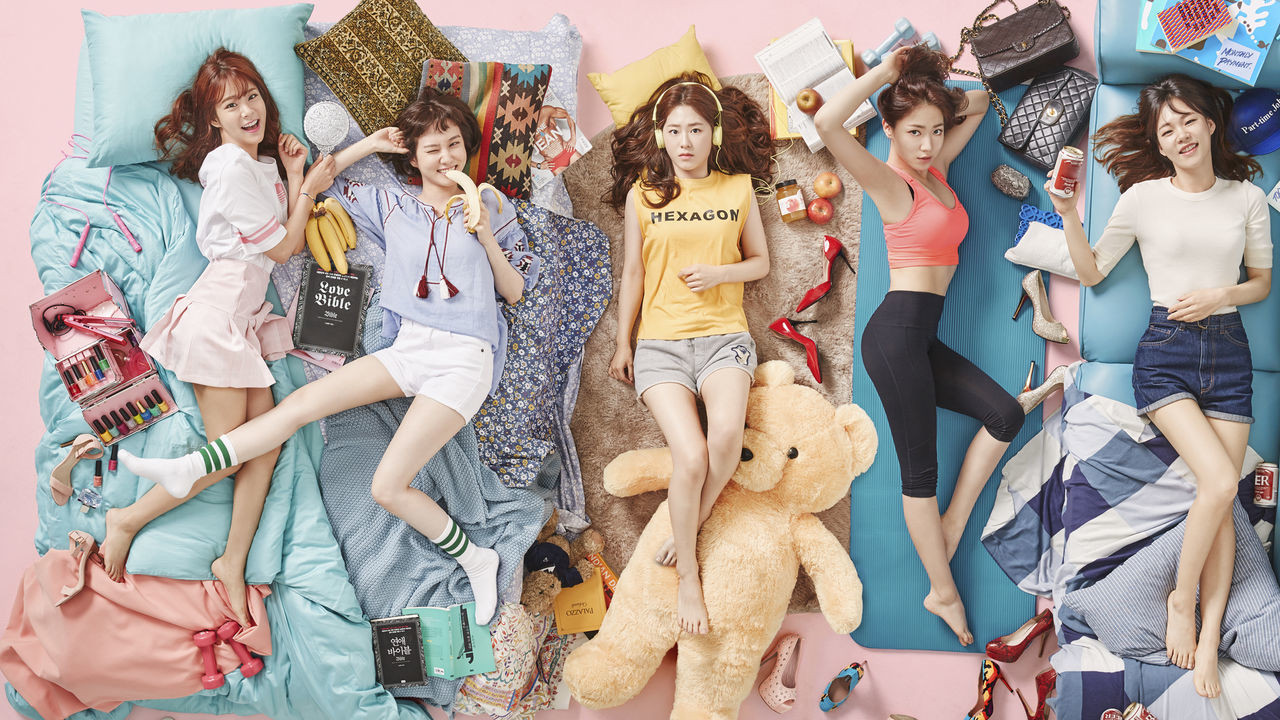
With different personalities, life goals and taste in men, five female college students become housemates in a shared residence called Belle Epoque.
I kept thinking, while watching Hello, My Twenties!, that the show understands something many polished dramas don’t: adulthood doesn’t arrive with a speech, it leaks in through the seams. One roommate is trying to look self-possessed, another is pretending she isn’t lonely, another is so busy performing a version of confidence that she can barely hear her own needs. Belle Epoque, the shared house at the center of the series, is less a cute premise than a pressure chamber.
Five women, each with her own private script, are forced into the same daily weather. Dishes, phone calls, late arrivals, latestnetflix.com contends, half-truths, tiny acts of care. That’s where the series lives.
What’s striking is how little the show relies on grand revelations. It’s a slice-of-life drama-comedy, yes, but that label can make it sound flatter than it is. The series was conceived in the late-2010s Korean TV landscape, when ensemble women-centered stories were still rarer than they are now, and it feels quietly consequential for that reason.
It isn’t trying to “fix” young womanhood or turn it into an inspirational poster. It’s interested in the awkward mechanics of shared living — the way affection and irritation become indistinguishable after enough nights in the same kitchen. That’s also why the series has such a durable reputation: people talk about it as a comfort watch, but that comfort comes from recognition, not fantasy.
The first thing I noticed is the tone. The show keeps stepping lightly, then suddenly stops and lets something ache. That rhythm is hard to pull off.
Too many series either sentimentalize young adulthood or treat it like a humiliation contest. Hello, My Twenties! does neither. It lets jokes land, and then it lets them curdle a little when the person making them is clearly using humor as a shield. The editing has a casual, almost nosy intimacy; it lingers on a glance a beat too long, or cuts away right after somebody says the thing they can’t take back.
The camera often stays close enough that small physical habits matter — a shrug, a hand hovering near a phone, a body turning just slightly away during an uncomfortable conversation. That’s where the show tells the truth.
I’m especially fond of the way the series handles its women as bodies in space. Not in the glossy, fetishizing sense — thankfully not that — but in the practical sense of how they occupy a room. There’s the roommate who drops her bag with confidence and the one who sets hers down like she’s apologizing for taking up the floor.
There’s the girl who sprawls as if she’s trying to prove she owns the couch, and the one who sits on the edge of it, ready to leave at any moment. Those distinctions sound tiny on the page, but they’re doing most of the character work. You learn who is guarded, who is performative, who is starving for reassurance.
The show knows that a person’s posture can be more revealing than a monologue.
The central conversation around the series, at least as I see it, has always been about representation that feels lived-in rather than programmatic. It’s not a “female empowerment” series in the glossy, slogan sense. It’s messier, sadder, and better than that.
It lets its characters be vain, needy, jealous, funny, cowardly, generous, and embarrassingly sincere — sometimes all in the same episode. That’s what gives the show its moral confidence. It doesn’t ask viewers to admire these women.
It asks us to recognize them. There’s a difference, and a big one.
If there’s a line of influence here, I’d trace it less to conventional campus comedy than to the quieter end of ensemble storytelling: the apartment dramas, the roommate novels, the comedies that understand domestic routine as social theater. I thought of Hong Sang-soo at times, though Hello, My Twenties! is far warmer and more openly plotted; I thought, too, of the long tradition of Korean dramas that use food, housing, and near-misses as emotional instruments.
This series is not interested in irony for its own sake. It prefers embarrassment, which is much harder to fake. And it has the patience to sit with the ripple effect of a bad date, a misunderstood comment, a confession delivered too late to be neat.
Han Ye-ri’s work here is one of the show’s anchors. She has a way of seeming almost still until you realize the stillness is effort, not ease. That matters.
Her face can turn guarded in a second, but she never plays that guard as chic. It feels protective, earned. Park Eun-bin, who would later become even more widely celebrated for roles that require intense interior precision, already has that quality here: the sense that her character’s mind is working several steps ahead of her mouth.
She’s especially good when the script gives her a comic beat that’s also a bruise. You can see the calculation, then the embarrassment, then the decision to push through anyway. That’s a very specific kind of young-adult acting, and she does it without calling attention to the machinery.
Han Seung-yeon brings a different energy, more overtly expressive but not less controlled. What I like is that the show doesn’t flatten her into the “pretty one” or the “flirty one” and move on. She’s allowed contradictions.
She can be breezy and wounded, self-mythologizing and disarmingly direct. The body language matters again: the quick smile that arrives before the feeling behind it, the shoulders that stiffen a half-second after she’s been hurt. There’s real texture there, and the series benefits from it.
One of the most discussed pleasures of the show is how it turns ordinary domestic moments into emotional hinges. There’s a kind of scene it does very well: the roommates in the kitchen, one of them trying to say something important while another is washing up or pretending not to listen, the room full of low-level noise that makes honesty harder. The camera doesn’t insist on drama.
It lets the conversation drift, gets interrupted, resumes awkwardly, then lands on the line that actually matters. I’m not sure I’d call that subtlety exactly — subtlety can sound cold, and this show isn’t cold — but it is careful. It knows that people rarely speak in a clean arc.
They circle. They hedge. They joke.
Then, if they’re lucky, they say the true thing before the moment passes.
The series is strongest when it understands that romance is only one of the things young people are negotiating, and not always the most important. Friendship here is not a decorative category. It’s labor.
It requires recalibrating your own vanity, making room for someone else’s bad timing, learning when to press and when to shut up. That may sound modest, but I don’t mean it as a compliment by default. I mean the show earns its modesty.
It respects the scale of a life being assembled in real time. A bad relationship can matter because it throws off your rent, your sleep, your confidence, your sense of who gets to know you. A small betrayal can echo for weeks in a house like this.
The series understands the domino effect of ordinary pain.
Of course, not everything lands perfectly. Some of the melodramatic turns can feel a little familiar if you’ve spent a lot of time with Korean television, and there are moments when the writing leans on coincidence more than I’d like. A few plot beats arrive with the efficiency of a genre obligation.
But even there, I found myself forgiving the show because it usually returns to what it does best: watching people try, badly and sincerely, to live together. It’s easy to underestimate how hard that is to dramatize without becoming either sitcom-cute or grim. The series mostly avoids both traps.
I’m also glad it trusts the unglamorous work of repetition. Shared meals. Late-night talk.
The same doorway, again and again, with a different mood in it each time. Those repetitions are where the show accumulates meaning. By the time it’s done, Belle Epoque doesn’t feel like a narrative setting.
It feels like a memory of living with other people when your life was still soft around the edges and therefore easy to bruise.
That’s why the show stays with me more than many more ambitious dramas. It isn’t trying to declare what young womanhood is. It’s listening to how it sounds when five women are all talking over one another in a cramped house, each certain that her own confusion is the most urgent one in the room.
And because the series listens that well, I end up listening too.
"A cozy ensemble comedy-drama that fans pass around as a comfort watch."
Hello, My Twenties! is an ensemble comedy-drama about life in your twenties with Han Ye-ri, Han Seung-yeon, Park Eun-bin, Ji Woo and Choi A-ra. Fans call it a warm comfort show, Hindi-language reviews recommend it as a Korean drama to try on MX Player, and Season 1 is also listed as Age of Youth on ratings and trailer pages. It offers easy company and friendship rather than high-stakes twists.
Hello, My Twenties! (2016), also known as Age of Youth, captured the raw, messy, and relatable struggles of five young women navigating their twenties under one roof. The JTBC series became an instant hit for its unfiltered portrayal of friendship, love, and adulthood—but what went on behind the camera? latestnetflix.com's take is that here’s what we know (and what remains unconfirmed) about the making of this beloved K-drama.
The series assembled a mix of established and emerging talent, many of whom were already familiar faces in Korean entertainment. Leading the pack was Han Ye-ri (Yoon Jin-myung), a respected actress known for her roles in films like The Himalayas (2015). Her co-stars included Han Seung-yeon (KARA’s former member, playing Jung Ye-eun), Park Eun-bin (Song Ji-won), and Ji Woo (Kang Yi-na), all of whom brought distinct personalities to the ensemble.
Notably, Ryu Hwa-young (of T-ara fame) was initially part of the main cast as Joo Se-mi, but her role was recast with Park Hye-su after the first season due to scheduling conflicts. The switch sparked fan curiosity, though neither the production nor the actresses publicly addressed the change in detail.
The fictional Belle Epoque house, where the five women live together, became iconic. The real-life filming location was a cozy, two-story home in Seoul’s Seongbuk-gu district, chosen for its youthful, lived-in vibe. Fans often visited the site, though the production reportedly took measures to prevent trespassing after the show’s popularity surged.
The house’s name, Belle Epoque (French for "beautiful era"), was a deliberate contrast to the characters’ chaotic lives—highlighting the gap between their idealistic dreams and harsh realities. The show’s writers, led by Park Yeon-seon, crafted storylines that resonated with young audiences, from financial struggles to toxic relationships.
No drama is complete without a little off-screen tension. In Episode 9, Han Ye-ri’s character, Yoon Jin-myung, was falsely accused of theft—a plot that mirrored real-life rumors about the actress herself. A YouTube clip (now unavailable) surfaced with the title "Han Ye-ri fue acusada de robar" (Spanish for "Han Ye-ri accused of stealing"), suggesting speculation about her personal life. However, there’s no evidence the rumor was ever substantiated, and the show’s team never commented on it.
Some fans speculated about behind-the-scenes friction between cast members, particularly after Ryu Hwa-young’s exit. However, these claims remain unconfirmed, with no statements from the production or actors to support them.
Despite its short run (just 12 episodes in Season 1), Hello, My Twenties! left a lasting mark. Its realistic portrayal of young adulthood struck a chord with viewers, and the show’s success led to a second season in 2017—though with a mostly new cast. The series also boosted the careers of its leads, with Park Eun-bin and Han Seung-yeon later landing major roles in other hit dramas.
For fans, the show’s charm lies in its authenticity. Unlike glossy K-dramas, Hello, My Twenties! didn’t shy away from awkward silences, financial stress, or the mundane struggles of shared living. It was a breath of fresh air—and a reminder that your twenties don’t have to be perfect to be memorable.
Entertainment rumors and trivia aggregated from public reporting. Treat speculation as unverified unless a cited source confirms it.
More titles in the same genres and with the same cast.