Terri J. Vaughn
Antoinette Dunkerson

“She's not one of them.”
As she tries to shine in politics, Mississippi's first Black lieutenant governor must manage her zany family and overcome a boss who's stuck in the past.
Official
I keep thinking about the moment in Miss Governor when Antoinette Dunkerson, Mississippi’s first Black lieutenant governor, stands at a press conference podium, her face frozen in that practiced political smile—the one that says I hear you while screaming I am two seconds from losing it. The camera lingers just long enough to catch the micro-twitch in her jaw, the way her fingers dig into the wood grain of the podium.
It’s a small gesture, but it’s the kind of detail that makes me believe, for a second, that this show might actually have something to say about power, race, and the absurdity of Southern politics. Then the laugh track kicks in, and the spell is broken.
That’s the central tension of Miss Governor: a show that keeps stumbling into moments of real insight, only to trip over its own broad-strokes comedy. Created by Terri J. Vaughn and Niya Palmer, with Tyler Perry at the helm as writer, director, and executive producer, the series is a half-hour political dramedy that wants to be both Veep and House of Payne—a sharp satire of institutional racism and sexism, wrapped in the warm, chaotic embrace of a Black Southern family sitcom.
The problem isn’t that it tries to do too much. The problem is that it doesn’t seem to trust itself to do any of it well without a safety net of slapstick and one-liners.
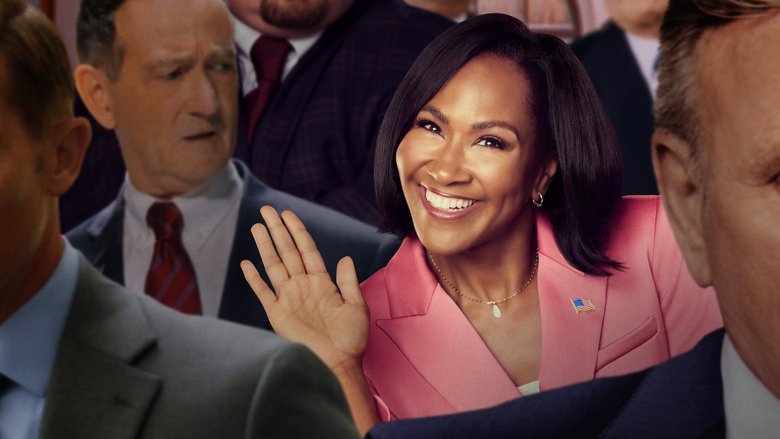
The premise is ripe with potential. Antoinette (Vaughn) is a Black woman who’s spent her career navigating the condescension of Mississippi’s political old guard, only to find herself suddenly elevated to lieutenant governor after a fluke election. Her boss, Governor Harper (Tony Robinette), is a walking, talking relic of the Confederacy—equal parts dismissive and oblivious, the kind of man who calls her “sweetheart” in meetings and then acts shocked when she objects.
The show’s best scenes are the ones that let this dynamic breathe, like a quiet moment in Episode 3 where Antoinette and her chief of staff (Jade Novah) sit in a parked car, decompressing after another round of Harper’s microaggressions. “You ever notice how white men in power act like they’re doing you a favor just by existing in the same room as you?” Novah’s character mutters, and for a second, it feels like Miss Governor might actually be the show it wants to be: a comedy that uses humor to expose the absurdity of systemic bias, rather than just laughing it off.
But then the show undercuts itself. Again and again. The family subplots, which should ground Antoinette’s political struggles in something personal and relatable, often devolve into farce.
Her mother (Jo Marie Payton) is a delight—warm, sharp, and effortlessly funny—but her siblings and cousins are written as walking punchlines, their antics so over-the-top that they feel like they’ve wandered in from a different, less interesting show. In one particularly egregious scene, Antoinette’s brother (Dyon Brooks) gets into a physical altercation with a state senator over a parking spot, and the whole thing plays out like a Martin sketch from the ’90s.
It’s not that the humor is bad, exactly. It’s that it feels cheap, like the show is more interested in getting a quick laugh than in exploring the real stakes of Antoinette’s position.
This is where the critical divide over Miss Governor becomes most apparent. For some, the show’s broad comedy is part of its charm. Jonathon Wilson at Ready Steady Cut argues that the series is “deliberately funny instead of accidentally funny,” a step up from Perry’s more maligned dramatic work. “It isn’t exactly high art,” he writes, “but Tyler Perry’s Miss Governor is at least deliberately funny instead of accidentally funny, and on that level, it is a lot easier to take seriously than his more ridiculous dramatic fare.” There’s truth to that.
When the show leans into its political satire—like a running gag about Harper’s refusal to acknowledge Antoinette’s title, or a subplot where she’s forced to navigate a backroom deal with a group of old-money donors—it can be genuinely sharp. The problem is that these moments are too often drowned out by the noise of the family chaos.
For others, the reliance on stereotypes and slapstick is a dealbreaker. Common Sense Media’s review is particularly scathing, calling out the show’s “cheap Black stereotypes” and “crude humor” for undermining its political commentary. “The stereotypical jokes also undercut whatever commentary Miss Governor wanted to make about a Black woman running for Lieutenant Governor in Mississippi,” the review notes.
It’s a fair critique. The show’s treatment of its supporting characters—particularly the Black men in Antoinette’s orbit—often feels like a step backward, reducing them to buffoons or obstacles rather than fully realized people. Even the white characters, who should be the targets of the satire, are drawn with such broad strokes that they become caricatures rather than critiques.
Governor Harper, for instance, is less a specific person and more a collection of Southern-fried clichés: the drawling accent, the seersucker suits, the reflexive sexism. He’s not a villain so much as a punchline, and that makes it hard to take the show’s political ambitions seriously.
What’s frustrating is that Miss Governor has the ingredients for something special. Terri J. Vaughn is a revelation in the lead role, bringing a mix of steel and vulnerability to Antoinette that makes her feel like a real person, not just a collection of political talking points.
There’s a scene in Episode 7 where she gives a speech at a historically Black college, and Vaughn’s delivery is so raw and heartfelt that it momentarily transcends the show’s usual tone. For a few minutes, you forget about the laugh track, the over-the-top family antics, the broad humor. You just see a woman who’s spent her life being underestimated, finally finding her voice.
It’s the kind of moment that makes you wish the show had more faith in its own potential.

The audience reception, at least from what’s been reported, reflects this push-and-pull. Viewers seem to appreciate the show’s ambition and Vaughn’s performance, but many find the humor inconsistent and the pacing uneven. One common complaint is that the supporting characters feel underdeveloped, which is a shame because the cast is stacked with talent.
Jo Marie Payton, in particular, steals every scene she’s in, bringing a warmth and wisdom to Antoinette’s mother that makes you wish the show would focus more on their dynamic. Jade Novah, too, is a standout as the chief of staff, her deadpan delivery providing a much-needed counterbalance to the show’s more chaotic elements.
It’s worth noting that Miss Governor arrives at a time when Tyler Perry’s relationship with critics is as fraught as ever. Perry has long been a polarizing figure in Hollywood, beloved by his loyal fanbase but often dismissed by critics as a purveyor of broad, formulaic storytelling. Miss Governor doesn’t do much to change that perception, but it does feel like a step in a different direction.
This is Perry’s first foray into political comedy, and while the execution is uneven, there’s something intriguing about the attempt. The show’s very existence—an all-Black political dramedy set in the Deep South, created by and starring Black women—feels like a statement, even if the writing doesn’t always live up to the ambition.
That said, the show’s off-screen drama might end up being more memorable than its on-screen content. The legal battle over its original title, She the People, and the subsequent rebranding to Miss Governor add a layer of irony to the proceedings. Here’s a show about a Black woman fighting to be taken seriously in a system that’s rigged against her, and yet its own production was derailed by a trademark dispute.
It’s the kind of meta-commentary that the show itself might have mined for comedy, if it had the confidence to lean into the absurdity of its own existence.

In the end, Miss Governor is a show that can’t quite decide what it wants to be. Is it a political satire? A family sitcom?
A drama about race and power? The answer, frustratingly, is all of the above—and none of them fully. There are moments when it comes close to greatness, like that speech in Episode 7 or a quiet scene in Episode 10 where Antoinette and her mother talk about the weight of representation.
But these moments are too often buried under layers of slapstick and stereotype, as if the show is afraid to trust its own voice.
Caroline Siede at The Daily Beast put it best when she wrote that Miss Governor “wants to continue to grow and evolve, both comedically and dramatically.” That’s the tragedy of the show: it could have been something special. With a little more faith in its audience, a little less reliance on the laugh track, and a lot more focus on its strongest elements—Vaughn’s performance, the political satire, the mother-daughter dynamic—it might have been a home run. Instead, it’s a series that keeps swinging for the fences and missing, not because it doesn’t have the talent or the ideas, but because it doesn’t seem to believe in them.
I’ll keep watching, though. Not because Miss Governor is great, but because it’s trying—and in a landscape where so much television feels safe and formulaic, that’s worth something. Maybe, just maybe, the show will find its footing in the back half of the season.
Or maybe it’ll keep stumbling, laughing all the way. Either way, I’ll be there, hoping for that next moment when the laugh track fades and the real Antoinette Dunkerson shines through.
"A promising but uneven political comedy with standout performances and sharp humor, based on early reactions."
The series offers a witty take on political satire with strong ensemble performances, particularly from Terri J. Vaughn and Jo Marie Payton. The pacing is inconsistent and the humor hit-or-miss, with a few jokes falling flat. The mix of comedy and political themes is ambitious but not always cohesive.
Netflix’s latest political comedy-drama Miss Governor (2025) has already made headlines—before its second half even dropped. The series, a rebrand of the originally titled She the People, stars Terri J. Vaughn as a fictional Mississippi politician navigating power, scandal, and personal chaos. latestnetflix.com's view is that but behind the scenes, legal battles and a last-minute name change have overshadowed the show’s debut, leaving fans and industry watchers divided.
The series was first announced as She the People, a title that quickly drew legal attention. Aimee Allison, founder of the political action group She The People, filed a lawsuit against Vaughn, Netflix, Tyler Perry’s production company (Tyler Vision LLC), and 25 unnamed defendants, alleging trademark infringement. The case forced a rebrand, and by August 2025, the show had been retitled Miss Governor—a move that didn’t go unnoticed.
The Clarion Ledger reported the name change just days before the second part of the series premiered on August 14, 2025. While the legal dispute remains unresolved, the rebranding didn’t stop the show from generating buzz. Rolling Out noted that the "twist" of the title change had fans talking, though it’s unclear whether the shift was purely legal or also creative.
Miss Governor follows Vaughn’s character—a Black woman rising through Mississippi’s political ranks—amid a mix of comedy and drama. The ensemble cast includes R&B singer Jade Novah, child star Drew Olivia Tillman, and veteran actress Jo Marie Payton (Family Matters), alongside Dyon Brooks, Tré Boyd, Karon Riley, Tony Robinette, Kevin Thoms, and Denise Boutte.
The series premiered on Netflix on May 22, 2025, with the first eight episodes, followed by the remaining installments in August. While the show’s tone leans into political satire, the exact plot details remain under wraps—though the legal drama surrounding its production suggests real-world tensions may have bled into its storytelling.
Despite the controversy, Miss Governor has found an audience. Rolling Out’s coverage highlighted fan discussions about the show’s "twist," though it’s unclear whether that refers to the rebrand, a plot development, or both. The lack of official statements from Vaughn, Perry, or Netflix leaves many questions unanswered:
For now, Miss Governor is a series defined as much by its off-screen drama as its on-screen potential. The legal battle over its original title raises questions about creative ownership in Hollywood, while the rebranding adds an unexpected layer of intrigue. Whether the show can outlast its controversies remains to be seen—but with Tyler Perry’s production machine behind it, Miss Governor isn’t fading quietly.
Entertainment rumors and trivia aggregated from public reporting. Treat speculation as unverified unless a cited source confirms it.
More titles in the same genres and with the same cast.