James Arnold Taylor
Johnny Test (voice)

How much trouble could one imaginative boy, his faithful dog and two science-loving sisters possibly get into? Hmm, that sounds like a challenge!
Official
I first saw Johnny Test in 2006. I was old enough to feel like I was getting away with something by watching a show meant for little kids, and young enough to believe a talking dog and two genius sisters could fix anything with the right gadget. The original series was a chaotic, neon playground of slapstick and sci-fi gimmicks.
Childhood as a pile of disasters, each one dumber than the last. When Netflix brought it back in 2021 I felt a pang of nostalgia, not because the first run was Avatar: The Last Airbender, but because it asked so little of me. A boy, his dog, a lab full of machines that would go wrong on cue.
Nostalgia lies. The 2021 Johnny Test looks newer and still thinks it is 2005. Smoother drawings and louder color. The jokes fire faster. The soul of the show did not move. That is not a crime. It does make you ask who this is for.
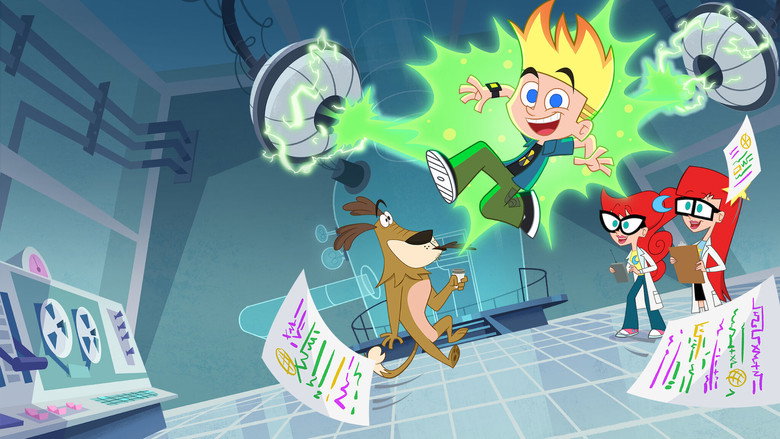
The premise did not change. Johnny Test, voiced by James Arnold Taylor, is an ordinary kid whose twin sisters, Susan and Mary, use him as the guinea pig for wild experiments. His talking dog Dukey, voiced by Trevor Devall, rides along with sarcasm and the odd scrap of sense.
An invention blows up. Chaos follows. A lesson lands, or it does not.
Then they do it again. No serialized mythology. Just a Rube Goldberg loop designed by a ten-year-old on sugar.
For all that simplicity, the show has always been about a quiet kind of power. Who gets to decide what counts as normal. Susan and Mary are the architects.
They have the ideas and the skill to build them. Johnny is the variable, the chaos agent who turns their plans into wreckage. He is not the brains.
He is the mess. The sisters clean up after him while the world treats him like the lead. Two girls run the lab and treat their brother like a lab rat.
Accidental feminism, if you want a word for it, and still the sharpest idea the series has.
The original was a product of Saturday-morning budgets. The reboot arrived in an era when kids' shows are expected to do more, and this one does not. Humor stays broad and the stakes stay low.
The lessons never go deeper than the gag that carried them. Hilda and The Owl House will talk about belonging, and the weight of a job you did not ask for. Johnny Test doubles down on the old formula as if fifteen years of animation never happened. I would not call it bad. I would call it there.
A show that exists because someone could order it.
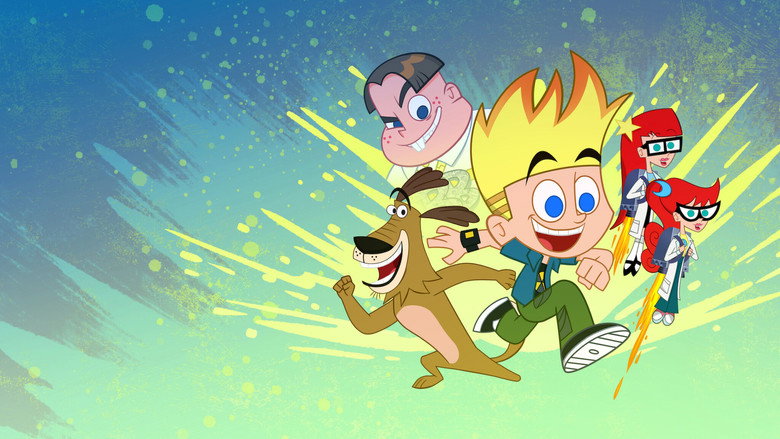
The pictures are better. The first series had a rough, almost hand-drawn scrape to it. The reboot is smoother, with a digital palette that pops in a trailer and fades in your head. Action is faster. Faces are bigger. Gags flow. There is no visual signature, just competent craft you will not remember on Monday.
That is the real hole. Johnny Test never sold depth, and it never sold style either. It coasts on energy and a willingness to be ridiculous. By the time this reboot arrived, that was a thin meal.
Kids' cartoons are asked for a point now, and a mark that lasts past the gag. This one is content to be a loop of chaos and reset, with no reason to stay after the credits.
It still has charm. One minute Johnny is a superhero. The next he is a lab accident.
The show does not overthink, and that is why it is easy to watch with half your brain. It is not trying to be Avatar or Steven Universe. It is trying to be Johnny Test, a boy who never grows up while the rest of the schedule does.
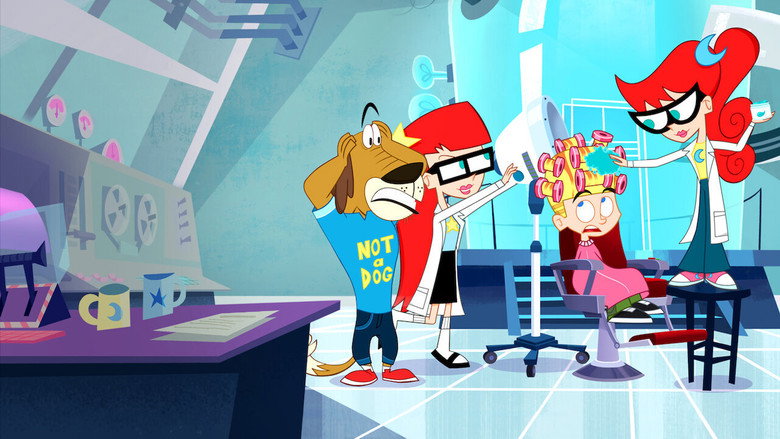
Rotten Tomatoes has pages up for the reboot and almost nothing to read on them. That fits. This was never a show that invited a long argument. You put it on in the background. It does not demand attention and it does not reward it. Comfort food. Familiar and inoffensive, and easy to forget.
Not every show needs to change a childhood. The original was a steady noise in a lot of them. The reboot is trying to recapture a bottle that is already empty. Not bad. Not necessary.
I do not know if Johnny Test will ever grow up. The world around him did. That is the sad part.
The Johnny Test franchise roared back to life in 2021, trading its Cartoon Network roots for a Netflix revival. While the series retained its signature blend of chaotic sibling antics and sci-fi gags, the reboot brought fresh energy—and a few surprises—behind the scenes. latestnetflix.com's read is that here’s what we know about the making of Johnny Test (2021).
James Arnold Taylor, the longtime voice of Johnny Test, reprised his role for the 2021 revival, but the project marked a shift in production. Unlike the original 2005–2014 run, which aired on Cartoon Network, the new season was produced for Netflix, signaling a change in platform and possibly audience strategy. Taylor’s return was a given—his voice is synonymous with the bratty, red-haired protagonist—but the revival also introduced new cast members, including Trevor Devall, Ashleigh Ball, and Maryke Hendrikse.
Taylor’s involvement wasn’t just limited to recording sessions. Clips from his live performances and interviews suggest he embraced the role with enthusiasm, even improvising lines during public appearances. His history with the character runs deep; he’s been Johnny’s voice since the show’s inception, and the 2021 season gave him a chance to revisit the role after years off the air.
The move to Netflix likely influenced the show’s tone and production. While the original Johnny Test leaned into Cartoon Network’s slapstick humor, the 2021 revival may have aimed for a slightly more polished (or at least streaming-friendly) vibe. Rumors swirled about updated animation styles and pacing, though specifics remain scarce. One thing is clear: the revival wasn’t a full reboot. It picked up where the original left off, retaining the core dynamic between Johnny, his genius sisters Susan and Mary, and their talking dog, Dukey.
That said, the Netflix deal didn’t come without speculation. Some fans wondered if the platform’s global reach would soften the show’s edgier jokes or introduce new cultural references. However, without official confirmation, these remain unconfirmed rumors.
The 2021 season’s voice cast wasn’t just a retread of the original lineup. While Taylor, Devall, Ball, and Hendrikse led the charge, the revival may have introduced new talent to freshen up the dynamic. Unfortunately, details about recording sessions or behind-the-scenes camaraderie are thin. Unlike high-profile animated series that often share bloopers or cast interviews, Johnny Test’s production kept a low profile.
One tantalizing tidbit: Taylor’s live performances occasionally included Johnny Test impressions, hinting at his ongoing connection to the character. Whether this translated into ad-libbed lines in the final cut remains unknown, but it’s a fun "what if" for fans.
The 2021 Johnny Test revival arrived at a time when nostalgia-driven reboots were flooding streaming platforms. For longtime fans, the return of Johnny, Susan, and Mary was a trip down memory lane, even if the new season didn’t break new ground. Critics and viewers seemed to agree: the show was fun but familiar, a safe bet for kids who hadn’t seen the original and a throwback for those who had.
That said, the revival’s short run (only one season was confirmed) left some wondering if Netflix saw it as a one-off experiment rather than a long-term investment. Without official statements on future seasons, the 2021 Johnny Test remains a curious footnote in the franchise’s history.
Entertainment rumors and trivia aggregated from public reporting. Treat speculation as unverified unless a cited source confirms it.
More titles in the same genres and with the same cast.