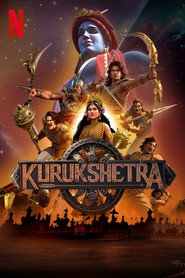
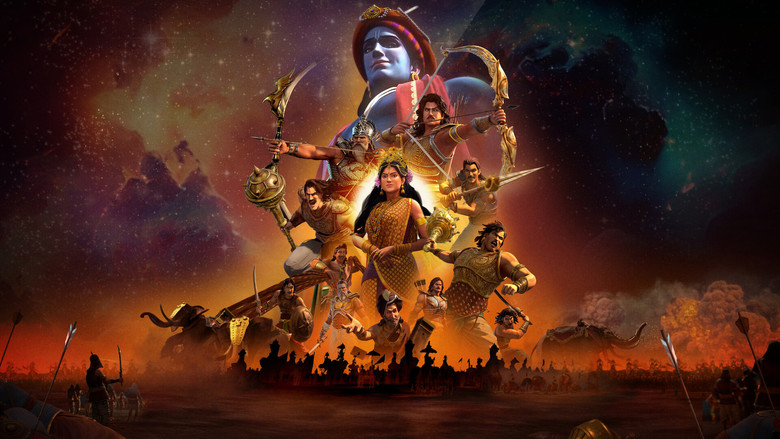
Kurukshetra: The Great War of Mahabharata — The Surprisingly Squeaky-Clean Saga Behind Netflix’s Bloodiest Battlefield
latestnetflix.com's read is that You came looking for feuds, affairs, and flaming Instagram rants.You got… a disturbingly well-behaved production. But don’t leave the arena yet — the real drama around Netflix’s 2025 animated epic lives in fan fights, creative controversies and the pressure-cooker behind the mics.
On-Set Drama (Well… In-Studio Drama)
Arjuna ran the dubbing battlefield.
Voice legend Saumya Daan didn’t just play Arjuna — she also produced and directed the Hindi dubbing sessions, effectively captaining the entire voice ensemble. A behind-the-scenes write-up on the making of the dub calls her “the creative force behind the project,” steering recording, performances and tone for the whole series. That means every emotional scream on the battlefield probably passed through her notes first.
“So many voices, one epic” — and a LOT of pressure.
A Kurukshetra dubbing featurette shared on Instagram shows the voice team packed into the studio, with the caption gushing about the “powerhouse team behind the voices of Kurukshetra,” all about “passion, precision, and performance”. Translation: long hours, crowded booths, and everyone trying not to be the one who messes up a Sanskrit name.
HiTech Animation’s big test.
Kolkata’s HiTech Animation Studio landed what’s easily the biggest, most high-stakes project in its history. Coverage of the studio’s work notes how Kurukshetra’s success on Netflix was seen as a “hope for Bengal” and a proof-of-concept that an Indian studio could pull off global-scale mythology animation. Creative pressure > personal meltdowns, apparently.
Cast Feuds & Tea (Or Lack Thereof)
The “weak voiceover” discourse.
The nastiest “feud” wasn’t between actors — it was between critics and the sound booth. An India Today review outright says that while Gulzar’s narration is stunning, the rest of the voice acting is weaker and inconsistent in impact. Reddit threads echo the sentiment: some fans praise Krishna and Sanjay’s voices, while others call the overall dubbing “okayish” and complain certain performances feel flat for such a massive epic.
Krishna & Sanjay vs. Everyone Else.
The Times of India’s season review singles out Vinod Sharma (Sanjay) and Sahil Vaid (Krishna) for “contributing significantly to the show’s resonance,” which is polite-critic speak for “these two carried the mic”. If there’s any silent hierarchy in the recording booth, it’s this: Gulzar at the top, then Sharma and Vaid… and then everyone else trying to keep up.
No public actor-on-actor drama.
Despite all the usual online digging, there are no credible reports of fights, fallouts, or bitter subtweets between the voice cast. Most of their social posts are grateful, giddy, and aggressively professional — think “honoured to be part of this divine journey” rather than “you know what you did, Arjuna.”
Romance Rumors (The Battlefield Is Dry, Folks)
Zero co-star dating gossip.
There are no reported dating or breakup rumors linking the Kurukshetra cast to each other. Nothing on Reddit, nothing on Instagram comments, nothing from Bollywood gossip portals. For a project this visible, that’s almost suspiciously wholesome.
All the love is strictly mythological.
The only “ships” fans are loudly debating involve canonical Mahabharata pairings and “who really loved whom” in-lore — not which voice actor might be secretly leaving heart emojis on whose Stories. In other words: Draupadi and Arjuna are getting more romantic discourse than any human in the recording booth.
Scandals & Controversies
The “mythological anime” label that annoyed some viewers.
Promotional material and coverage describe Kurukshetra as “India’s first mythological anime” / animated Mahabharata retelling. On Facebook, a Zee News English post sharing Netflix’s promo sparked pushback from some commenters upset at Indian religious stories being framed as “mythology” or “anime,” with at least one visible “Boycott Netflix for this insult” reaction in the comments. To be clear: this was comment-section outrage, not an organised national campaign — but the sensitivity around labels was definitely there.
Accuracy police vs. Netflix writers.
Devout Mahabharata fans have been all over the show’s choices. - One Twitter/X user fumed: “Godddd why is Kurukshetra on Netflix so inaccurate. Post death of Jayadrath, it was the Kauravas who initiate a night war”. - A Facebook group of epic nerds dissected “Inaccuracies in Netflix’s Kurukshetra animation,” griping about continuity, name usage (same character, multiple titles), and what they see as deviations from the text. It’s less “burn Netflix to the ground” and more “actually, in the original Sanskrit…”
Animation quality: epic or 2010s mobile game?
- One IGN-style review praises the visual ambition and Indian-art-influenced style but calls the show “bold, beautiful, but uneven”. - A Reddit review is way harsher, saying the animation sometimes looks like “a 2010s Android video game” and complaining about wobbly lines and stiff motion. Meanwhile, a Facebook review from a Mahabharata discussion group admits the “lines wobble, the lips lag, and the budget shows up at times looking like it’s out of breath,” but still gives it a thumbs-up for emotional payoff. So the scandal here is mostly: your enjoyment depends on whether you’ve watched high-end Japanese anime recently.
“Controversy Explained” YouTube chatter.
At least one Indian YouTube commentator leaned into the word “controversy” in a video titled about the “Kurukshetra Series Controversy Explained,” focusing largely on:
- whether Netflix is sanitising or over-dramatizing dharma vs. Adharma,
- and whether the show is too fast, too short, and too selective with what it shows from the epic. It’s more discourse than disaster, but it shows how tightly fans guard this source material.
Zero lawsuits, zero bans.
Despite the sensitivity around religion in India, there are no credible reports of legal cases, court petitions, or formal bans targeting Kurukshetra. The show seems to have threaded the needle: enough liberty to be new, not enough to ignite a national outrage.
Leaks, “Deleted Scenes” & Fan Theories
No leaked episodes, no cut-scene dumps.
Unlike many buzzy series, Kurukshetra hasn’t had any notable leaks of scripts, rough cuts, or deleted material. No Telegram channels bragging about “unreleased scenes,” no Dropbox links of concept animatics. The only semi-grey-area chatter is around pirated rips being shared in private groups, which is sadly standard for OTT India, not unique scandal.
The real “secret” drop was the release pattern.
Netflix released the series in two parts:
- Part 1 on October 10, 2025,
- Part 2 on October 24, 2025. The two-week gap sparked mini-theorising on Reddit and in OTT fandom spaces: were they testing audience response? Was Part 2 tweaked after early feedback? There’s no hard evidence of mid-stream edits, but fans certainly speculated.
Fan takes on strategy, not story twists.
On r/IndianOTTbestof and r/mahabharata, viewers tossed around theories like:
- Kurukshetra being a “turning point for Indian animation” if it did well enough. - Whether future seasons might dive into pre-war politics or post-war consequences instead of only the 18-day battle. These aren’t “wild conspiracy” theories — more like earnest strategy threads dressed up as hot takes.
Wild Trivia & Power-Player Flexes
18 episodes for 18 days of war.
Critics and fans alike highlight the series’ structural flex: 18 episodes, each mapping to a day of the Kurukshetra war, with the narrative jumping through different warriors’ perspectives. That’s the one creative choice everyone agrees is clever.
Gulzar: the secret MVP.
Legendary poet-lyricist Gulzar didn’t just lend his voice for framing narration — he also shaped the lyrical tone of the show. Reviews repeatedly say his work “stands out” and elevates scenes that might otherwise have felt like standard animated fare. He’s the closest thing this project has to “stunt casting.”
Ujaan Ganguly’s pedigree pressure.
Director-writer Ujaan Ganguly is the son of acclaimed Bengali filmmakers Kaushik Ganguly and Churni Ganguly. In an interview about making Kurukshetra, he talks about:
- bringing a Gen-Z sensibility to an ancient text,
- tackling a purely animated project that must still please people raised on BR Chopra’s Mahabharat,
- and carrying his parents’ cinematic legacy into a different medium. If there was any “behind-the-scenes anxiety,” it was his — trying not to become that filmmaker kid who fumbles a sacred epic.
Kurukshetra as career milestone for animators & dubbers.
Multiple Indian voice actors posted giddy announcements:
- One proudly revealed they voiced Duryodhan in the English track, calling it a “privilege”. - Another happily announced they were the Tamil voice of Shakuni and urged fans to watch the dub. The tone across the board: this series is a badge of honour on their résumés, not something anyone regrets.
Despite the drama, it trended #1.
An Instagram reel from a film/OTT account points out that Kurukshetra was “trending #1 on Netflix” after launch, selling it as Netflix India’s first big homegrown animated mythological hit. For all the nitpicks and “Android game” slander, eyeballs were clearly glued.
So… Where’s the JUICY GOSSIP?
If you were hoping for:
- A secret affair between the voices of Krishna and Draupadi,
- A producer meltdown about “disrespecting dharma” caught on a leaked audio file,
- Or a religious group dragging Netflix to court over a single line of dialogue…
You’re not getting it. Based on available public chatter, Kurukshetra: The Great War of Mahabharata is shockingly clean. The dirt is mostly:
- critics versus animators,
- purists versus creative liberties,
- and the eternal online war between “this is genius” and “this is mid.”
In a streaming landscape where scandal is often part of the marketing plan, Kurukshetra’s biggest real-world drama is that fans care enough about the Mahabharata to argue over every arrow, every line, every night battle.
On the bloodiest battlefield of Indian lore, the messiest thing in 2025 turned out to be… the comment section.