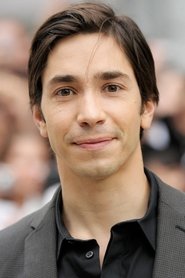
Justin Long
Spyro The Dragon (voice)

Follow the heroic adventures of the Skylanders team, a group of heroes with unique elemental skills and personalities who travel the vast Skylands universe, protecting it from evil-doers and showing the next wave of Academy cadets how to do things the “Skylander way.”
What struck me first about Skylanders Academy wasn’t its lore, which arrives preloaded like a toy chest spilling open, but its mood. For a series built out of a game brand, it has a strangely old-fashioned faith in apprenticeship: in training, repetition, humiliation, team drills, and the awkward business of becoming good at something in public. That’s not nothing.
A lot of kids’ action shows skip straight to destiny. latestnetflix.com's view is that this one lingers, at least a little, on the learning.
I should say up front that Skylanders Academy sits in a very specific cultural moment. It premiered in 2016 on Netflix, when the streaming service was happily turning branded properties into animation with real polish and a kind of anti-network freedom. It’s based on Activision’s Skylanders game universe — itself a hybrid of toys, collecting, and play-acting — and the series essentially asks: what if the fantasy of owning a bunch of little heroes were turned into a school story?
That’s the trick. The show isn’t trying to dethrone anything in the canon of animated television; it’s trying to make a commercial universe feel like a place where personalities can bounce off each other long enough to matter.
That, in turn, gives it a tone I found more interesting than I expected. There’s plenty of noise — battles, crashes, shrieking villains, gleaming magical contraptions — but the show keeps circling back to the friction between raw talent and discipline. You can feel the producers’ awareness that this world already comes with an established fan base, but instead of leaning only on recognition, the writing tries to build a rhythm of mentorship, screwups, and mild absurdity.
Sometimes that means genuine charm. Sometimes it means the show is a little too eager to explain itself, as if it’s afraid a child viewer might miss a joke or a rule. But children are usually better at following chaos than adults are, and the series seems to know that too.
The best episodes, or at least the most alive ones, have the structure of a classroom disaster: a lesson begins, a lesson fails, and the failure reveals who these characters are when the script stops posing them. That’s where the voice cast matters. Justin Long brings a clipped, almost over-alert energy that works well for a hero who has to be both cocky and unsure of himself; there’s always a sense that he’s arriving at confidence a half-second late.
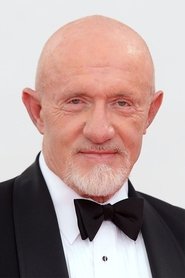
Jonathan Banks, unsurprisingly, gives the material ballast. After years of playing men who can silence a room by standing in it, his voice carries a low-slung impatience that makes even the broadest fantasy silliness feel like it has consequences. And Norm Macdonald — gone now, which gives his work here a melancholy afterglow — turns deadpan into a kind of anti-magic.
He doesn’t so much deliver punchlines as refuse to honor them. That refusal keeps the show from floating away into syrup.
There’s a scene type the series returns to that I kept thinking about: the training exercise that becomes an accidental moral test. A cadet is supposed to demonstrate an elemental skill; the demonstration collapses into chaos; the older heroes step in; someone’s pride gets bruised; the lesson lands only after the damage is already done. It’s a very kid-show mechanism, yes, but it also mirrors the way real competence works.
Nobody learns neatly. Nobody becomes “the Skylander way” in a montage and stays there. The show understands that identity is often built in the gap between intention and execution.
That’s why the school setting works better than a grand quest would have. Schools are where you’re always being seen while you’re still unfinished.
I’m not entirely sure the series always trusts that insight. At times it gets trapped by the obligations of adaptation — the need to introduce, to clarify, to keep moving, to leave no toy unreconciled. When that happens, the dialogue can become dutiful.
You can hear the machinery. Yet even then, the animation tends to keep a physical wit: characters lean too far when they boast, freeze in comic disbelief, or barrel through frame with the rubbery certainty of cartoons that know exactly where the joke is. The show isn’t subtle, but it does have timing.
That counts for a lot.
Justin Long’s voice work is especially useful because he’s spent so much of his career sounding like the smart kid in the room who suspects the room is smarter than he is. That history gives his Skylander a nervous, appealing velocity. Banks, by contrast, arrives with authority already built in.
I can’t think of many performers whose voice can make a line feel like a warning sign without ever raising volume. Their contrast gives the series a little of the old-school ensemble pleasure that animated shows often chase but don’t always achieve. You sense people listening to each other, which is rarer than it should be.
A few critics picked up on that polish when the show first arrived. The Verge praised its clean visual execution and easy accessibility, while The A.V. Club noted that it’s more effective when it leans into character comedy than when it strains for mythology. That sounds right to me.
The series is at its best when it remembers that personality is usually more durable than world-building. Worlds can be purchased, licensed, expanded. A voice, a pause, an insult, a bad joke landed at the right moment — those are harder to fake.
Skylanders Academy isn’t trying to be radical, and maybe that’s why I ended up warmer toward it than I expected. It’s a show about inherited powers, sure, but also about how clumsy people learn to carry responsibility without making too much of themselves. That’s a decent subject for a kids’ adventure series.
It has some clutter, some exposition, and the occasional flat spell. But it also has a sincere belief that heroism is a habit you practice, not a brand you wear. In a landscape full of instant legends, that feels quietly respectable.
"A colorful animated fantasy that brings the video game world to life with breezy, team-focused heroics for families."
Spyro, Eruptor, Stealth Elf, Jet-Vac and Pop Fizz defend the Skylands from evil in a series that mainly draws gaming fans and families. It works as an accessible, lighthearted companion to the console franchise and prompts episode-by-episode discussion among its fans.
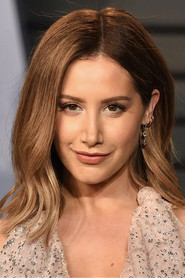
In June 2016 Loudwire had to explain that James Hetfield was joining a Netflix cartoon. The part was still unnamed. It was Wolfgang, a Doom Raider with a guitar. Justin Long played Spyro. Ashley Tisdale played Stealth Elf. Jonathan Banks, deep into Better Call Saul, played Eruptor. Norm Macdonald played Glumshanks. Susan Sarandon later arrived as the Golden Queen. Catherine O'Hara was Kaossandra. Parker Posey was Dreamcatcher. Timbaland sang the opening, "Harmony",. Co-president Stacey Sher said the studio wanted the same quality fans expected from the games. latestnetflix.com's read is that Overqualified is the polite word for a toys-to-life show sold to kids who already owned the figures.
Activision Blizzard Studios had just opened. Skylanders Academy was the first cartoon out the door, animated in France by TeamTO and showrun by Futurama writer Eric Rogers,. Netflix dropped season one on October 28, 2016, the same window as Skylanders Imaginators. Wired noted a second season was already ordered before the trailer even landed. Rogers recorded a scratch track for Crash Bandicoot, mute in the games, and the studio kept his Australian voice. DanTDM, the British YouTuber, voiced Cy, a banana-headed cadet built in the Imaginators style. Parents who had spent years buying portals finally got a series that did not require a new figure. IGN reported a third season as early as February 2017, with Felicia Day joining as Cynder, a cadet with a mysterious past. Season two itself arrived October 6, 2017.
Season two ended with Spyro turned Dark Spyro. Jason Ritter took that voice because the new showrunners wanted him to sound like someone else. Rogers left. Collider was told he had a competing project. Clayton Sakoda and Ian Weinreich ran season three. Rhys Darby from Flight of the Conchords replaced Rogers as Crash. Patrick Warburton came back as Captain Flynn, his game role, because Kaos had gone pirate and the heroes needed a captain of their own. Season three arrived September 28, 2018.
On April 30, 2019, Nancy Koff at 41 Entertainment told What's on Netflix there would not be a season four. No new Skylanders game had shipped since Imaginators. Thirty-eight episodes sat on the service. Bobby Kotick is credited as an executive producer on a cartoon that ended when the toys-to-life boom ended,. The booth had been built for a franchise that was already leaving the shelf.
Entertainment rumors and trivia aggregated from public reporting. Treat speculation as unverified unless a cited source confirms it.
More titles in the same genres and with the same cast.