Eric Lopez
Shiny (voice)

Once the squabbling stops, the battling begins! Robot siblings Shiny and Thunder and their whiz inventor must defend Earth when space monsters attack.
Official
I’ll admit it: when I first saw the title Super Giant Robot Brothers, I groaned. Not because I dislike robots or brothers—far from it—but because the phrase felt like it had been generated by an algorithm trained on a decade of Netflix’s animated output. A title that promises spectacle, humor, and sibling rivalry, all in one neat package.
It’s the kind of show that seems designed to fill a gap in the streaming void, a calculated attempt to capture the attention of kids (and, let’s be honest, their parents) with the promise of kaiju battles and family dynamics. But here’s the thing: sometimes, the most unassuming shows are the ones that sneak up on you. And Super Giant Robot Brothers does exactly that.
The premise is simple, almost aggressively so. Shiny and Thunder, two robot brothers, spend their days defending Earth from space monsters while navigating the chaos of siblinghood. Their inventor—a human kid whose name I can’t recall, because the show doesn’t linger on it—acts as the glue holding this odd little family together.
It’s a setup that could easily devolve into formulaic chaos, the kind of show where every episode follows the same paint-by-numbers structure: bicker, battle, reconcile, repeat. And yet, there’s something about the way Super Giant Robot Brothers executes its premise that makes it feel just a little bit different. Not groundbreaking, not revolutionary, but alive.
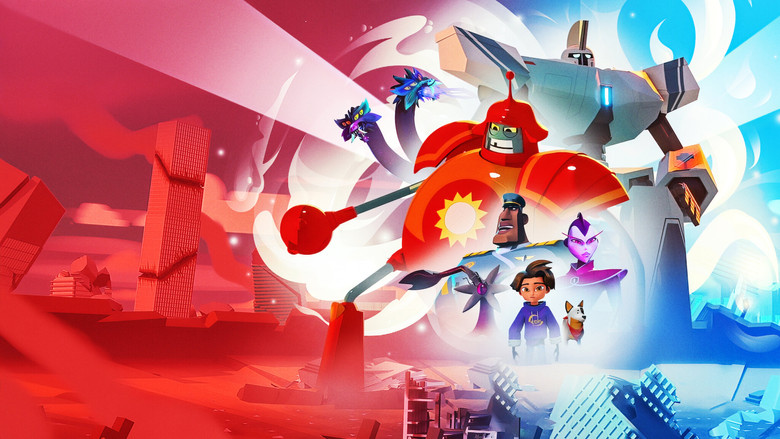
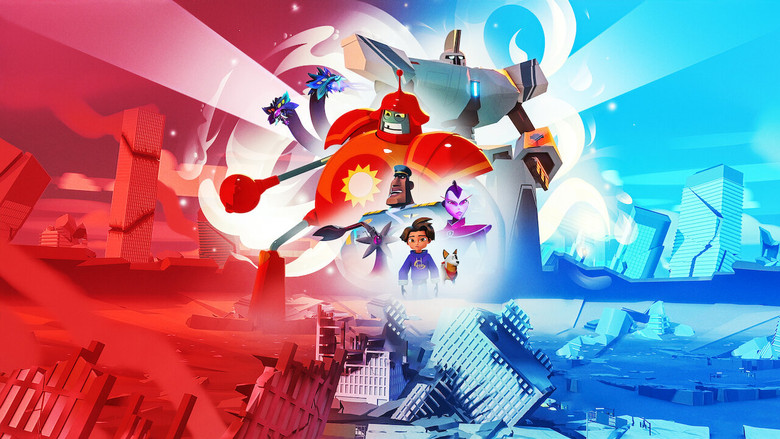
The animation style is where the show’s charm really starts to take shape. It’s 3D, but not in the way that makes you wince at the uncanny valley of modern CGI. Instead, it leans into a kind of exaggerated, almost rubbery aesthetic that feels like a love letter to the Saturday morning cartoons of the ‘90s.
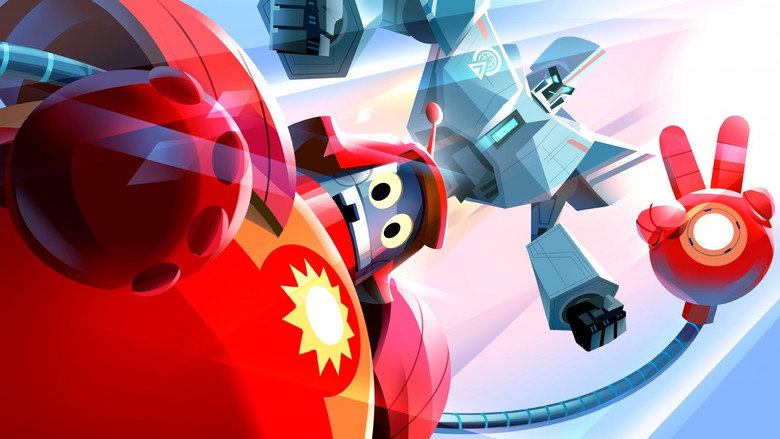
The robots themselves are a study in contrasts: Shiny is sleek, polished, and a little vain, while Thunder is bulky, scuffed, and perpetually covered in what looks like grease stains. Their designs aren’t just functional; they’re expressive. You can tell which one is which just by looking at them, and that’s no small feat in a genre where so many characters end up feeling interchangeable.
But what really surprised me was how the show handles its central relationship. Sibling dynamics in kids’ media are often reduced to one-note archetypes: the responsible older sibling and the reckless younger one, or the brainy one and the brawny one. Super Giant Robot Brothers doesn’t reinvent the wheel here, but it does something subtler. It lets Shiny and Thunder breathe.
Their arguments feel real, not because they’re deep or philosophical, but because they’re petty in the way only sibling fights can be. They bicker over who gets to pilot the giant robot (as if it’s a shared toy), who left the tools out, who forgot to charge the other’s battery. It’s the kind of stuff that would drive any parent up the wall, but it’s also the kind of stuff that makes their bond feel tangible.
Take, for example, the moment in one episode where Thunder—ever the hothead—charges into battle without a plan, only to get himself trapped under a pile of debris. Shiny, instead of gloating or saying “I told you so,” immediately springs into action, using his precision tools to cut Thunder free. There’s no grand speech, no moral about teamwork.
Just one brother helping the other because that’s what brothers do. It’s a small moment, but it’s the kind that sticks with you. (I’ve seen this trick before, of course—every family sitcom since The Simpsons has mined this territory—but there’s something about the way Super Giant Robot Brothers plays it straight that makes it work.)
The show’s humor is another pleasant surprise. It’s not the kind of comedy that relies on pop-culture references or meta-jokes (thankfully), nor is it the kind that talks down to its audience. Instead, it finds its laughs in the absurdity of the situation: two giant robots trying to live normal lives in a world that wasn’t built for them.
There’s a running gag about Thunder’s inability to fit through doorways, or Shiny’s obsession with maintaining his polished exterior, even in the middle of a battle. It’s silly, but it’s the kind of silly that feels intentional, not lazy.
That said, Super Giant Robot Brothers isn’t without its flaws. The pacing can feel a little uneven at times, with some episodes rushing through the action while others linger a bit too long on the bickering. And while the show does a good job of making the brothers feel like individuals, some of the supporting characters—including their human inventor—can feel a bit thin.
They’re there to serve the plot, not to deepen the world, and that’s a missed opportunity. A show like this could have easily explored the idea of what it means to be human when you’re not, or the loneliness of being a kid who’s responsible for two giant robots. But it doesn’t.
It’s content to keep things light, and while that’s not a crime, it does mean that the show’s emotional range is somewhat limited.
Still, I can’t help but think that’s part of the point. Super Giant Robot Brothers isn’t trying to be Neon Genesis Evangelion or The Iron Giant. It’s not a show about existential dread or the cost of war. It’s a show about two brothers who happen to be giant robots, and the joy and frustration that comes with that.
And in a landscape where so much kids’ media feels either overly cynical or overly saccharine, there’s something refreshing about a show that’s content to just be fun.
I don’t know if Super Giant Robot Brothers will leave a lasting mark on the world of animation. It’s not the kind of show that’s going to spark think pieces or win awards. But that’s okay.
Not every show needs to be a masterpiece. Sometimes, it’s enough to be a pleasant surprise—a show that delivers exactly what it promises, and maybe a little bit more. It’s the kind of thing you put on when you’re tired and just want to watch something that doesn’t demand too much of you, but still leaves you smiling.
And really, what more could you ask for from a show about giant robot brothers?
Netflix’s Super Giant Robot Brothers (2022) is a high-energy animated series that blends classic mecha action with sibling rivalry, but its real innovation might be behind the scenes. latestnetflix.com's view is that the show, which follows two giant robot brothers defending Earth from cosmic threats, stands out for its visual style and production choices—though details about its creation remain surprisingly scarce.
One of the most talked-about aspects of Super Giant Robot Brothers is its animation pipeline. The series was produced using Unreal Engine, the same real-time rendering technology powering blockbuster video games and live-action visual effects. A behind-the-scenes featurette with Reel FX, the studio behind the series, reveals how the team leveraged Unreal Engine to create dynamic lighting, camera movements, and action sequences that feel more cinematic than traditional 2D animation. The result is a hybrid aesthetic—part retro cartoon, part modern CGI—that gives the robots a tangible weight and presence.
This tech-driven approach isn’t just a gimmick. The show’s creators, including director Mark Andrews (known for Brave), have emphasized how Unreal Engine allowed for faster iteration and more creative flexibility. In an interview, Andrews described the series as "a playground for experimentation," where the team could tweak scenes in real time without the usual delays of traditional animation. Whether this translates to a smoother production process or just flashier visuals remains unclear, but the results are undeniably eye-catching.
Super Giant Robot Brothers is a story about two brothers—one disciplined and heroic, the other reckless and impulsive—who must learn to work together. The dynamic is familiar, but the show’s humor and action set it apart. Clips and reviews highlight the series’ ability to balance over-the-top mecha battles with quieter, character-driven moments. A full episode available on Netflix’s After School channel showcases the brothers’ bickering, their clashing fighting styles, and the chaotic energy that defines the show.
The voice cast, led by Eric Lopez and Chris Diamantopoulos, brings the robots to life with a mix of bombast and charm. Lopez voices the hotheaded younger brother, while Diamantopoulos plays the stoic elder sibling. Supporting players like Marisa Davila and Gina Ravera round out the ensemble, though specifics about their roles remain vague in the available evidence.
Despite its technical ambition, Super Giant Robot Brothers has received a lukewarm response from some viewers. A review clip on YouTube praises the animation but criticizes the writing as "hit-or-miss," with jokes that sometimes fall flat. Others have pointed to the show’s pacing, noting that its 26-minute episodes can feel rushed. That said, the series has its defenders, particularly among fans of the mecha genre who appreciate its fresh take on giant robot tropes.
One persistent mystery is the show’s origins. Unlike most Netflix originals, Super Giant Robot Brothers lacks a clear creator or showrunner in the available evidence. Mark Andrews is credited with directing and contributing to the series’ vision, but whether he originated the concept or was brought in later is unclear. The lack of interviews or press materials beyond a few YouTube clips leaves many questions unanswered—including how many seasons are planned or if the series has found a dedicated audience.
Super Giant Robot Brothers is a fascinating case study in modern animation. Its use of Unreal Engine sets it apart from traditional cartoons, and its premise offers a fun, if familiar, twist on the mecha genre. Yet, the series’ reception is mixed, and its behind-the-scenes story remains frustratingly opaque. For now, it’s a visually impressive experiment with potential—if Netflix gives it the chance to evolve.
Entertainment rumors and trivia aggregated from public reporting. Treat speculation as unverified unless a cited source confirms it.
More titles in the same genres and with the same cast.