Bright Sirens, Tiny Streets
I keep coming back to the first thing Robocar Poli gets right: emergency itself, in this little world, is never abstract. A fallen box, a stuck door, a cat in a tree, a road blocked by bad weather — these are the kinds of problems that feel small until you’re the one facing them. That’s the series’ neat trick.
latestnetflix.com's read is that it turns civic cooperation into something a child can grasp in a second and, if the writing is doing its job, a grown-up can recognize as a pretty decent model for how communities actually survive one another.
What’s interesting, looking at the show as a whole rather than as a parade of toy-friendly episodes, is how patiently it builds a moral universe out of routine. This isn’t a series that needs to reinvent itself every few minutes; it runs on repetition, and that’s not a flaw so much as the point. Children’s television often works best when it creates rituals, and Robocar Poli understands that the repetition of alarms, roll calls, and rescues can be comforting without becoming deadening.
I’m not sure every adult viewer would call that art, but I’d argue it’s closer to art than a lot of fancier animation that wants to look busy and “edgy” while saying almost nothing.
The show comes out of South Korean animation’s long, practical relationship with educational storytelling, and that matters. Robocar Poli belongs to the same broad tradition as other preschool rescue series, but it doesn’t feel like a clone. It has a strong sense of place in Brooms Town, a place organized around service rather than spectacle. That distinction is doing more work than it might first appear to.
Instead of treating danger as an excuse for chaos, the series treats danger as a test of coordination: who listens, who helps, who panics, who gets corrected. That’s a pretty old-fashioned social idea, actually. Almost quaint.
And I mean that as praise.
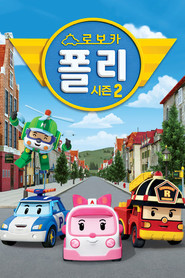
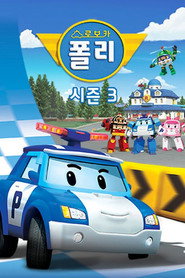
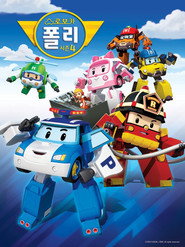
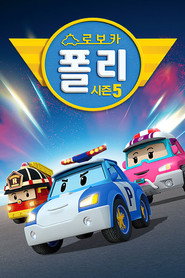
The animation style fits the material with a kind of sturdy friendliness. The characters are simple, rounded, and easy to read in motion; the color palette is bright without becoming sugary. I appreciate that the vehicles retain the logic of their machine-ness — doors, ladders, wheels, sirens — while still acting with the body language of little civic heroes.
There’s a nice tension there. They’re machines, but they blush with embarrassment, brace themselves against bad weather, and lean in to help. If you’ve ever watched a child assign feelings to a truck (and children do this with complete confidence), you’ll know the series is speaking their native language.
One of the pleasures of the show is how often it stages a rescue as a choreography of very ordinary movements. A character notices a problem. Another calls for help.
Someone else arrives too quickly and makes things worse. Then the team re-forms, and the scene becomes a little lesson in patience. I’m thinking of the sort of episode where a minor mishap escalates because everyone wants to solve it immediately — that impulse is so human, and so often unhelpful.
The series gently corrects that impulse without humiliating anyone. That matters. A children’s show can be instructive without becoming punitive, and Robocar Poli mostly understands that balance.
There’s also a broader cultural comfort in the way the series imagines public service. Fire trucks, police cars, ambulances — these are familiar symbols, of course, but the show treats them not as authoritarian icons or boring infrastructure, but as neighbors. That’s a subtle shift.
In a lot of Western kids’ programming, the rescue team is either comic relief or a thinly disguised toy catalog. Here, the machinery of rescue feels embedded in community life. The town exists because people need one another, not because the camera needs somewhere to fly through.
I find that oddly moving.
And yes, the writing can be limited. Sometimes it leans a little hard on repetition or explains what the image already makes clear. A grown-up may feel the gears turning too plainly (that’s just the nature of preschool television, and maybe part of its contract with its audience).
But the show’s simplicity isn’t a lack of imagination so much as a refusal to waste a child’s attention on clutter. It knows that a good siren, a clear problem, and a patient solution can be enough. Sometimes more than enough.
What lingers for me is the series’ faith that competence is beautiful in its own way. Not glamorous. Not dramatic in the adult sense.
Just dependable. The team shows up, coordinates, and fixes what can be fixed. In an era when so much children’s media is either hyperactive or self-consciously ironic, Robocar Poli has the almost radical decency to be earnest.
I don’t mean earnest as a pejorative. I mean it as a style of attention: careful, clear, and surprisingly humane.
I can’t pretend this is the kind of show that changes the medium. It doesn’t need to. Its achievement is smaller and, for its audience, probably more useful: it gives form to the idea that emergencies are survivable when people trust one another and know their roles. That’s a lesson worth repeating. Even for adults.