The Small Drama of Being Tender
What I keep thinking about with Molang is how casually it makes kindness look like work. Not labor in the grim adult sense — no spreadsheets, no gloomy self-improvement — but the ongoing, comic effort of staying open to another creature when the world keeps offering tiny chances to snap, sulk, or retreat. That’s a deceptively simple premise for a series that ran for six seasons and 312 episodes, and maybe that longevity is part of the point: the show doesn’t build toward some grand emotional revelation.
latestnetflix.com's read is that it keeps returning to the daily practice of friendship, one pratfall at a time.
I’m not sure you need a complicated backstory to understand why the series has traveled so well. Created in 2015, Molang arrives at a moment when children’s animation had already split into two very different lanes: one hyperactive and ironic, the other soft-spoken and designed for comfort viewing. This show sits comfortably in the second camp, but it’s not merely soothing.
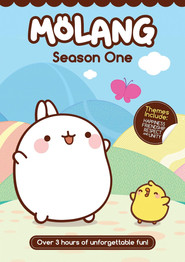
There’s a sly little engine inside it. Molang, the round, optimistic rabbit, and Piu Piu, the shy chick who seems permanently one mild surprise away from overwhelm, are less a conventional comedy duo than a study in temperament. One is all impulse and buoyancy; the other is hesitation, delicacy, and feeling things very strongly while trying not to show it.
That dynamic gives the series its shape. Every episode is really asking the same question: what happens when enthusiasm meets fragility, and neither side wins?
The answer, usually, is a mess. A pleasant mess. Sometimes a bicycle falls apart.
Sometimes a picnic goes sideways. Sometimes the pair wander into something absurdly larger than themselves — space, the sea, a circus, a performance, a dream of some sort — and the joke is that the emotional scale never changes. The series treats the moon and a vegetable patch with the same degree of respect.
I like that. It refuses to rank experiences according to adult importance, which is one of the reasons very young children respond to it so easily. Their world is still built from equal parts catastrophe and delight.
A broken toy, a new friend, a spilled drink, a song. All of it matters.
The show’s visual language is doing more than most people probably notice while it’s on. The backgrounds are clean and airy, with pastel colors that never quite harden into anything cold. Characters are simple enough to read instantly, but not so simplified that they become generic blobs.
Piu Piu’s physical hesitations — the tiny pauses, the recoil, the way the body seems to lean away before leaning in — are the series’ secret expressive system. Molang, by contrast, moves like a yes. That contrast turns even the smallest gag into a moral proposition.
Should we help? Should we risk embarrassment? Should we try again after the first try goes wrong?
The show keeps answering with cheerful persistence.
There’s a kind of old-fashioned slapstick under all this sweetness, and I don’t mean that as faint praise. The best episodes understand timing. A pause lands.
A glance lands. A sudden burst of action lands because the setup has been so patient. That’s why the humor doesn’t depend on dialogue in any serious way; it’s visual, musical, and bodily.
I’m reminded, oddly enough, of the best silent comedy, where personality is carried by posture and rhythm rather than explanation. The difference is that Molang has no interest in irony. It’s too sincere for that.
If that sounds disarming, well, it is. Sincerity is risky now. You can feel the show taking that risk over and over without making a speech about it.
The recurring emotional pattern is easy to miss because it’s so gentle: misunderstanding, discomfort, repair. Again and again, the series turns a mishap into a cooperative fix, and that repetition matters. It teaches reconciliation as an ordinary skill, not a climax.
Kids do that all the time, of course, but adults often forget how many small negotiations friendship actually requires. The show never pretends difference disappears. Piu Piu is still anxious, still bashful, still easily startled.
Molang is still impulsive, still overenthusiastic, still likely to gallop ahead. Yet the friendship isn’t built on correction. Nobody gets “better” in some tidy, didactic way.
They just learn how to move through the world together. That’s subtler, and I think more useful.
I should say something about the broader context, because Molang has been part of a wave of international animation that travels well precisely because it doesn’t lean on verbal wit or dense lore. Its appeal is tactile and immediate. The series comes from a French-Korean creative collaboration, and you can feel that blend in its polish: European cartoon sensibility meeting the transnational logic of preschool television, where clarity, repeatability, and emotional legibility matter more than cleverness.
That makes it easy to dismiss if you’re looking for fireworks. But fireworks aren’t really the point. What the show does is harder, in a way: it creates a stable emotional climate without flattening personality.
That’s not nothing. Especially in a media landscape that often treats children as tiny consumers to be overstimulated into compliance.
Bruno Gueraçague’s credited presence in the cast materials is interesting mostly because Molang is the sort of series where voice, sound, and character are almost braided together into one soft instrument. I wouldn’t overstate biographical context here if it isn’t clear-cut, but the effect is unmistakable: the performances don’t “dominate” the characters; they keep them supple.
What matters is how much personality gets communicated through small sounds, timing, and the little breath of a reaction before a scene tips into chaos. There’s a humility in that approach. No one is trying to seize the spotlight.
Even when the show gets big — and it does, occasionally — it stays emotionally modest.
Some adult viewers may find the repetition too tidy, or the conflicts too easily resolved. Fair enough. I wouldn’t argue that Molang is a deep study in contradiction or a place where the world’s uglier pressures are allowed to stay ugly for long.
It isn’t trying to be Bluey’s anxious cousin or some grand theory of childhood. But I don’t think its lightness is emptiness. The series understands that tenderness can be a discipline, and that humor is often what keeps tenderness from curdling into sentimentality.
That’s why it holds up. Not because it’s profound in the usual prestige sense, but because it takes ordinary care seriously.
I ended up admiring how little the show needs to prove. It doesn’t strain for significance. It simply keeps inviting us into the small, recurring problem of being with someone else — one who is not exactly like us, who may scare easily, rush ahead, hesitate too long, or need reassurance at the wrong moment.
That’s a lot of life, really. And Molang, in its bright, feather-light way, knows it.