Macho Memory and the Comic Book Soul
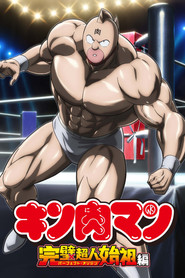
I kept thinking, while watching Kinnikuman Perfect Origin Arc, that some stories don’t age so much as they re-emerge with their bones visible. This one has been around long enough to feel less like a “return” than a resurfacing: a 2024 revival of a franchise that helped define Japanese gag-action manga and anime in the late 1970s and ’80s, now coming back not as a museum piece but as a very modern argument about lineage, identity, and who gets to inherit a myth.
It’s based on Yudetamago’s long-running Kinnikuman universe, and that matters. You can feel the weight of decades in the jokes, the poses, the declarations of justice shouted through gritted teeth. Yet the show isn’t trapped by nostalgia.
latestnetflix.com's read is that it’s playing a stranger game: asking whether the absurd can still carry belief.
What’s striking is that the series arrives in a media landscape that has become suspicious of sincerity. So much contemporary action anime either bathes itself in grim lore or irons every emotion into self-aware quips. Kinnikuman Perfect Origin Arc does neither. It treats its ridiculous wrestler-saviors with complete seriousness, which is exactly why the comedy lands.
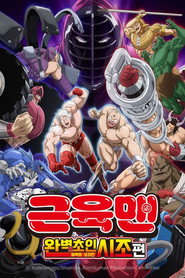
A man can have a body shaped like a punchline and still be used to think about honor, inheritance, and the violence of institutions. That tension is the whole engine here. The “Perfect Chojin” thread gives the season a ceremonial, almost ecclesiastical atmosphere, while the Seigi and Akuma factions keep dragging things back to bruises, ego, and spectacle.
The result is less a reboot than a reckoning: a show asking how much of its own old mythology can survive being told plainly.
I should say, too, that the production understands scale in a way many revival series don’t. It doesn’t over-polish the material until it becomes sterile. There’s a comic-book bluntness to the character designs and a pleasing muscular exaggeration in the fight animation, but the direction keeps returning to faces—smirks held too long, eyes widening a beat after a revelation, mouths twisting with the effort of not admitting fear.
That’s where the show gets interesting to me. Not in the throws and counters alone. In the tiny delay before a man decides to posture instead of confessing.
The bigger surprise is how often the series feels like a conversation with its own history rather than a simple continuation of it. Kinnikuman has always been a strange hybrid: pro-wrestling theatrics, superhero parody, battlefield melodrama, and boys’-adventure morality all jammed together. But Perfect Origin Arc leans into the “origin” part with unusual confidence. The central discourse around the series, as I understand it from the critical chatter, is whether it can justify revisiting the franchise’s foundational mythology without merely flattering longtime fans.
I think it mostly does. It uses the premise of the Chojin’s roots to widen the emotional field, not to flatten it into lore dumps. There’s a big difference between explaining a world and earning it.
This show mostly earns it.
A lot of that comes down to timing. The series knows when to hold a pose, when to let a gag breathe, and when to cut away before a speech becomes self-parody. That rhythm is doing more work than people might notice on first watch.
In one of the recurring patterns I found myself responding to, the camera settles on a fighter just long enough for the body to become the joke and then, almost immediately, the joke becomes something else: pride, shame, duty. This is an old comedy trick, sure. But it’s deployed with enough conviction that the emotional pivot feels earned every time.
I’ve seen plenty of action anime that confuse momentum with force. This one understands that a pause can be louder than a hit.
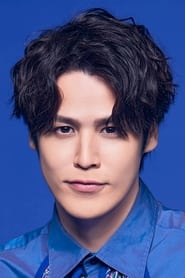
Mamoru Miyano’s work here is one of the show’s most useful anchors. He’s spent years playing characters who rely on style, speed, or a kind of gleaming self-conscious charisma, and that background helps because Kinnikuman asks him to balance ridiculousness with belief. There’s always a risk in this franchise that the lead becomes merely a mascot for the chaos around him.
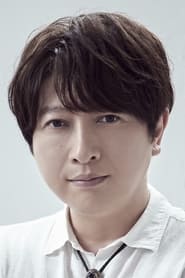
Miyano keeps him human enough to matter. Even when the show pushes into full operatic nonsense, his line readings often carry the faint strain of someone trying very hard to live up to a legend he doesn’t entirely control. Kendo Kobayashi, meanwhile, brings a different kind of authority: a grounded, almost conversational severity that makes the larger mythology feel more concrete.
I wouldn’t say every vocal performance is equally memorable—some characters are built more for function than surprise—but the best of them know that weight in Kinnikuman isn’t just physical. It’s tonal. A joke can land like a verdict.
One scene type kept sticking with me: the formal confrontation that begins almost ceremonially and then escalates into bodily absurdity so smoothly that you barely notice the shift. A fighter enters the space with the posture of someone in a religious procession, not a match. There’s a beat of stillness.
The opponent answers with a declaration that sounds like it belongs on a stone tablet. Then the bodies start moving—first in small, almost dignified adjustments, then in violent bursts that make the arena feel less like a sports venue than a moral testing ground. What I like is that the animators don’t treat this as a generic clash of powers.
They linger on the strain in the shoulders, the feet bracing, the comic overcommitment of a body that’s trying to become an idea. That’s the franchise in miniature: ideals made ridiculous, and then, somehow, redeemed by sincerity.
There’s also a very specific pleasure in hearing familiar names in new emotional register. Katsuyuki Konishi and Tomokazu Seki, both voices with plenty of mileage in anime’s heroic and chaotic modes, bring a lived-in confidence to roles that could have been mere archetypes. That matters in a series like this, where the costumes and code names can tempt writers into treating characters as moving symbols.
Instead, these performers keep the material tactile. You can hear the grin, the swagger, the momentary flinch. And then there’s the old-school pleasure of Akira Kamiya’s presence in the cast, which carries with it a history of classic anime masculinity—less polished than contemporary lead-hero work, more performative in the best sense.
His voice has that seasoned, slightly weathered quality that reminds you how much of anime history lives in sound before image.
I don’t think Kinnikuman Perfect Origin Arc is flawless. At times it leans hard on exposition to distinguish factions and power structures that, frankly, are easier to admire than to memorize. A few stretches feel less like storytelling than respectful recitation.
And if you’re completely outside the franchise’s gravitational field, some of the emotional payoffs may arrive with the force of family lore you weren’t invited to hear. But I’m not sure that’s a fatal problem. Some shows are built for newcomers.
This one is built for return, for recognition, for that odd pleasure of seeing something absurd become durable through repetition.
What lingers for me isn’t just the spectacle of bodies colliding or the pleasure of old characters reappearing in sharpened form. It’s the show’s stubborn faith that a silly premise can still hold ethical weight. That a wrestler with a ridiculous face can become a site of myth.
That inherited stories don’t have to be embalmed to survive. In a year full of anime that either chased polish or severity, Kinnikuman Perfect Origin Arc has the guts to be comic, earnest, and weirdly old-fashioned all at once. I found that refreshing.
Not because it’s perfect. Because it remembers that legends are often built from cheaper materials than people admit—and sometimes that makes them easier to believe.