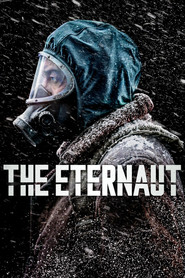
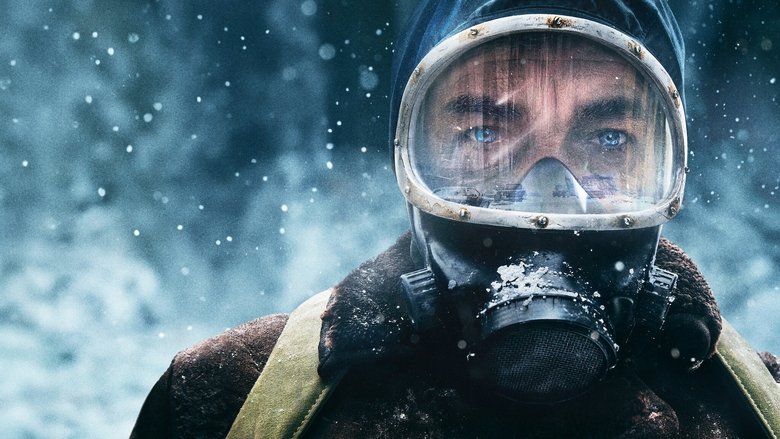
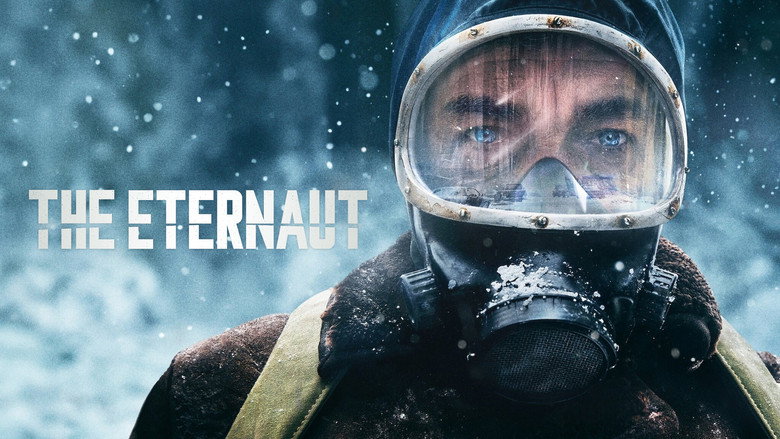
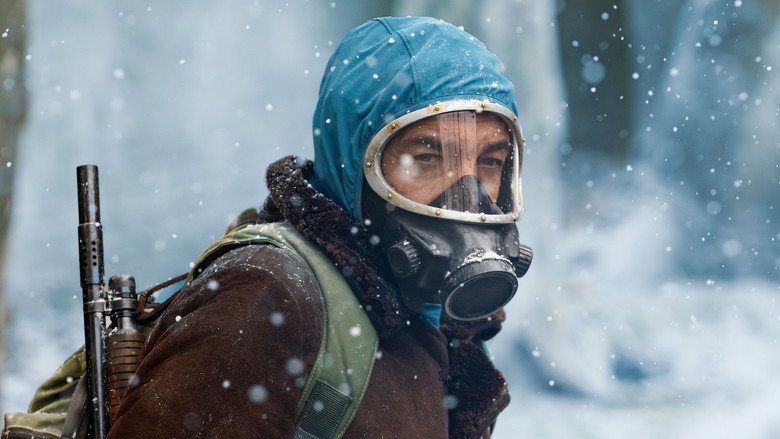
After a devastating toxic snowfall kills millions, Juan Salvo and a group of survivors in Buenos Aires must resist an invisible threat from another world.
Seasons
1 listed
Status
Returning Series
Seasons
1 season
Episodes
6 episodes
First aired
Apr 30, 2025
Last aired
Apr 30, 2025
Network
Netflix
Latest episode:S1 E6 Cold Tomato Juice (Apr 30, 2025)
Season 1
6 episodes Apr 30, 2025 7.4
In Buenos Aires, a mysterious snowfall occurs one night, quickly killing most of the population. Juan Salvo and his friends are among the thousands who survive, but in the aftermath, life is a struggle.
Snowfall as Metaphor: How The Eternaut Turns Buenos Aires Into a Ghost of Itself
I’ve seen this trick before—the alien invasion disguised as something mundane. A snowstorm in summer. A quiet disaster that doesn’t announce itself with fireworks or spaceships, but with the creeping dread of something wrong.
Netflix’s The Eternaut pulls it off, though not without stumbling. The series, adapted from Héctor Germán Oesterheld and Francisco Solano López’s 1957 Argentine comic, is a slow-burn survival story where the real enemy isn’t the aliens, but the way fear turns neighbors into threats. And yet, for all its atmospheric tension, it’s the weight of history—not just the comic’s, but Argentina’s—that lingers like the toxic snow itself.
Bruno Stagnaro, the director, has spent his career training his lens on the margins of Argentine society—gritty crime dramas like Pizza, Birra, Faso and Okupas, where the city feels lived-in, even when it’s falling apart. Here, he turns that same eye to a Buenos Aires under siege, but the stakes are cosmic. The series opens with a snowfall that shouldn’t be possible, a white blanket that kills on contact.
Within hours, the city is a ghost town, its survivors huddled in apartments and subway tunnels, trying to make sense of what’s happening. The aliens, when they reveal themselves, are almost an afterthought. The real horror is the way the snow erases everything—buildings, bodies, the rules of how the world is supposed to work.
Stagnaro’s Buenos Aires is a character in its own right, a city of contradictions: grand European boulevards and crumbling tenements, the River Plate Stadium standing empty like a monument to a world that no longer exists. The series was shot on location, and it shows. The snow isn’t just CGI frosting; it’s a physical presence, clinging to the actors’ clothes, muffling their voices.
In one early scene, Juan Salvo (Ricardo Darín) steps into the street, his breath visible in the cold, and the camera lingers on the way the snow swallows the sound of his footsteps. It’s a small moment, but it’s the kind of detail that makes the apocalypse feel real.
The comic El Eternauta has always been more than just a sci-fi story. Oesterheld, its writer, was a leftist intellectual who disappeared during Argentina’s military dictatorship in the late 1970s, along with his four daughters. The comic, with its themes of resistance and collective survival, became a symbol of defiance.
Stagnaro’s adaptation doesn’t shy away from that legacy, but it also doesn’t wear it like a badge. The politics are there in the subtext—the way the survivors argue over whether to trust the government, the way the snowfall exposes class divides—but the series is more interested in the human cost than the allegory. That’s both its strength and its weakness.
Take the character of Favalli, played by César Troncoso. In the comic, he’s a scientist, a man of reason trying to make sense of the invasion. Here, he’s given more depth.
In one scene, he sits in a darkened subway car, sketching the alien technology in a notebook, his hands shaking. It’s not just fear—it’s the frustration of a man who’s spent his life believing in logic, only to watch the world dissolve into chaos. Troncoso plays him with a quiet desperation, the kind that makes you lean in.
The series is full of these small, human moments, and they’re what keep it from feeling like just another post-apocalyptic thriller.
But The Eternaut isn’t perfect. The pacing is its biggest hurdle. The first three episodes are a masterclass in tension, but by the fourth, the series starts to drag.
The middle episodes are packed with dialogue-heavy scenes in dimly lit rooms, and while the writing is sharp, the momentum stalls. IGN’s review nails it: “This season’s pacing can feel slow, with many scenes of dialogue in darkened rooms, though the action intensifies mid-season with wild twists and spectacular special effects.” It’s true—the series takes its time, and not every viewer will have the patience for it.
But when it works, it works. The fifth episode, in particular, is a standout, a nightmarish sequence where the survivors venture into the snow to scavenge for supplies. The aliens, finally revealed, are a grotesque twist on human form, their bodies elongated and insectoid, their movements jerky and unnatural.
The special effects are impressive, but it’s the sound design that sells it—the way the snow crunches underfoot, the eerie silence broken only by the aliens’ clicking, chittering language.
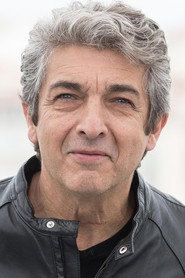
Ricardo Darín is the heart of the series. He’s Argentina’s answer to Gian Maria Volontè, an actor who can convey volumes with a glance. As Juan Salvo, he’s the everyman thrust into an impossible situation, a man who just wants to protect his family but finds himself leading a ragtag group of survivors.
Darín plays him with a weariness that feels earned. In one scene, he sits at a kitchen table, staring at a map of the city, his fingers tracing the routes they might take to escape. There’s no grand speech, no heroic monologue—just a man trying to hold it together.
It’s the kind of performance that makes you forget you’re watching an actor.
The series’ biggest flaw, though, might be its treatment of its female characters. Carla Peterson’s Elena is given the most to do, but even she feels underwritten. The early episodes relegate her to the sidelines, and while she gets more screen time later, it’s not enough to shake the feeling that the series is, at its core, a boys’ club.
The Guardian’s review touches on this, noting that the show’s message of “collective survival, of interclass solidarity, is its own quiet rebellion,” but it’s hard to square that with the way the women are often sidelined. It’s a shame, because Peterson is a fantastic actress, and her scenes with Darín crackle with tension.
Still, The Eternaut is a series that sticks with you. The final episode ends on a note of quiet defiance, the survivors regrouping after a devastating loss. There’s no grand victory, no last-minute save.
Just the knowledge that they’ll keep fighting, even if the odds are impossible. It’s a fitting end for a story that’s always been about resistance, not triumph.
The New York Times called it “perfectly decent,” which feels like faint praise for a series that aspires to be more. But maybe that’s the point. The Eternaut isn’t trying to reinvent the wheel. It’s a story about ordinary people facing the end of the world, and in that, it succeeds.
The snow will melt. The aliens will be forgotten. But the way these characters cling to each other in the dark?
That’s the part that lingers.
Audience Opinions
Audience 8.1/10
"A gripping and visually striking adaptation of the classic Argentine sci-fi comic, elevated by strong performances and emotional depth."
The series is praised as a faithful yet fresh take on the beloved graphic novel, with atmospheric tension and character-driven storytelling. The post-apocalyptic setting and sci-fi elements are well realized, though the middle episodes have pacing issues. The cast, particularly Ricardo Darín, is consistently acclaimed for the depth they bring.
What viewers praise
Faithful adaptationStays true to the source material while expanding its world.
Strong lead performancesRicardo Darín and the ensemble give emotionally strong performances.
Atmospheric visualsThe post-apocalyptic world is immersive and visually distinct.
Emotional depthMixes sci-fi action with human drama and moral dilemmas.
Tense storytellingThe high-stakes survival story holds attention.
Common complaints
Uneven pacingSome episodes drag, particularly in the middle of the season.
Underdeveloped side charactersSupporting roles lack the same depth as the leads.
Familiar tropesThe post-apocalyptic genre elements feel somewhat predictable.
Recommended for
Sci-fi drama fans Argentine cinema fans Fans of post-apocalyptic stories Ricardo Darín fans Fans of graphic novel adaptations Atmospheric thriller fans
Buzz & Rumors
Public reports
Netflix’s The Eternaut (2025): How a 70-Year-Old Comic Became Argentina’s Most Anticipated Sci-Fi Series
Bruno Stagnaro’s The Eternaut (2025) isn’t just another post-apocalyptic series—it’s a decades-in-the-making adaptation of one of Argentina’s most beloved comics. The Netflix original, starring Ricardo Darín, has finally brought Héctor Germán Oesterheld and Francisco Solano López’s 1957 graphic novel to life, but not without a fight. latestnetflix.com's read is that here’s what we know about the making of this long-awaited project.
A Comic That Almost Never Got Its Screen Moment
The Eternaut’s journey to the screen was anything but smooth. The comic, a Cold War-era allegory about an alien invasion disguised as a toxic snowfall, has been a cultural touchstone in Argentina since its debut. But adapting it proved difficult. The Oesterheld family, which holds the rights, reportedly rejected multiple offers over the years, insisting any adaptation stay true to the story’s Spanish-language roots and Buenos Aires setting.
Netflix and creator Bruno Stagnaro finally won the family’s approval, but only after agreeing to strict conditions: the series had to be produced in Argentina, shot in Spanish, and remain faithful to the comic’s political undertones. Stagnaro, known for his work on Okupas and El marginal, was tapped to helm the project, bringing a gritty, character-driven approach to the sci-fi genre.
Ricardo Darín on Why This Story Still Matters
Argentina’s most famous actor, Ricardo Darín (The Secret in Their Eyes), takes on the role of Juan Salvo, the comic’s protagonist. In interviews, Darín has framed The Eternaut as more than just a survival story—it’s a reflection on resistance and tyranny. "Survival through teamwork: It’s a tale as old as time with particular resonance today," he told France 24, hinting at the series’ parallels to modern political struggles.
Darín’s involvement was a major coup for the project, but it also raised the stakes. The actor is notoriously selective about his roles, and his decision to lead The Eternaut signaled its importance. The series updates the original’s 1950s setting to the present day, incorporating cellphones and contemporary Buenos Aires while preserving the comic’s core themes of isolation and defiance.
Behind the Scenes: A Slow-Burn, High-Stakes Production
Stagnaro’s vision for The Eternaut was deliberate. Reviews describe the series as a "slow-burn" post-apocalyptic drama, focusing on the psychological toll of the invasion rather than nonstop action. This approach aligns with the comic’s tone, which Oesterheld originally used to critique authoritarianism under the guise of sci-fi.
The cast includes a mix of veteran Argentine actors and rising stars:
Carla Peterson (El marginal) as Elena, a key survivor. - César Troncoso (The Clan) as Favalli, a scientist fighting to understand the alien threat. - Andrea Pietra and Marcelo Subiotto, both known for their work in Argentine cinema and TV.
Production details are scarce, but the series was filmed in Buenos Aires, leveraging the city’s urban landscape to ground the story in reality. Rumors suggest Netflix pushed for a second season, but as of now, nothing has been confirmed.
Why This Adaptation Finally Worked
The Eternaut’s success hinges on its respect for the source material. Unlike many comic adaptations that prioritize spectacle over substance, Stagnaro’s series stays true to Oesterheld’s vision—even expanding on characters and relationships that the original comic only hinted at. The result is a haunting, character-driven thriller that feels both timeless and urgently modern.
For fans of the comic, the series is a long-overdue victory. For everyone else, it’s a reminder that some stories are worth the wait.
Entertainment rumors and trivia aggregated from public reporting. Treat speculation as
unverified unless a cited source confirms it.
Related series
More titles in the same genres and with the same cast.