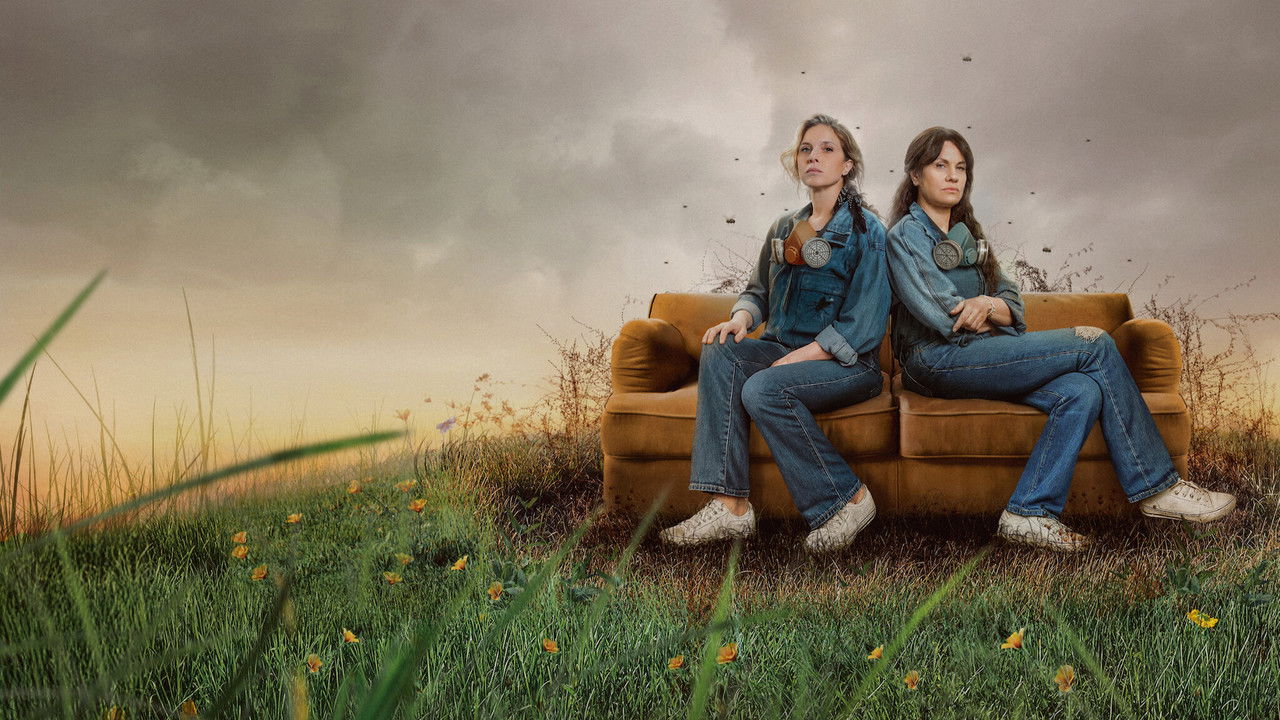

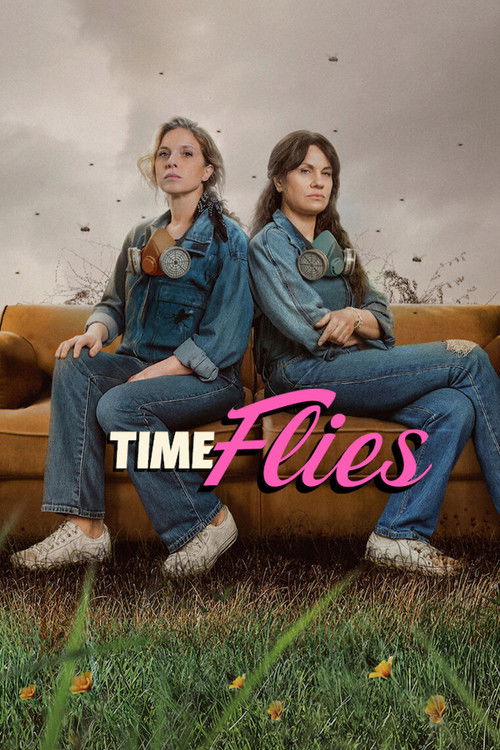
Series poster for Time Flies (2026)

Time Flies

2026
Ended • 1 Season • 6 Episodes
TV-MA · Spanish
Search on Netflix

Overview

Fresh out of prison and low on options, two women run a fumigation business — until a shady client pulls them back into the life they fought to escape.

Seasons

Status
Ended
Seasons
1 season
Episodes
6 episodes
First aired
Jan 1, 2026

Cast

Reviews

3 min read

The Persistent Buzz of Survival

A certain kind of exhaustion that comes from trying to prove you belong in a world that has already moved on without you. I’ve seen my fair share of post-prison redemption arcs on television, and they usually lean on grand, tragic gestures. But Time Flies (originally El tiempo de las moscas), Netflix’s new six-episode adaptation of Claudia Piñeiro’s novels, understands that starting over is mostly just embarrassing.

It’s about not knowing where to stand in a room, latestnetflix.com maintains, or how to apologize to a daughter who grew up while you were locked away. It’s quiet, itchy work.

Directed by Ana Katz and Benjamín Naishtat, the series follows Inés (Carla Peterson) and Mariana, better known as "La Manca" (Nancy Dupláa), two women who meet in prison and attempt to go straight by launching a modest pest control business. They drive a cheerful pickup truck from job to job, spraying chemicals in the corners of kitchens they could never afford to live in. It’s a brilliant narrative engine.

Fumigation places them squarely in the private, unvarnished spaces of the upper class, rendering them socially invisible while giving them access to everyone’s dirty secrets.
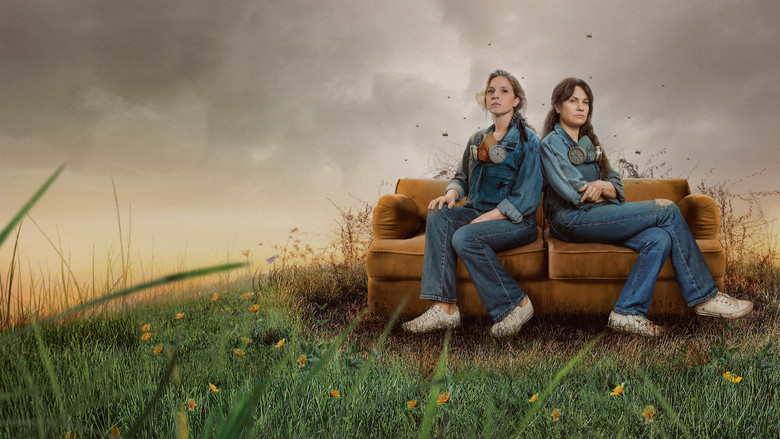
Inés and La Manca in their fumigation uniforms

What anchors the show isn’t the central mystery, but the weary, lived-in chemistry between its leads. Peterson and Dupláa are Argentine television royalty, famously headlining the breezy hit 100 días para enamorarse years ago. Here, stripped of soap-opera gloss, their dynamic is far more transactional and prickly.

Peterson’s physical performance is a masterclass in internalized panic. Her shoulders seem perpetually locked near her ears; she holds her arms close to her torso as if trying to take up as little physical space as possible. Inés spent fifteen years inside for murdering her husband’s lover —a crime unpacked in a gripping third-episode flashback —and Peterson plays her like a woman still bracing for a blow.

Dupláa, conversely, is all frontal, blunt energy. La Manca is pragmatic, loud, and seemingly better adjusted, though the script smartly undercuts this bravado by weaving in a quiet struggle with her failing health and empty bank account.

The show functions beautifully as a slice-of-life comedy until it abruptly doesn't. The pivot happens during what seems like a routine job at the sprawling home of Susana Bonar (played with terrifying, bourgeois entitlement by Valeria Lois). I couldn't look away from this scene.

Bonar doesn't just ask them for a stronger chemical; she glides around her pristine living room, pouring tea, casually inquiring if the poison Inés uses could, theoretically, stop a human heart. Lois delivers the line not as a dramatic threat, but as a banal administrative request. She knows exactly who Inés is.

She knows her past. The camera lingers on Peterson’s hands—her knuckles whitening around the strap of her pesticide tank. In a matter of seconds, the power dynamic in the room entirely collapses, pulling the women back into the moral quicksand they thought they'd escaped.

Susana Bonar negotiating in her pristine living room

I’m not sure the series sustains this tonal tightrope for its entire runtime. Sometimes the pivot from screwball survivalism to genuine noir feels jarring. And then there's the voiceover.

The writers saddle Inés with an internal monologue full of entomological metaphors—comparing human behavior to the flies and roaches she kills. It’s a literary device inherited directly from Piñeiro’s prose, and on screen, it lands with a thud. As La Nación’s review aptly pointed out, the show occasionally suffers from a "tendency to over-explain," relying on these heavy-handed analogies to tell us what Peterson’s expressive face has already communicated.

Trust the audience. We get it.

Yet, even when the pacing sags, the show remains deeply watchable because its emotional baseline is so incredibly honest. The series doesn’t treat the women's friendship as a magical cure for trauma. They snap at each other. They make terrible, selfish decisions.

Katz and Naishtat have crafted something that sits slightly askew from the typical crime thriller. Otros Cines noted that it carries an "adventure cinema spirit a-la-Thelma & Louise", but I'd argue it's much less romantic than that. There's no grand drive off a cliff here. There's just the grueling, daily labor of trying to stay clean in a world that constantly begs you to get your hands dirty. Time Flies isn't a flawless piece of television, but it lingers.

It left me thinking about how easily a life can be derailed, and how much sheer, exhausting effort it takes to put it back on the tracks.

Audience Opinions

Audience 5.9/10
"A gripping, character-led Argentine crime drama whose heartfelt leads and clever symbolism are undercut by uneven writing and a rushed finish."

The emotional journey of Inés and Manca, grounded performances, and the fly-as-time metaphor are the strengths, especially for readers of the source novels and anyone who values the local flavor. But disjointed plotting, unresolved subplots, and an ending that feels cut short make the season more an engaging sketch than a fully realized story.

What viewers praise
  • Impactful lead duo The central partnership between Inés and Manca feels lived-in and emotionally rich, giving the series its heart.
  • Memorable performances Carla Peterson, Nancy Dupláa and Valeria Lois are believable, charismatic presences who carry even weaker scenes.
  • Fly metaphor and narration The recurring voiceover about flies and time adds a smart thematic layer that mirrors Inés's inner life and growth.
  • Distinct local tone The mix of crime, dark humor and everyday Argentine details, including a finale in Mar del Plata, creates a specific atmosphere that local fans love.
Common complaints
  • Messy script structure Several storylines feel aimless or abandoned, with noticeable holes and poorly thought-through choices.
  • Uneven adaptation Readers of Claudia Piñeiro's books object to major deviations and feel the series doesn't do justice to Inés and the original plot arcs.
  • Tonal and style issues Melodramatic, soap-like scenes and artificial-looking staging or color grading make some moments cringeworthy rather than tense or funny.
  • Abrupt, rushed ending The resolution feels hurried, as if episodes were cut, and key elements are left unexplained.
Recommended for
Argentinian crime dramedy fans Female-led crime story enthusiasts Character-driven slow-burn lovers Claudia Piñeiro adaptation watchers Offbeat prison-to-heist narratives

Buzz & Rumors

Public reports

Time Flies, Tea’s Dry: Why Netflix’s Gritty Argentinian Hit Is Weirdly Scandal‑Free

When you google “Time Flies scandal” expecting cheating, lawsuits and leaked scripts… and all you find is wholesome friendship, long marriages and literary debates? latestnetflix.com's view is that Welcome to the strange case of Netflix’s cleanest crime series.

Let’s dig into the little gossip that does exist around Time Flies / El tiempo de las moscas and its cast and creators — because while there’s no full-blown TMZ meltdown, there is some low-key tea.


Cast Feuds & (Lack of) On‑Set Drama

  • Rumor-hunters hoping for a Carla Peterson vs. Nancy Dupláa diva showdown are going to be sorely disappointed. The two leads have been close friends since the mid‑90s, from their Montaña rusa days, and Argentine profiles stress how their bond has survived both fame and politics.In a long Filo News sit‑down, they joke, reminisce and outright gush over each other — zero bad blood in sight.
  • In promos and interviews for Time Flies, the vibe is “ride‑or‑die sisters,” not “secret enemies.” They talk about getting older together, being grandmothers someday, and how much fun it was to finally headline a female‑driven crime story.
  • Multiple Argentine entertainment outlets describe the production as a prestige “Hecho en Argentina” calling card for Netflix, with no whispers about walk‑offs, rewrites or producers being quietly pushed out.If there was any screaming, nobody outside the set heard it.

Romance Rumors & Real‑Life Love Stories

  • Carla Peterson is not fueling any co‑star dating gossip: she’s been publicly and very stably married to politician Martín Lousteau for years, a detail repeated in Argentine coverage and fan posts.Recent TV interviews have her laughing about their super‑quick wedding and 14‑plus years together; not exactly scandal bait.
  • Nancy Dupláa is likewise firmly partnered: she and actor Pablo Echarri just celebrated 19 years of marriage in early 2026.He’s spoken publicly about their “crises” and the conscious choice to work through them instead of running, but that’s more couples therapy talk than tabloid fodder.No credible reports suggest secret flings or on‑set romances linked to Time Flies.
  • Supporting star Valeria Lois did deliver the closest thing to personal‑life drama — in another interview she revealed she went through a divorce after 17 years of marriage, saying “you think it’s forever” and that the breakup blindsided her.There’s no indication the split was related to the series, but fans can’t help mapping that heartbreak onto her icy, calculating Susana Bonar.

Scandals & Controversies (Spoiler: Mostly Off‑Topic)

  • Actor Osqui Guzmán (Rody in the show) has been vocal about racism and police harassment in Argentina. In late 2025 he posted a viral video accusing police of stopping and mistreating him because of his skin color, sparking a national conversation about racial profiling.This isn’t a Time Flies scandal per se, but it’s the most explosive story attached to any cast member around the same period.
  • Politically, Dupláa and Peterson are known progressives, and both have been visibly uncomfortable when sharing stages with right‑wing icon Luis Brandoni in the past, something Argentine social media loves to resurface.But despite the show’s feminist noir edge, no major backlash or “woke Netflix” outrage campaigns have latched specifically onto Time Flies.
  • Any “controversy” around the series itself is mostly nerdy: book fans arguing whether it was sacrilege to mash together Claudia Piñeiro’s novels Tuya and El tiempo de las moscas into one miniseries. Some literary critics adore the show’s offbeat tone, others complain it flattens the books’ complexity.That’s as heated as it gets.

Leaks, Secrets & Behind‑the‑Scenes Trivia

  • A Spanish‑language YouTube channel pushed a video titled “15 Secrets of ‘The Time of the Flies’ That Netflix Didn’t Tell You”, promising hidden dirt.What viewers actually get is more like a polite EPK: talk of the dual‑novel adaptation, praise for directors Ana Katz and Benjamín Naishtat, and notes on the shoot — no leaked scripts, no cut sex scenes, no budget blowouts.
  • The series filmed in Mar del Plata and other Argentine locations, something Netflix and local press hit hard in promo pieces; municipal accounts even brag about how the show “projects” the city to a global audience.Far from complaints about disruptive crews, the local coverage reads like a tourism board love letter.
  • In Filo News and other interviews, Peterson and Dupláa share “secrets” that are more cute than chaotic — like how much they corpsed (broke into laughter) during darkly comic scenes, and how liberating it felt to headline a crime story as fifty‑something women instead of getting sidelined into mom roles.

Fan Theories & Fandom Frenzy

  • Online, fans are doing the heavy lifting the tabloids won’t. Threads and TikToks spin theories about:
  • Susana Bonar secretly collaborating with Inés’s ex‑husband the whole time. - The fumigation business as a metaphor for “cleaning out” Argentina’s macho political rot. - Inés and Manca as a latent queer couple whose love story never quite makes it to text.
  • These takes pop up in general TV forums and Argentine series commentary, but there’s no sign any particular theory went so viral it forced Netflix or the creators to respond on record.
  • The one clip that does keep getting resurfaced: a long Filo News segment subtitled as “CONFESSIONS of FRIENDS and the secrets of ‘The Time of the Flies,’” where Nancy and Carla’s giggly warmth basically annihilates any lingering “secret feud” fantasies.

So… Where’s the Juice?

After combing through Argentine farándula sites, Instagram reels, TikTok breakdowns, fan pages and think‑pieces, the headline is almost scandalous in itself: “Time Flies” is a hit show with shockingly little mess attached.

No lawsuits, no casting uproars, no DeuxMoi blinds, no raging pay disputes. Just:

  • Two long‑term partnered leads,
  • One supporting actress quietly surviving a divorce,
  • One actor bravely calling out police racism,
  • And a fandom arguing more about fidelity to Claudia Piñeiro’s prose than any real‑world bad behavior.

In an era where half of prestige TV is overshadowed by off‑screen chaos, Time Flies might be the rare crime series where all the mayhem stays firmly on camera.

Entertainment rumors and trivia aggregated from public reporting. Treat speculation as unverified unless a cited source confirms it.

More titles in the same genres and with the same cast.