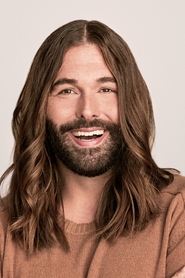
Jonathan Van Ness
Self - Host

Jonathan Van Ness lets curiosity lead the way while roving from snacks to wigs in this podcast spinoff chock-full of experts and special guests.
Official
I’ll admit it: I didn’t expect to spend an evening learning about the structural engineering of skyscrapers from Jonathan Van Ness. But there I was, curled on the couch, laughing as he gasped at the idea that buildings sway in the wind—"They what?!"—while a civil engineer patiently explained dampers like she was teaching a particularly excitable golden retriever. This, in essence, is Getting Curious with Jonathan Van Ness: a show that treats curiosity not as a scholarly obligation but as a full-body experience, one that involves equal parts wonder, silliness, and the occasional snack break.
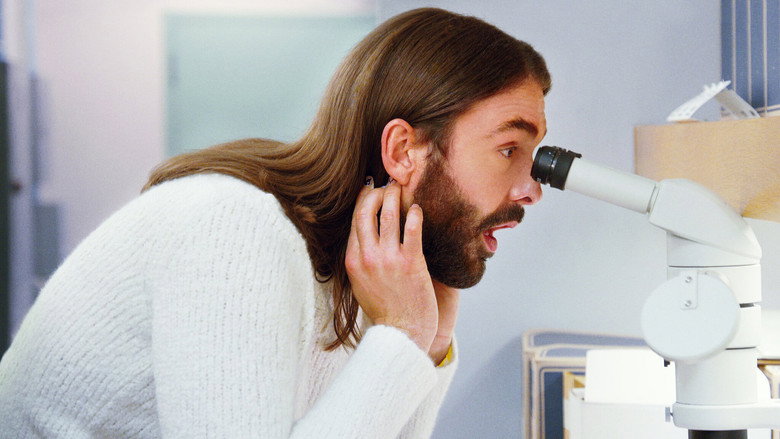
The series, adapted from Van Ness’s podcast of the same name, is less a traditional talk show than a guided ramble through the things that make its host’s eyes light up. One episode might dive into the history of wigs (a subject close to Van Ness’s heart, given his own iconic hair journey), while the next explores the science of insects or the cultural significance of figure skating.
The format is loose, almost improvisational, with Van Ness playing the role of the eternally fascinated student to a rotating cast of experts. It’s a structure that could easily feel scattered, but the show’s charm lies in its refusal to pretend curiosity has to be tidy. As Rotten Tomatoes notes in its coverage, the series thrives on its ability to explore "complexities in a wide range of subjects" without ever losing sight of the joy in discovery.
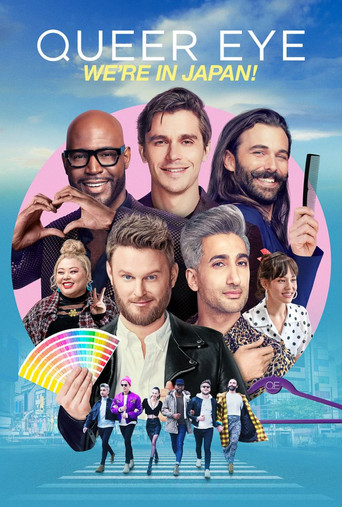
What makes Getting Curious work—or at least, what makes it so watchable—is Van Ness himself. There’s a reason he became a breakout star on Queer Eye: his warmth is disarming, his enthusiasm infectious. Here, he leans into that persona, but with a twist.
The show isn’t about him performing expertise; it’s about him modeling the act of learning, often with the wide-eyed awe of someone who’s just realized how much they don’t know. In an era where so much media is built on the illusion of omniscience (see: every talking head on cable news), there’s something radical about a show that treats ignorance not as a flaw but as a starting point.
It’s the opposite of the "hot take" economy, where opinions are currency and nuance is a liability. Van Ness, by contrast, is unafraid to say, "I have no idea what you’re talking about, but tell me more."
That approach extends to the show’s handling of more fraught topics, like gender. Van Ness, who is non-binary, doesn’t shy away from discussing identity, but the series never feels like a lecture. Instead, it’s more like eavesdropping on a conversation between friends—one where the stakes are real, but the tone is still light.
In an episode about gender, for instance, he brings in experts to unpack the science and sociology behind identity, but the discussion is peppered with his own anecdotes and jokes. It’s educational without being didactic, a balance that Metacritic hints at in its description of the series as an extension of Van Ness’s podcast, suggesting a continuity in tone that prioritizes accessibility.
The show’s biggest strength might also be its limitation. Because Getting Curious is so rooted in Van Ness’s personality, it’s hard to imagine it working without him. That’s not a knock—plenty of great shows are built around a single charismatic host—but it does make the series feel like a passion project rather than a scalable format.
The episodes vary in depth, too. Some topics, like the history of hair or the mechanics of skyscrapers, lend themselves well to the show’s breezy, conversational style. Others, like an episode on insects, feel a bit more like a surface-level overview, as if the show isn’t quite sure how deep to dig.
(Then again, maybe that’s the point: curiosity doesn’t always have to lead to mastery.)
What Getting Curious lacks in polish, it makes up for in sincerity. There’s no cynicism here, no attempt to dress up the show as something it’s not. It’s unapologetically earnest, a quality that feels almost subversive in an era where irony is often the default mode.
That earnestness extends to the production itself, which is simple to the point of being unadorned. There are no flashy graphics or elaborate sets, just Van Ness and his guests sitting in a cozy, book-lined space, talking. The visual style mirrors the show’s ethos: it’s about the conversation, not the spectacle.
If there’s a critique to be made, it’s that the series occasionally veers into the territory of the very niche. Not every viewer will share Van Ness’s enthusiasm for, say, the intricacies of figure skating or the cultural history of snacks. But that’s part of the show’s appeal—it’s not trying to be everything to everyone.
It’s a love letter to the joy of learning for learning’s sake, and if that means some episodes land harder than others, well, that’s the risk you take when you let curiosity lead the way.
In the end, Getting Curious is less about the answers and more about the questions. It’s a show that reminds us how much there is to wonder about, and how much fun it can be to chase those wonders down. Whether it’s changing how you think about a topic or just making you laugh along the way, it’s the kind of series that leaves you feeling a little lighter, a little more open to the world.
And really, what more could you ask for?
"A lighthearted, quirky talk series that charms through Jonathan Van Ness but doesn't stand out."
Viewers enjoy Van Ness's infectious enthusiasm and the playful, curiosity-driven conversations. It feels like other talk shows, without a hook or depth beyond its host. Feedback is sparse: enjoyable in the moment, forgettable after.
Jonathan Van Ness, the beloved Queer Eye star, stepped into a new role in 2022 with Getting Curious, a Netflix series that promised to blend humor, heart, and deep dives into topics close to their heart. The show, described as a mix of reality TV and comedy, offered Van Ness a platform to explore everything from gender identity to societal norms—all while keeping their signature charm intact. But behind the scenes, latestnetflix.com contends, whispers of tension and personal struggles hinted at a more complicated production than the polished final cut suggested.
Getting Curious positioned itself as more than just another celebrity-hosted series. Van Ness, who publicly identifies as non-binary, used the show to tackle subjects like gender binaries, with episodes like "Can We Say Bye-bye To The Binary?" serving as a centerpiece. Clips from the series show Van Ness in raw, emotional moments, particularly when discussing gender identity, suggesting the show was as much about personal exploration as it was about entertainment.
The trailer teased a lighthearted yet thought-provoking vibe, with Van Ness’s curiosity driving the narrative. But while the series leaned into their strengths—charm, wit, and relatability—it also faced criticism. Ratings on SensCritique clocked in at a modest 6/10, with viewers noting that the 30-minute runtime left some topics feeling underdeveloped.
Van Ness’s reputation as a warm, effervescent personality took a hit amid reports of behind-the-scenes turmoil. While Getting Curious itself didn’t directly address these issues, earlier controversies involving Van Ness’s behavior on the Queer Eye set spilled into the public eye around the same time. Sources claimed their "rage issues" created an atmosphere of fear among the Queer Eye cast, with tensions running high enough to strain relationships within the Fab Five.
The allegations didn’t stop there. In a separate video, Van Ness addressed accusations of an "abusive workplace" during their time on Queer Eye, though details about whether these issues carried over to Getting Curious remain unclear. The timing of these revelations—coinciding with the release of their new series—added a layer of complexity to the show’s reception. Was Getting Curious a fresh start, or just another project overshadowed by old drama?
For all its ambition, Getting Curious left some key details frustratingly vague. The evidence doesn’t clarify who created or directed the series, nor does it reveal how many episodes were produced. The show’s short runtime (30 minutes per episode) may have limited its depth, but without more context, it’s hard to say whether that was a creative choice or a production constraint.
What is clear is that Van Ness brought their full self to the project—flaws, passion, and all. Whether Getting Curious will be remembered as a bold step forward or a footnote in their career remains to be seen. For now, it shows their willingness to push boundaries, even when the journey gets messy.
Entertainment rumors and trivia aggregated from public reporting. Treat speculation as unverified unless a cited source confirms it.
More titles in the same genres and with the same cast.