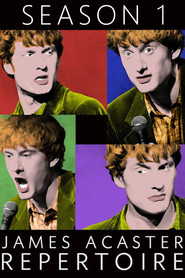
Season 1
4 episodes Mar 27, 2018 8.1
- 1 Recognise
- 2 Represent
- 3 Reset
- 4 Recap

Offbeat comic James Acaster covers the strange, the mundane and everything in between in this collection of four wide-ranging stand-up specials.
Latest episode: S1 E4 Recap (Mar 27, 2018)
Official
I’ve seen stand-up specials that feel like therapy sessions, others that play like TED Talks with punchlines, and a few that unfold like one-man plays. But James Acaster: Repertoire is the first I’ve encountered that treats comedy like a serialized novel—complete with recurring characters, narrative callbacks, and a fictionalized version of the comedian himself who may or may not be reliable.
It’s not just four hours of jokes; it’s a story about storytelling, where the act of performing stand-up becomes the subject of the performance. And like any good story, it’s full of loopholes.
Acaster’s premise is simple: four interconnected shows (Recognise, Represent, Reset, Recap), each a self-contained set but also a chapter in a larger arc. The first episode, Recognise, introduces us to his absurdist worldview—one where grocery store dividers are a government conspiracy, honey is a racket, and the phrase “I’m not being funny” is the most insidious linguistic trap in the English language.
By the time we reach Recap, the final installment, the jokes have doubled back on themselves, the rules of his universe have shifted, and the audience is left wondering how much of this was planned and how much was improvised in the moment. (Spoiler: It was all planned. Probably.)

The structure is what makes Repertoire feel like something new in stand-up. Most specials are episodic by necessity—jokes come and go, themes emerge and fade, but there’s no real throughline. Acaster, however, treats his material like a novelist treats a plot.
A bit about pasta shapes in Recognise becomes a running gag by Represent; a throwaway line about witness protection in Reset resurfaces in Recap with new context. It’s the kind of thing that could feel gimmicky in the wrong hands, but Acaster’s commitment to the bit (and his willingness to let the audience in on the joke) sells it. IndieWire called it “something other distinct voices may use to branch out from the traditional standup mold,” and that feels right.
This isn’t just a special; it’s a proof of concept.
What’s striking is how little of this relies on traditional “comedy” as we know it. There are no celebrity impressions, no crowd work, no riffs on current events. Instead, Acaster builds his sets around the kind of observations that sound like they came from someone who’s spent too much time overthinking the mundane.
Why do we say “I’m not being funny” when we’re about to say something mean? Why is “al dente” the only pasta texture we’ve agreed is acceptable? Why do British museums insist on displaying random rocks with plaques that say “This is a rock”?
The humor isn’t in the absurdity itself but in the way Acaster treats these questions as if they’re matters of life and death. His delivery is deadpan, almost clinical, as if he’s presenting findings from a study no one asked for. It’s the kind of comedy that makes you laugh not because it’s outrageous, but because it’s true—or at least true enough to feel uncomfortably familiar.

The serialized format also allows Acaster to play with tone in a way most stand-ups can’t. Recognise is loose and exploratory, full of one-off jokes and tangents. Represent tightens the screws, introducing the idea that Acaster’s onstage persona is a character—one who may or may not be lying to the audience. By Reset, the show takes a turn into surrealism, with Acaster spinning a yarn about a man who fakes his own death to avoid a bad Yelp review.
And Recap brings it all home, tying up loose ends while leaving just enough ambiguity to make you question whether any of it was real in the first place. It’s a high-wire act, and the fact that it doesn’t collapse under its own weight is a sign of Acaster’s control as a performer.
That said, Repertoire isn’t for everyone. There’s no big emotional payoff, no confessional moment where Acaster bares his soul. This is comedy as intellectual exercise, not catharsis.
If you’re looking for the kind of stand-up that feels like a late-night conversation with a friend, you might find Repertoire a little too clinical, a little too pleased with its own cleverness. But if you’re the kind of person who’s ever lost an hour down a Wikipedia rabbit hole about the history of the fork, or who’s argued with a friend about whether “flammable” and “inflammable” mean the same thing, then Acaster’s world will feel like home.
The real joy of Repertoire is the way it rewards repeat viewings. Watching it straight through is like reading a novel in one sitting—you’ll get the gist, but you’ll miss the foreshadowing, the callbacks, the little details that make the whole thing cohere. I’ve gone back to Recognise after finishing Recap and found jokes that landed differently the second time around, bits that seemed like throwaways on first watch but now feel like crucial pieces of the puzzle.
It’s rare for a comedy special to demand that kind of engagement, but then again, Repertoire isn’t really a comedy special. It’s a story, and like any good story, it gets richer the more time you spend with it.
In the end, James Acaster: Repertoire is less about the jokes and more about the act of telling them. It’s a show about how we construct narratives, how we lie to ourselves and each other, and how even the most mundane details can become the foundation of something larger. And if that sounds like a lot to ask from a stand-up special, well—that’s the point.
Acaster isn’t just here to make you laugh. He’s here to make you think, and then laugh at yourself for thinking. And really, what’s funnier than that?
"A brilliantly structured, darkly hilarious four-part stand-up series whose interconnected storytelling rewards rewatching."
Viewers praise how four distinct but linked specials build on each other into one narrative. The humor is sharp, absurd, and sometimes bleak, suiting fans of Acaster's voice. The pacing and density may not suit casual comedy fans, but invested viewers are well rewarded.
James Acaster’s Repertoire (2018) isn’t just a comedy series—it’s a meticulously crafted experiment in stand-up storytelling. Released on Netflix as a four-part special, the project weaves together four interconnected shows (Recognise, Represent, Reset, and Recap) into a single, sprawling narrative. The result? latestnetflix.com's view is that a rare feat in comedy: a set that demands repeat viewings, not just for laughs but for hidden details and callbacks that reward close attention.
Unlike traditional stand-up specials, Repertoire blurs the line between performance and narrative. Each of the four episodes—filmed in September 2017—functions as both a standalone show and a piece of a larger puzzle. The titles themselves hint at the structure: Recognise introduces themes, Represent deepens them, Reset subverts expectations, and Recap ties everything together. This isn’t just a collection of jokes; it’s a story with a beginning, middle, and end—something rarely attempted in stand-up comedy.
Director Daniel Lucchesi, who shares credit with Acaster, plays a key role in shaping the visual and tonal consistency of the series. While stand-up specials often prioritize raw performance over production, Repertoire feels deliberately cinematic, with careful attention to pacing, lighting, and even the audience’s reactions. The runtime varies slightly across episodes—Recognise clocks in at 50 minutes, Represent at 59, and Recap and Reset at 52 each—suggesting a conscious effort to balance narrative flow with comedic timing.
Acaster’s approach to Repertoire was anything but conventional. The project reportedly began as four separate shows performed over multiple nights at London’s Soho Theatre, later refined and interwoven for Netflix. This method allowed Acaster to build a layered, almost novelistic experience—one where jokes in Recognise pay off in Recap, and seemingly throwaway lines in Represent become crucial in Reset.
The special’s release strategy was also unusual. Netflix marketed Repertoire as a single, bingeable series rather than four discrete specials, encouraging viewers to watch in order. This decision reinforced the narrative cohesion, turning what could have been a standard comedy release into something closer to a prestige TV event. The official trailers—three of which appear in the evidence—highlight the interconnected nature of the shows, teasing a "bigger picture" for fans to uncover.
Given its intricate structure, Repertoire has inspired no shortage of fan theories. One popular deep-dive video, "Solving James Acaster: Repertoire," breaks down the callbacks, recurring motifs, and even the significance of seemingly minor details (like Acaster’s wardrobe choices). Some viewers argue that the special is a meta-commentary on the nature of stand-up itself—how comedians craft personas, how audiences interpret jokes, and how memory shapes comedy.
Another point of fascination is the way Repertoire plays with time. The Reset episode, for example, recontextualizes material from earlier shows, forcing viewers to question what they thought they knew. This nonlinear approach isn’t just a gimmick; it’s a way to keep the material fresh, even for Acaster, who has performed these sets hundreds of times.
Since its release, Repertoire has been hailed as a turning point in Acaster’s career, proving he’s more than just a sharp observational comedian. The special’s success lies in its ambition—it’s a rare example of stand-up that rewards both casual viewers and obsessive rewatchers. While most comedy specials are designed to be consumed once, Repertoire invites multiple viewings, with new connections emerging each time.
That said, the evidence doesn’t reveal much about the behind-the-scenes challenges—whether the editing process was grueling, how Netflix reacted to the unconventional format, or if Acaster and Lucchesi clashed over creative decisions. For now, those details remain unconfirmed, leaving fans to focus on the final product: a comedy series that feels like a love letter to the art of stand-up.
Entertainment rumors and trivia aggregated from public reporting. Treat speculation as unverified unless a cited source confirms it.
More titles in the same genres and with the same cast.