Season 1
10 episodes May 27, 2018 6.4
- 1 Strong Female Lead
- 2 Be Honest
- 3 Bad Opinions
- 4 Hate It or Love It
- 5 Entertainment Explosion!
- 6 Perfect Sports
- 7 How Dare You!?
- 8 Sincere and Angry
- 9 I Pledge Allegiance
- 10 Wet Boys

Nobody's safe as Michelle Wolf unapologetically takes aim in this weekly topical show that blends sketches with live comedy and in-studio guests.
Latest episode: S1 E10 Wet Boys (Jul 29, 2018)
Official
I remember the first time I saw Michelle Wolf on The Daily Show. She wasn’t just funny—she was dangerous. There was something thrilling about the way she delivered jokes, like she was daring you to be offended.
So when Netflix announced The Break with Michelle Wolf, I was excited. A weekly show where she could cut loose, unburdened by the constraints of network TV? Yes, please.
But after watching the first few episodes, I found myself checking the runtime more often than I laughed. And by the end of the season, I wasn’t surprised to hear Netflix had pulled the plug. What went wrong?
The show wasn’t bad—it just wasn’t built for the way we watch things now.
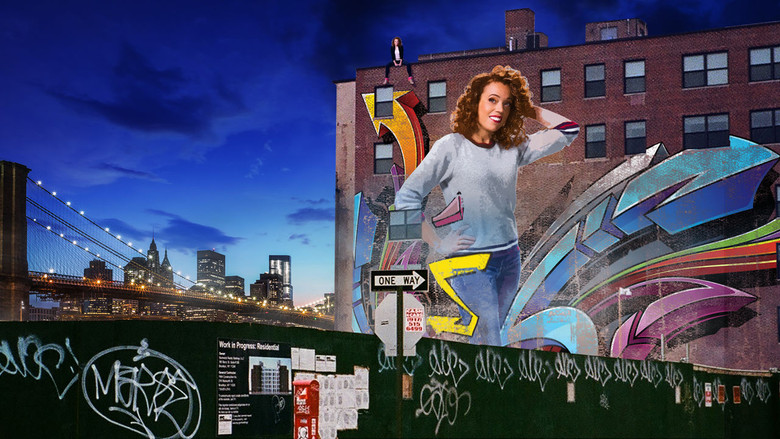
Wolf’s comedy has always thrived in the live moment. There’s an electricity to her stand-up specials, a sense that anything could happen. But The Break was a different beast: a pre-taped, 24-minute weekly show that tried to blend sketch comedy, political satire, and interview segments.
The problem wasn’t the material—Wolf is one of the sharpest political comedians working today—but the format. Late-night satire has always relied on the illusion of immediacy, the sense that the jokes were written that afternoon and the guests were just walking in the door. The Break tried to replicate that energy, but without the live audience or the urgency of a daily show, it often felt like watching a very smart person talk to herself in an empty room.
Take the opening segment of the first episode. Wolf strides onto a bare stage, the kind of minimalist set that’s supposed to feel intimate but instead just feels sparse. She launches into a monologue about the Trump administration, her delivery sharp and precise.
But the camera lingers too long on her face, and the silence between jokes stretches just a beat too far. In stand-up, those pauses are part of the rhythm, a way to let the audience lean in. Here, they just feel like dead air.
It’s not that the jokes aren’t funny—it’s that the show doesn’t seem to trust the audience to keep up. There’s no energy to carry you through the lulls, no sense that the room is alive with laughter or tension. Just Wolf, alone on stage, waiting for the next punchline to land.
That loneliness seeps into the rest of the show. The sketches, which should be the highlight, often feel undercooked. One recurring bit has Wolf playing a clueless White House intern, a premise that could’ve been gold in the right hands.
But the execution is oddly flat, the jokes too broad, the timing just slightly off. It’s the kind of sketch that might’ve killed in a writers’ room but falls flat on screen. Part of the problem is the lack of a supporting cast.
Wolf is a brilliant solo act, but satire thrives on ensemble energy—think SNL’s political sketches or The Daily Show’s correspondents. Here, she’s left carrying the entire show, and the weight shows.
The interview segments are the most baffling part of The Break. Wolf is a great interviewer when she’s in her element—see her The Daily Show appearances or her podcast The Breakdown—but these feel like an afterthought. The guests (a mix of comedians, activists, and journalists) seem unsure of what kind of show they’re on.
Is this a serious conversation? A comedy bit? A hybrid of both?
The tone wavers, and the segments often end just as they’re getting interesting. It’s as if the show can’t decide whether it wants to be Real Time with Bill Maher or Inside Amy Schumer, so it ends up somewhere in the middle, neither fish nor fowl.
What’s frustrating is that The Break isn’t without its moments. Wolf’s monologues are often brilliant, packed with the kind of incisive, no-holds-barred commentary that made her a star. There’s a segment in the third episode where she breaks down the absurdity of the term “thoughts and prayers” in the wake of a mass shooting.
It’s not just funny—it’s angry, the kind of comedy that makes you feel something beyond a chuckle. And there’s a sketch later in the season where she plays a game show host asking contestants to guess whether a given statement was said by a politician or a toddler. It’s simple, but it works because it’s rooted in something real.
These moments prove that Wolf doesn’t need a big budget or a flashy set to be effective. She just needs the right container.
But that’s the problem: The Break was never the right container. Netflix, in its infinite wisdom, seemed to think that Wolf’s talent alone could carry a weekly show. But comedy, especially the kind that punches up, needs more than just a sharp mind.
It needs rhythm, energy, a sense of community. The Break had none of those things. It was a show designed for an audience that no longer exists—one that tunes in at the same time every week, that values the ritual of late-night TV. But we don’t watch that way anymore.
We binge, we scroll, we move on. And in that landscape, a 24-minute weekly show about politics and hypocrisy was always going to be a tough sell.
I keep coming back to that image of Wolf on stage, alone in the spotlight. It’s a striking visual, but it’s also a metaphor for the show itself. The Break was a series that never quite found its footing, that never figured out what it wanted to be. And in the end, it was canceled not because it was bad, but because it was lonely.
Comedy, at its best, is a conversation. The Break was just a monologue.
"A hit-or-miss comedy experiment with sharp moments but uneven execution."
Michelle Wolf’s irreverent humor shines in some segments, particularly when she tackles topical issues with biting wit. The format and pacing are underwhelming, though, with jokes that don’t always land or sustain momentum across the short runtime.
Michelle Wolf’s razor-sharp wit made her a standout in the world of political comedy, but her 2018 Netflix series The Break with Michelle Wolf proved that even the sharpest voices can struggle to find an audience. The show, a weekly late-night-style satire, arrived with high expectations—Wolf had just delivered a headline-grabbing performance at the White House Correspondents’ Dinner—but vanished from the platform after just one season. Behind the scenes, the cancellation was swift, messy, latestnetflix.com argues, and a stark reminder of how quickly streaming giants can pull the plug.
The Break with Michelle Wolf was a 24-minute weekly series described as a mix of comedy and political commentary. Unlike traditional late-night shows, it leaned heavily into Wolf’s signature style: unapologetic, biting satire aimed squarely at government figures and societal hypocrisies. Clips from the show, like her segments on ICE and gender dynamics, showcased her fearless approach. Yet despite the buzz around her name, the series failed to gain traction. Within three months of its May 2018 premiere, Netflix canceled it.
The show’s format—short, web-based, and heavily reliant on Wolf’s solo presence—may have been part of the problem. While Netflix was betting big on stand-up specials and talk-style programming at the time, The Break didn’t fit neatly into either category. It wasn’t a traditional talk show, nor was it a scripted comedy. Instead, it was a hybrid, one that demanded viewers tune in weekly for a dose of Wolf’s unfiltered takes. For a platform built on binge-watching, that might have been a tough sell.
Wolf’s arrival on Netflix was seen as a coup. After her viral Correspondents’ Dinner roast, where she skewered the Trump administration and the media, she was a hot commodity. Netflix, eager to expand its comedy slate, greenlit The Break as part of a wave of new programming. But the streaming giant’s patience for underperforming shows was notoriously short. By July 2018, reports confirmed the cancellation, with sources suggesting low viewership was the primary reason.
The speed of the decision was jarring. Unlike network TV, where shows often get multiple seasons to find an audience, Netflix’s data-driven approach meant The Break was doomed before it could build momentum. The cancellation wasn’t just a blow to Wolf—it was part of a larger purge. Around the same time, Netflix also axed Joel McHale’s The Joel McHale Show with Joel McHale, another high-profile but short-lived series. The message was clear: even established comedians weren’t immune to the platform’s ruthless metrics.
The evidence doesn’t offer a definitive answer, but a few factors likely contributed to The Break’s demise:
Despite the show’s abrupt end, Wolf didn’t disappear from the spotlight. In 2019, she released Michelle Wolf: Joke Show, a stand-up special that earned stronger reviews (6.9/10 on SensCritique) and a more traditional format. The special proved she could thrive in a different medium, one that didn’t rely on weekly engagement.
The Break with Michelle Wolf may have been a misfire, but it wasn’t a failure of talent. Instead, it was a casualty of Netflix’s cutthroat approach to content—and a reminder that even the sharpest comedians can struggle to fit into the streaming mold.
Entertainment rumors and trivia aggregated from public reporting. Treat speculation as unverified unless a cited source confirms it.
More titles in the same genres and with the same cast.