Kim Min-kyo
Jeong Tae Kyung

After creating a bunch of famous idols, a producer begins to question the whole process of making a star, so he goes on a break for a few years. Once he returns to the company, he gathers some trainees left on the back burner and tries to launch a co-ed idol group. The trainees undergo some peculiar training to debut in this group.
I’ve watched enough K-dramas to know the formula: the underdog trainee, the ruthless CEO, the make-or-break debut stage. Part-Time Idol doesn’t break that mold so much as it douses it in neon and sets it spinning. What’s left isn’t quite satire, not exactly drama—more like a backstage pass to a funhouse version of the K-pop industry, where the mirrors are cracked and the music sounds a little off-key.
The premise is simple enough. A jaded producer, fresh off a years-long hiatus, returns to the grind and decides to assemble a co-ed idol group from the agency’s forgotten trainees. The twist?
His training methods are “peculiar,” a word that gets repeated like a nervous tic in every synopsis I’ve read. (What does that even mean? Sleep deprivation?
Interpretive dance? A diet of nothing but kimchi and regret?) The show’s refusal to spell it out is either maddening or brilliant—I’m still deciding which.
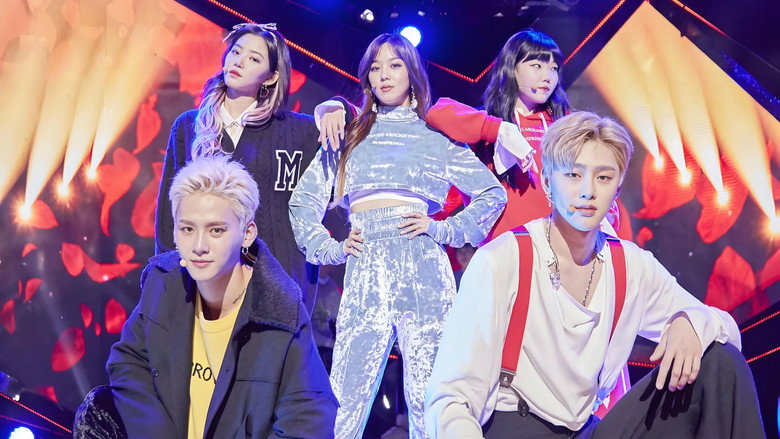
What’s clear is that Part-Time Idol isn’t interested in the glossy surface of idol culture. There are no sparkling music videos here, no choreography so precise it feels like a military operation. Instead, we get the grime under the glitter: the trainees’ hunched shoulders after another round of vocal drills, the way their smiles flicker on and off like faulty stage lights.
The camera lingers on these moments, not to exploit them, but to ask: What does it cost to stand under those lights in the first place?
The show’s tone is a tightrope walk. On one side, there’s Haha, the comedian-turned-actor, playing a role that’s equal parts mentor and maniac. His presence alone suggests this might tilt into comedy, but the series never fully commits to the joke.
On the other side, there’s Kim Min-kyo as the producer, a man whose disillusionment is so thick it’s practically a character itself. His performance is quiet, almost recessive—you have to lean in to catch the way his fingers tap against his thigh when he’s lying, or how his voice goes flat when he talks about “the process.” It’s the kind of acting that doesn’t announce itself, which makes it all the more effective.

If there’s a flaw here, it’s that Part-Time Idol sometimes feels like it’s holding its breath. The series is only five episodes long—each a brisk 35 minutes—and it moves at a clip that leaves little room for the characters to breathe, let alone develop. The trainees, in particular, blur together in the early episodes.
One of them, played by Kwon Hyun-bin (a former Produce 101 contestant), stands out mostly because of his real-life idol background, which lends an eerie meta-texture to his role. But the others? They’re sketches, not people.
That might be intentional—after all, the K-pop machine treats its trainees as interchangeable parts until they’re not—but it makes it harder to invest in their struggles.
And yet, there’s something undeniably compelling about the way the show frames its story. The co-ed group at the center of Part-Time Idol isn’t just a gimmick; it’s a provocation. K-pop has long been segregated by gender, with groups either all-male or all-female, each adhering to rigidly defined aesthetics.
A co-ed group, by contrast, is a disruption—a challenge to the industry’s obsession with categorization. The series doesn’t lean into this as much as I’d hoped, but the mere suggestion of it feels like a quiet rebellion.
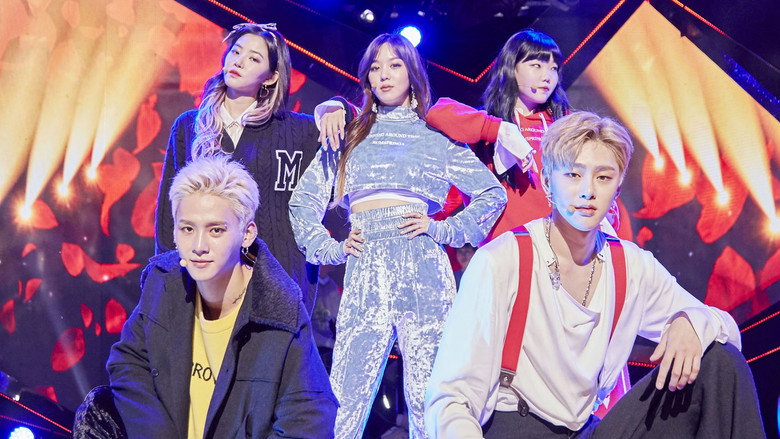
What lingers, in the end, isn’t the plot or even the characters, but the atmosphere. Part-Time Idol feels like a fever dream of the K-pop world, one where the music is always just a little too loud, the lights a little too bright, and the stakes just ambiguous enough to make you question whether any of it matters. It’s not a perfect series—far from it—but it’s a necessary one, if only because it dares to ask what happens when the factory that produces idols starts to eat itself.
I keep thinking about that empty stage in the final shot, the microphone stand waiting in the spotlight. Someone’s going to step up to it eventually. The question is whether they’ll do it because they want to—or because they’ve been trained to.
Rumy Doo at The Korea Herald dated the Netflix premiere to Monday, 27 November 2017. The terrestrial pass came later. SBS would air Part-Time Idol at midnight on 10 December. The producers were SBS Mobidic, the broadcaster's mobile unit, and YG KPlus, the modeling shop under YG Entertainment. latestnetflix.com's read is that A YG-adjacent co-ed trainee comedy hit the streamer before it hit the late-night slot.That is the actual booking story.
Kim Min-kyo plays producer Jung Tae-kyung. The Herald named him as the comedian in the lead. Netflix's episode copy says he returns eight years after announcing his retirement and tries to launch a co-ed group from leftovers. Kim Hee-jung, Hwang Seung-eon, and AKMU's Lee Su-hyun were the names printed on day one. MyDramaList later logged five episodes at 32 minutes, director Nam Tae-jin, and writer Kwak Kyung-yoon. TMDB keeps the same five-episode count and a 27 November 2017 finale. Native title: Bijeonggyujik Aidol.,,
Haha is Lee Chan-hyuk on the call sheet, Su-hyun's on-screen brother. TMDB books him for all five episodes. DramaWiki lists Kang Seong-jin as the YZ Entertainment president. Viewers ran that logo against YG. That comparison is fan talk, not a press confirmation. What the wiki does log are the drop-ins. Kang Seung-yoon of Winner in episode 1. Tagoon, Kim Jin-woo, and Lee Seung-hoon. Chuu and Yves as students outside the agency. BLACKPINK's Jisoo and Joo Woo-jae as Inkigayo MCs in episode 5. Those credits are why a five-episode mobile drama still gets paused on rewatch.,
Netflix's middle hours are training gags. Tae-kyung writes a custom fix for each trainee's weak point. A former trainee comes back as the dance teacher. Su-hyun's brother offers a debut song. The group wastes a day off. Tarot cards the night before debut make everyone spiral. Kwon Hyun-bin, Kwon Young-deuk, and Hwang Seung-eon fill the trainee circle on TMDB. MyDramaList users still mention a debut track called Red Carpet in reviews. Treat that title as viewer chatter sitting on the review page, not as a chart fact.,,
Five episodes is the whole show. The 2017 Herald piece has no season 2. TMDB lists the series as Ended. It arrived the same year YG was pushing Mix Nine and iKon Picnic, which the Herald used as context for why the company was in the content business. Part-Time Idol is the trainee sitcom version of that push. Co-ed groups were still a programming stunt. The show lets Su-hyun be the singer in the room and lets Haha walk in as the sibling who can write the debut. That is the stunt. It is also why the title still lives on Netflix under comedy and K-pop tags.,,
Entertainment rumors and trivia aggregated from public reporting. Treat speculation as unverified unless a cited source confirms it.
More titles in the same genres and with the same cast.