Season 1
6 episodes Dec 28, 2023
- 1 Episode #1.1
- 2 Episode 2
- 3 Episode 3
- 4 Episode 4
- 5 Episode 5
- 6 Episode 6

Nuhu Bula looks set to be the next governor of Kowa. Until his wife learns he wants to marry another woman — and does everything she can to stop him.
Latest episode: S1 E6 Episode 6 (Dec 28, 2023)
Official
I kept waiting for the moment when War: Wrath and Revenge would stop explaining itself and just let the knives fall. But the knives never stopped being announced first. That, in the end, is the series’ most revealing flaw—and its most honest reflection of the world it depicts.
Set in the fictional Northern Nigerian state of Kowa, this six-part Netflix thriller from EbonyLife Studios is a story about power, but it’s also a story about the stories people tell to keep power. Every character here is a narrator, spinning their own version of events to justify their next move. The problem is that the series itself can’t resist doing the same.
It tells us Binta Bula (Rahama Sadau) is a woman of quiet cunning, then has her deliver a monologue about her quiet cunning. It shows us a political rally, then cuts to a character explaining what the rally means. The camera lingers on the golden light of a setting sun over Kowa’s skyline, and then a character says, “This is our moment.” It’s as if the series is afraid we won’t understand the symbolism unless someone spells it out.
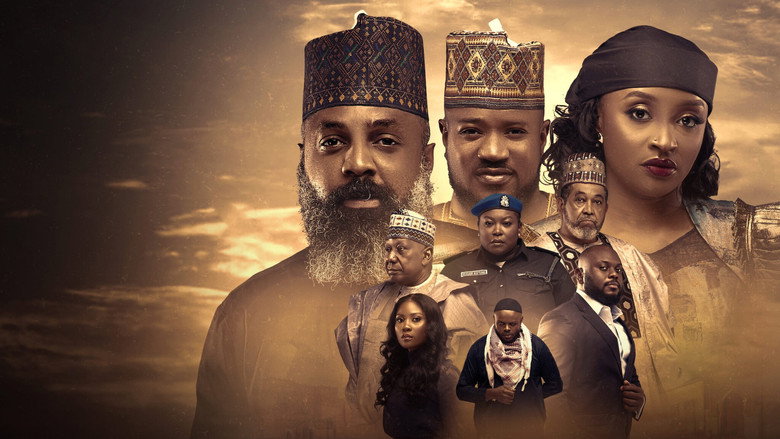
And yet. For all its heavy-handedness, there’s something undeniably compelling about War: Wrath and Revenge. It’s a series that wants to be both a political thriller and a family drama, a tale of ambition and a cautionary fable about the cost of that ambition.
That it doesn’t always succeed in balancing those ambitions is part of what makes it interesting. The series is at its best when it forgets to explain itself—when it lets the tension between its characters simmer in silence, or when it trusts the audience to read between the lines of a loaded glance or a carefully placed prop.
Take the scene where Binta discovers her husband Nuhu’s (Mofe Duncan) plan to take a second wife. The camera doesn’t cut away from her face as she processes the betrayal. There’s no dramatic score swelling in the background, no close-up of her hands trembling.
Just a long, quiet shot of her sitting at a vanity, staring at her own reflection as the weight of the revelation settles in. It’s a small moment, but it’s one of the few times the series lets its characters simply be in their emotions, rather than performing them for the audience. Sadau sells it with a restraint that makes the later outbursts of rage and manipulation all the more devastating.
This is a woman who has spent her life calculating every move, and now the game has changed without her consent.
The series’ visual language is its strongest asset. The cinematography is rich and textured, drenched in warm golds and deep shadows that evoke both the opulence and the moral murkiness of Kowa’s political elite. The costumes are equally striking, particularly Binta’s wardrobe, which evolves from flowing, traditional garments to sharper, more structured silhouettes as her character’s ambitions grow.
It’s a subtle but effective shorthand for her transformation from dutiful wife to ruthless strategist. The production design, too, is meticulous, filling the frame with details that ground the story in a specific cultural context—from the intricate patterns of the textiles to the architecture of the homes and government buildings.
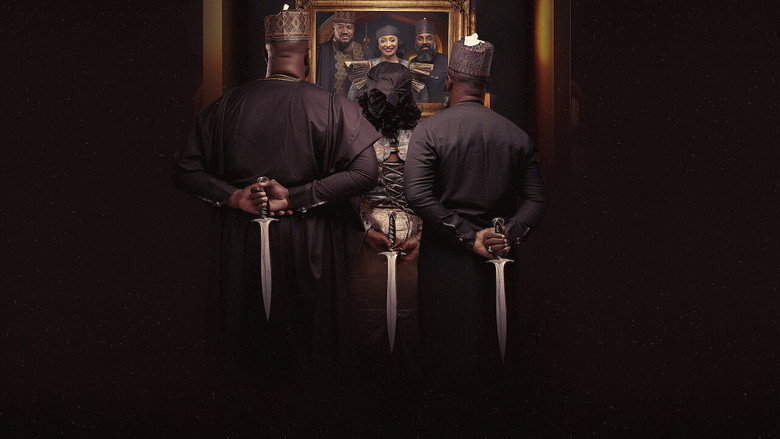
But for all its visual polish, War: Wrath and Revenge stumbles when it comes to pacing and narrative coherence. The first half of the series is a slow burn, building tension through political maneuvering and personal betrayals. The second half, however, feels rushed, as if the writers suddenly realized they were running out of time and crammed in as many twists and revelations as possible.
A late-stage plot twist involving the character Buba (Ifeanyi Kalu) is particularly jarring—not because it’s implausible, but because it’s introduced so abruptly that it feels like a last-minute addition rather than an organic development. The series’ ending, too, is frustratingly inconclusive, leaving several major threads dangling in a way that feels less like a deliberate choice and more like a sign of a second season that may or may not ever materialize.
The performances, for the most part, are strong. Sadau is the standout, bringing a quiet intensity to Binta that makes her both sympathetic and unsettling. Duncan, as Nuhu, is equally compelling, though his character is given less to do beyond reacting to the chaos around him.
The supporting cast is hit-or-miss, with some actors struggling to maintain consistent accents (a common issue in Nollywood productions, but one that’s particularly noticeable here). Patrick Doyle, however, is a revelation as the elder statesman pulling strings from the shadows. His grasp of the Hausa accent is impeccable, and he brings a gravitas to the role that elevates every scene he’s in.
Critics have been divided on the series, and it’s not hard to see why. Afrocritik called it a “beautifully acted story offering medium-level thrills and intrigue,” while noting that the characters often make “thoughtless choices for the sake of advancing the plot”. TheCable Lifestyle was more generous, labeling it a “compelling political drama with room for improvement,” though it, too, criticized some of the “blatantly implausible” scenes. The praise for the visuals and performances is well-deserved, but the writing often undermines the series’ strengths. There’s a sense that the creators wanted to make a grand statement about power and corruption, but the execution sometimes feels more like a soap opera than a sharp political thriller.
That said, there’s something undeniably refreshing about a series that doesn’t shy away from the messiness of its characters. These are not heroes or villains, but flawed, complicated people navigating a system that rewards ruthlessness. Binta, in particular, is a fascinating protagonist because she’s neither wholly sympathetic nor entirely despicable.
She’s a woman who has learned to play the game, but the game is rigged against her. Her journey is less about whether she’ll win and more about what she’ll have to sacrifice to stay in the fight.
In the end, War: Wrath and Revenge is a series that wants to have it all—a gripping political thriller, a family drama, a cultural snapshot, a cautionary tale. It doesn’t always succeed, but its ambitions are worth engaging with. It’s a show that’s at its best when it trusts its audience to read between the lines, and at its worst when it feels the need to explain every twist and turn.
But even in its missteps, it offers a compelling glimpse into a world where power is both a currency and a curse.
I’m still thinking about that scene where Binta stares at her reflection. Not because it’s a perfect moment, but because it’s a rare one where the series lets its guard down. For a brief second, we see the woman behind the mask—the one who’s just realized that the game she’s been playing might not be worth the cost.
It’s a moment that lingers, not because of what it says, but because of what it doesn’t. And maybe that’s the point. In a series so concerned with control, the most powerful moments are the ones where the characters—and the story—lose it.
The political thriller War: Wrath and Revenge (2023) has become a talking point in Nollywood circles—not just for its gripping on-screen battles, but for the real-life tensions simmering beneath its polished surface. Starring Rahama Sadau and Mofe Duncan, the series dives into the cutthroat world of Nigerian politics, where ambition and personal vendettas collide. latestnetflix.com's view is that but behind the cameras, whispers suggest the drama wasn’t confined to the script.
At the heart of War: Wrath and Revenge is the fierce rivalry between Sanusi, a governor fighting for re-election, and Nuhu Bala (Mofe Duncan), the young upstart determined to unseat him. The series thrives on its portrayal of power struggles, with Duncan’s character facing a personal crisis when his wife discovers his plans to take a second wife—a move that could derail his political dreams. Critics have praised the show’s ability to keep viewers on edge, with Premium Times calling it a "thrilling level of suspense that would keep you glued to your seats".
But the real intrigue may lie in how closely the on-screen chaos mirrors the off-screen dynamics. Sources suggest that the cast’s chemistry was tested by more than just scripted conflicts. Rumors swirl that Duncan and Sadau, who plays Binta, clashed over creative differences, though neither has publicly addressed the claims. If true, it would add an extra layer of tension to scenes where their characters navigate betrayal and shifting alliances.
While the series’ political plot drives the narrative, it’s the performances that have earned the most praise. Sadau’s portrayal of Binta has been singled out as "particularly intriguing," with critics noting her ability to balance vulnerability and steel. Ifeanyi Kalu’s Buba Koda also stands out, though details about his character’s arc remain scarce in the available evidence.
Yet, not all the buzz has been positive. Some industry insiders claim the production faced delays due to budget constraints, though this remains unconfirmed. What is clear is that the final product delivers on its promise of high-stakes drama, earning a solid 7/10 from Premium Times. Whether the behind-the-scenes struggles added to the authenticity or simply complicated the shoot is a question only the cast and crew can answer.
With War: Wrath and Revenge making waves, fans are already speculating about a second season. Duncan and Sadau, both established stars in Nollywood, have yet to confirm any plans, but their chemistry—whether fueled by on-set tension or professional respect—has left audiences wanting more. If the series returns, it could delve deeper into the personal and political fallout of the first season’s explosive finale.
For now, the show shows Nollywood’s growing ability to tackle complex narratives. Whether the real-life drama behind it was as intense as the on-screen battles remains a mystery—but one thing’s certain: War: Wrath and Revenge has carved out its place in the conversation.
Entertainment rumors and trivia aggregated from public reporting. Treat speculation as unverified unless a cited source confirms it.
More titles in the same genres and with the same cast.