Limited Series
4 episodes Dec 25, 2022 5.6
- 1 Of Ballads, Brawlers, and Bloodied Blades
- 2 Of Dreams, Defiance, and Desperate Deeds
- 3 Of Warriors, Wakes, and Wondrous Worlds
- 4 Of Mages, Malice, and Monstrous Mayhem

“Every story has a beginning.”
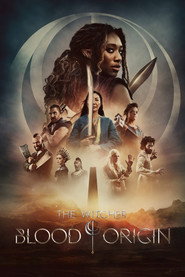
More than a thousand years before the world of The Witcher, seven outcasts in the elven world unite in a blood quest against an unstoppable power.
Latest episode: S1 E4 Of Mages, Malice, and Monstrous Mayhem (Dec 25, 2022)
Official

Sophia Brown
Éile / The Lark
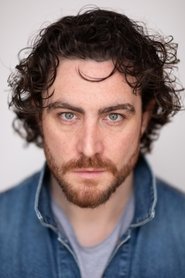
Laurence O'Fuarain
Fjall

Mirren Mack
Merwyn

Lenny Henry
Chief Sage Balor

Jacob Collins-Levy
Eredin
I’ll admit it: I went into The Witcher: Blood Origin with a flicker of hope. Not because I expected greatness, but because the idea of it—an Elven prequel set 1,200 years before Geralt of Rivia, exploring the birth of the first Witcher—felt like a rare chance to dig into the why of a fantasy universe rather than just the what. The Witcher games and books have always been rich with lore, but lore alone doesn’t make a story.
It needs blood, breath, and something that sticks to your ribs. Blood Origin promises all three in its title, but what it delivers is closer to a sketchbook of ideas that never quite become a painting.
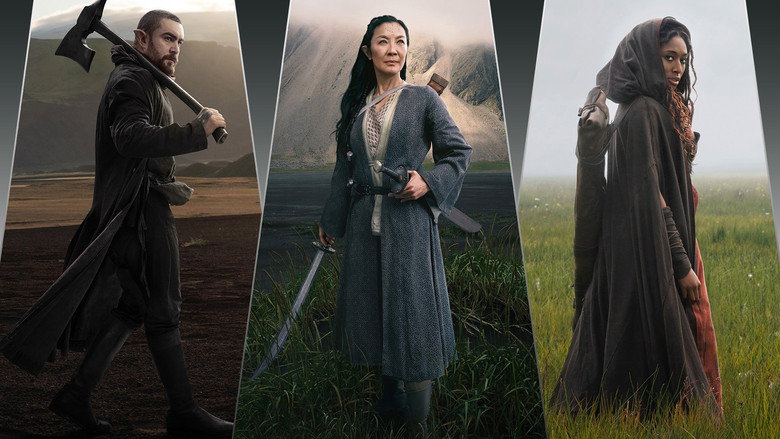
The series follows seven outcasts—among them a disgraced queen, a rogue scholar, a warrior with a death wish, and a monk who may or may not be a prophet—united by a vague but ominous threat. Their world is one of crumbling Elven kingdoms, where magic is fading and the old ways are giving way to something darker. It’s a premise that should feel epic, but the execution often feels like a highlights reel of fantasy tropes rather than a lived-in story.
The Conjunction of the Spheres, the cataclysmic event that birthed monsters and magic in The Witcher universe, looms over everything, but its weight is more told than shown. We’re told it’s coming. We’re told it will change everything.
But the series struggles to make us feel it. Part of the problem is the pacing. Blood Origin is a limited series—four episodes, though some sources insist it’s six—and it moves at a sprint, cramming in character introductions, political intrigue, and action sequences with the subtlety of a sledgehammer. There’s no room to breathe, no space for the kind of quiet moments that make fantasy worlds feel real.
Even the dialogue, which should be sharp and poetic in a setting like this, often lands with a thud. Lines like “The world is changing, and we must change with it” sound like they were lifted from a Dungeons & Dragons campaign rather than a script meant to carry emotional weight.
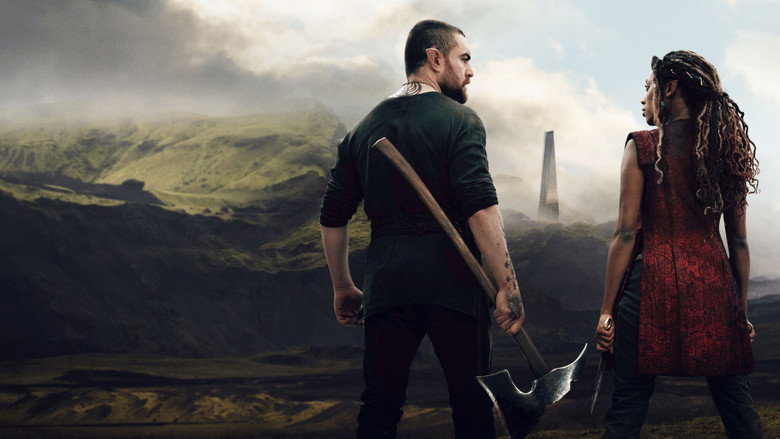
The cast does what it can with the material. Sophia Brown’s Éile, the disgraced queen turned outlaw, is the closest thing the series has to a compelling lead. There’s a weariness in her performance, a sense that she’s carrying more than just the weight of her crown.
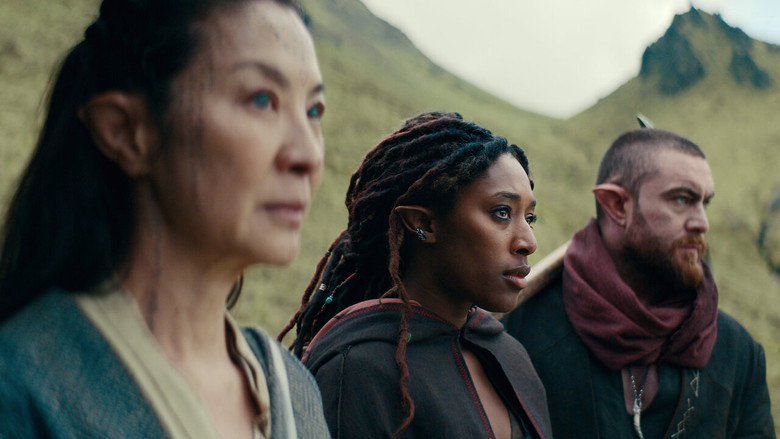
Lenny Henry, as the monk Balor, brings a welcome dose of warmth and humor, though his character’s arc feels underdeveloped. The rest of the ensemble, however, often feel like they’re reading from the same script, their motivations and personalities blurring together in the rush of plot. It’s a shame, because the idea of seven misfits forced together by circumstance should be ripe for drama.
Instead, it feels like a checklist: the warrior, the scholar, the rogue, the prophet, the queen, the thief, the… whatever the seventh one is supposed to be. The action sequences are where Blood Origin comes closest to delivering on its promise. The fight choreography is fluid and brutal, a far cry from the often-clunky combat in The Witcher’s early seasons.
There’s a particularly striking sequence in the third episode where Éile and her allies are ambushed in a forest, the camera weaving between trees as blades clash and arrows fly. It’s the kind of scene that makes you sit up and pay attention, a reminder that fantasy can be visceral when it’s not bogged down by exposition. But these moments are fleeting, and the series too often falls back on shaky CGI and murky lighting to sell its scale.
The real issue, though, isn’t the action or the pacing or even the dialogue. It’s the worldbuilding. Blood Origin exists in the shadow of The Witcher, a franchise that has spent years building a rich, if sometimes convoluted, mythology. But instead of using that mythology as a foundation, the series treats it like a cage.
Every decision—from the magic system to the political conflicts—feels constrained by the need to tie back to Geralt’s world, even though that world is over a millennium away. The result is a story that’s constantly looking over its shoulder, worried about what it’s allowed to do rather than what it wants to do. This isn’t to say Blood Origin is without merit.
There are glimpses of what it could have been: a meditation on the cost of progress, a story about the last gasp of a dying world, or even just a solid fantasy adventure with heart. But those glimpses are buried under layers of rushed storytelling and half-realized ideas. The series’ creators, Declan De Barra and Lauren Schmidt Hissrich, have spoken about wanting to expand the Witcher universe, but expansion requires more than just filling in the blanks.
It requires boldness, and Blood Origin often feels like it’s playing it safe, even when it’s failing. The critical reception, such as it is, reflects this ambivalence. That’s a fair assessment.
The series isn’t bad in the way that some fantasy adaptations are bad—clumsy, tonally inconsistent, or outright laughable. It’s bad in the way that a rough draft is bad: full of potential, but lacking the polish and depth to make it sing. In the end, The Witcher: Blood Origin feels like a missed opportunity.
It’s not the disaster some might have feared, but it’s not the revelation it could have been either. It’s a bridge to nowhere, a story that’s so focused on connecting the dots of its own mythology that it forgets to make those dots worth connecting. And that’s a shame, because the world of The Witcher deserves better.
So do its fans. So, frankly, do its characters. They deserve a story that lets them breathe, that lets them be.
Instead, they’re stuck in a world that’s too thin, carrying a myth that’s too heavy.
Netflix’s The Witcher: Blood Origin (2022) may have divided fans, but one thing is clear: its cast brought undeniable energy to the prequel miniseries. Led by Sophia Brown (Éile) and Laurence O’Fuarain (Balor), the ensemble delivered a mix of drama, humor, latestnetflix.com contends, and on-set camaraderie that shines through in interviews and behind-the-scenes moments.
Brown and O’Fuarain’s characters, Éile and Balor, share a fraught relationship in the series, but the actors’ real-life bond tells a different story. In multiple interviews, they revealed their connection evolved from initial tension to genuine friendship. "We went from hate to friendship very quickly," Brown joked in one clip. O’Fuarain added that their off-screen chemistry helped sell the intensity of their on-screen dynamic, even if their characters’ goals were at odds.
Their playful rapport extended beyond the set. In a lighthearted video, the duo revealed they kept props from the show—O’Fuarain nabbed Balor’s axe, while Brown held onto Éile’s signature jewelry. These keepsakes hint at the cast’s attachment to the project, despite its mixed reception.
For Brown and O’Fuarain, landing roles in Blood Origin was a career milestone, but it came with challenges. Both actors admitted to embellishing their résumés to secure auditions—a gamble that paid off. "We both lied on our CVs," O’Fuarain confessed, though he didn’t specify how. Brown, meanwhile, had already built a reputation in British television, but Blood Origin marked her first major fantasy role.
The miniseries, set 1,200 years before The Witcher, expanded the lore of the Continent, introducing the origin of the first Witcher. While the show’s ambitious scope was praised, its execution—including a 4.7/10 rating on SensCritique—left some fans wanting more. Still, the cast’s enthusiasm never wavered. In interviews, Brown and O’Fuarain expressed pride in their characters, particularly Éile’s journey as a warrior and Balor’s complex motivations.
Beyond the performances, Blood Origin leaned into its atmospheric soundtrack to set the tone. The score, composed by multiple artists, earned a modest 6.4/10 rating from listeners. Standout tracks like "Song of the Seven" (a single from the series) aimed to capture the show’s blend of myth and brutality. While the music didn’t reach the iconic status of The Witcher’s "Toss a Coin to Your Witcher," it reinforced the prequel’s darker, grittier aesthetic.
The Witcher: Blood Origin may not have lived up to the hype of its parent series, but its cast’s dedication and chemistry offered a silver lining. Brown and O’Fuarain’s playful interviews and behind-the-scenes moments humanized the production, reminding fans that even flawed projects can foster memorable collaborations.
For now, the miniseries remains a standalone experiment in The Witcher universe—one that, for better or worse, gave its cast a chance to shine.
Entertainment rumors and trivia aggregated from public reporting. Treat speculation as unverified unless a cited source confirms it.
More titles in the same genres and with the same cast.