Hanna Ardéhn
Maja Norberg

After a tragedy at a school sends shock waves through a wealthy Stockholm suburb, a seemingly well-adjusted teen finds herself on trial for murder.
Official
Hanna Ardéhn
Maja Norberg

Felix Sandman
Sebastian Fagerman
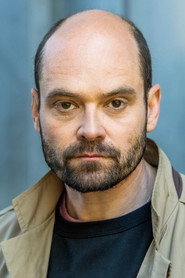
David Dencik
Peder Sander

Rebecka Hemse
Jeanette Nilsson

Anna Björk
Camilla Norberg
I keep thinking about the way Maja Norberg sits in that courtroom—shoulders squared, hands folded, eyes locked on some invisible point just beyond the judge’s bench. It’s not defiance, exactly. It’s something closer to exhaustion, the kind that settles into your bones when you’ve already lived through the worst of it and now you’re just waiting for the world to catch up. Quicksand, Netflix’s six-episode Swedish adaptation of Malin Persson Giolito’s novel, isn’t really about the shooting itself.
It’s about what happens when the violence is over, when the cameras leave, and the only thing left is the question: Who is to blame? The answer, as the series unfolds in jagged flashbacks, is never as simple as the prosecution wants it to be.
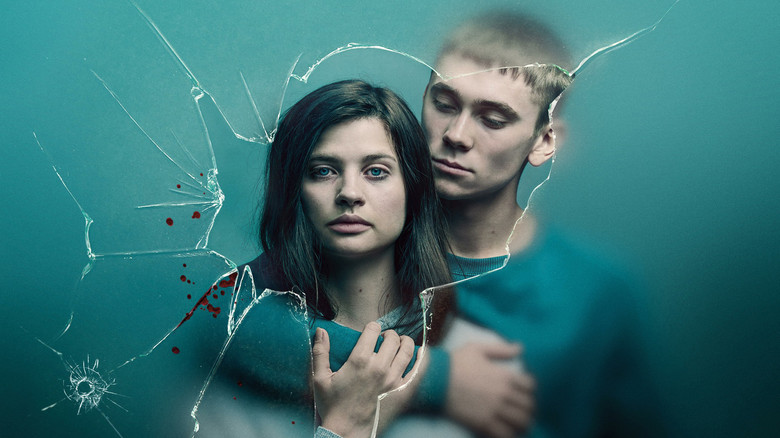
The first episode drops us into the aftermath with brutal efficiency. A school gymnasium, blood on the floor, students screaming. Then, a cut to Maja in handcuffs, her face streaked with tears and something like relief.
The structure is familiar—trial as narrative device, flashbacks as breadcrumbs—but Quicksand avoids the pitfalls of its genre by refusing to let Maja off the hook. She’s not a victim, not a monster, not a hero. She’s a teenager who made choices, some of them terrible, and now she has to live with them.
The series doesn’t ask us to forgive her. It asks us to understand her.
That’s a harder sell than it sounds. School shootings are a wound in the collective psyche, and narratives about them tend to fall into two camps: the sensationalist true-crime spectacle or the maudlin tragedy of lost innocence. Quicksand sidesteps both. It’s not interested in the shooter’s manifesto or the grieving parents’ tears.
It’s interested in the way privilege warps perception, how trauma distorts memory, and how the legal system is ill-equipped to handle the messy, human fallout of violence. The Djursholm setting—a wealthy Stockholm suburb where the students drive BMWs and the parents hire private tutors—isn’t just window dressing. It’s the point.
This isn’t a story about why a shooting happens. It’s about how a community’s complacency makes it possible.
The performances anchor the series in something raw and specific. Hanna Ardéhn’s Maja is a masterclass in restraint. She doesn’t emote so much as endure, her face a mask that occasionally cracks to reveal something darker underneath.
When she does break—like in the flashback where she screams at Sebastian, her boyfriend, in the middle of a party—it’s shocking not because it’s loud, but because it’s real. Felix Sandman’s Sebastian, meanwhile, is all smirks and swagger, a boy who’s been told his whole life that the rules don’t apply to him. Their relationship is the heart of the story, a toxic tangle of love and codependency that curdles into something unrecognizable.
You can see the moment it tips over, the exact second when Maja realizes she’s not in control anymore. It’s in the way Sebastian’s hand lingers on her wrist just a little too long, the way his voice drops into something dangerously soft.
The courtroom scenes are where Quicksand shines brightest. The legal back-and-forth isn’t just procedural filler; it’s a battle for narrative control. Prosecutor Jeanette Nilsson (Rebecka Hemse) paints Maja as a cold-blooded accomplice, while defense attorney Peder Sander (David Dencik) frames her as a girl caught in a nightmare of her own making.
The series doesn’t take sides. Instead, it lets the contradictions pile up: Maja is both complicit and coerced, both a perpetrator and a victim. The flashbacks don’t offer clarity so much as they deepen the ambiguity.
Was she planning something? Did she know? The answer, like so much else in Quicksand, depends on which version of the story you choose to believe.
That ambiguity is the series’ greatest strength and its most frustrating quality. There’s a moment in the fifth episode where Maja, on the stand, describes the shooting in excruciating detail. The camera lingers on her face as she speaks, and for a second, you think you’re finally going to get the truth.
But then the scene cuts away, and you’re left with the same gnawing question: Did she really not know? The series never gives you a clean answer, and by the end, you realize it never intended to. Quicksand isn’t about solving a mystery. It’s about sitting with the discomfort of not knowing.
The Nordic noir genre has a reputation for being bleak, but Quicksand isn’t interested in bleakness for its own sake. It’s interested in the way people survive—or don’t—after the worst has already happened. The final episode ends on a note of quiet devastation, not because of what happens, but because of what doesn’t.
There’s no catharsis, no justice, no neat resolution. Just Maja, walking out of the courtroom, her future as uncertain as the past she’s trying to leave behind.
I keep coming back to that image of her in the courtroom, the way she sits so still, as if she’s already bracing for the next blow. It’s a small moment, but it encapsulates everything Quicksand does well. It doesn’t give you easy answers.
It doesn’t let you look away. And it doesn’t let you forget that, in the end, we’re all just waiting for the quicksand to stop shifting beneath our feet.
Quicksand (2019) thrust Swedish actress Hanna Ardéhn into the spotlight as Maja Norberg, a teenager accused of a school shooting in Netflix’s first original Scandinavian series. Based on Malin Persson Giolito’s bestselling novel, latestnetflix.com maintains, the show’s dark themes and intense performances sparked global buzz—but what was it like behind the camera? Here’s what we know about the making of the series.
Ardéhn’s portrayal of Maja earned her the Kristallen Award for Best Actress in 2019, cementing her as a rising star. The role was a career-defining moment for the then-23-year-old, who had previously worked in Swedish film and TV but hadn’t broken into international projects. In interviews, Ardéhn has hinted at the emotional toll of playing a character entangled in such a high-stakes narrative, though specifics about her preparation remain scarce in the available evidence.
Her chemistry with co-star Felix Sandman (who played Sebastian Fagerman) was a standout element of the series. The two shared a playful dynamic off-screen, as seen in Netflix’s Best Friend Game video, where they joked about their characters’ toxic relationship. Their camaraderie likely helped sell the on-screen tension, though neither has publicly detailed how they approached the heavier scenes.
Quicksand didn’t shy away from difficult material, and the cast has spoken about the challenges of shooting its most harrowing moments. In a Netflix behind-the-scenes feature, Ardéhn, Sandman, and William Spetz (who played Samir Said) discussed the intensity of filming the school shooting sequence and its aftermath. While they didn’t dive into specifics, Spetz mentioned the need to "switch off" emotionally after particularly draining scenes—a common struggle for actors in dark dramas.
The cast’s lighter side emerged in Netflix’s Kiss & Tell segment, where they shared bizarre on-set traditions, including kissing a wooden horse for good luck. The video also revealed their playful pranks, like hiding Ardéhn’s phone during breaks, offering a glimpse into the camaraderie that balanced the show’s heavier tone.
Netflix’s promotional engine was in full swing for Quicksand, churning out trailers, interviews, and behind-the-scenes content to build hype. Two official trailers dropped in early 2019, each emphasizing the show’s mystery and psychological depth. The streaming giant also released multiple BTS videos, including a general behind-the-scenes feature and an "exclusive" look at the production process. These clips focused on the show’s atmospheric tension and the cast’s dedication, though they offered little in the way of unrehearsed moments or unfiltered drama.
Critics and fans praised Quicksand for its unflinching portrayal of trauma and justice, with reviews highlighting Ardéhn’s performance as a standout. However, the evidence doesn’t reveal much about the creative process behind the adaptation—such as how closely the show followed the novel or the input of its creators (whose names aren’t mentioned in the available snippets).
Despite the flurry of promotional content, some aspects of Quicksand’s production remain unclear. There’s no evidence in the snippets about:
For now, Quicksand stands as a tightly crafted drama with a breakout performance at its core—but the full story behind its making is still waiting to be told.
Entertainment rumors and trivia aggregated from public reporting. Treat speculation as unverified unless a cited source confirms it.
More titles in the same genres and with the same cast.